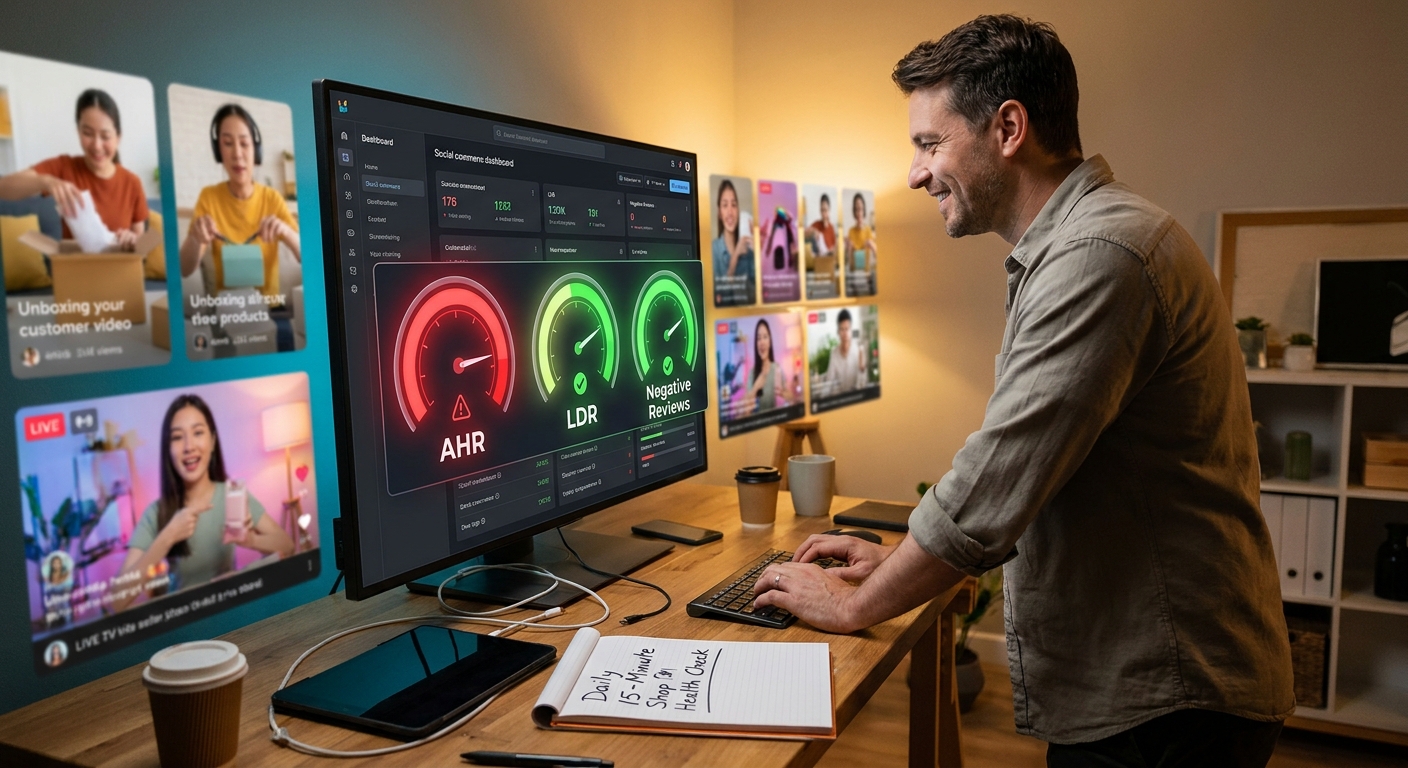
If you sell on TikTok Shop, this is the kind of update that can ruin your week before you even know it happened. Sellers are waking up to warnings tied to refunds, slow replies, late shipping and bad reviews, then realizing their shop score has quietly slipped. That matters more than it sounds. Once your score drops, creators get nervous about promoting you, TikTok shows your listings less often and products that were selling fine can suddenly stall out. The frustrating part is that TikTok has tightened the rules, but it still has not done a great job explaining what “safe” looks like for small brands. So let’s make it simple. If you understand the July 2026 TikTok Shop penalties around AHR, LDR and refund patterns, and you build a small daily routine around them, you can protect your account before one rough week turns into a visibility problem.
⚡ In a Hurry? Key Takeaways
- TikTok Shop penalties in July 2026 appear to hit hardest around three areas: AHR, LDR and unusual refund behavior.
- Your fastest fix is a daily 15 minute check for unanswered messages, at-risk orders and repeat refund causes by product.
- A healthy shop score is not just about avoiding punishment. It helps keep creator partners confident and your offers visible in the feed.
What is the new refund trap play?
The short version is this. A refund is no longer just a refund.
On its own, one customer return is normal. But if TikTok sees a pattern, especially mixed with late replies, delayed dispatch and harsh reviews, it can start to read that as a shop quality problem. That is the trap. Many sellers still think refunds live in one box, customer service lives in another and shipping lives somewhere else. TikTok does not seem to see it that way anymore.
Now the platform appears to connect these signals. Too many refunds on one SKU. Slow message response. Orders going out late. Reviews that mention “never replied” or “item not as described.” Stack those together and your shop health can slide fast.
What AHR and LDR actually mean in plain English
AHR usually comes down to response speed
AHR is generally used to track how well and how quickly you respond to buyers. Sellers are increasingly focused on a 12 hour response benchmark, which means letting messages sit overnight or through a weekend can start to hurt more than it used to.
If you are a small team, this is rough. You are packing boxes, answering creators, dealing with stock and trying to make content. But from TikTok’s point of view, a silent seller looks risky.
LDR usually points to late dispatch
LDR is the shipping headache. If orders are not dispatched on time, that can count against you. A late parcel does more than annoy one customer. It often triggers cancellation requests, refund claims and lower reviews. One operational slip can snowball.
Refund rules are getting stricter through patterns, not just totals
The word to focus on is patterns. A burst of refunds after a viral post may not look the same as a stable refund rate spread across normal sales. TikTok is likely looking for signs of abuse, poor listing accuracy or fulfillment issues. If one product keeps creating problems, that product can drag down the rest of your shop.
Why this matters more than your next viral hit
A lot of small brands still believe discoverability solves everything. Get a creator to post. Catch a trend. Ride the traffic. That still helps, of course. But traffic sent to a weak store is expensive traffic.
If your shop score drops:
Creators may stop accepting your samples or ask for higher fees because your store feels risky.
TikTok may push your products less.
Your conversion rate can fall because customers see mixed reviews or slower shipping estimates.
Your support load goes up right when your visibility goes down.
That is why the tiktok shop penalties july 2026 AHR LDR refund rules matter. This is no longer back-office admin. It affects growth.
What “good” probably looks like now
TikTok has not made this feel especially simple, so here is the practical version.
For AHR
Good looks like no buyer message sitting untouched for anywhere near 12 hours. If possible, aim much lower. Under 4 hours during business hours is a safer internal target, because real life happens. Staff get sick. Phones die. Weekends happen.
For LDR
Good looks like dispatching early, not just barely on time. If your warehouse or 3PL regularly cuts it close, assume you need a buffer. “We usually make it” is not a strategy.
For refunds
Good looks like understanding why they happen. Not just how many happened. You want to know whether refunds are caused by sizing confusion, damaged packaging, misleading product images, stock mismatches, creator overpromising or slow shipping.
The daily routine that can save your shop score
You do not need a huge operations team. You need a repeatable habit.
1. Check messages twice a day
Morning and late afternoon is a good start. If you have sales volume in the evening, add a third check. Use saved replies for common questions, but make sure they still sound human.
2. Pull an order delay list
Look for orders that will miss dispatch if nothing changes today. Not tomorrow. Today. If inventory is missing, pause the SKU or update the listing before more orders land.
3. Review refunds by product, not just store total
This is where many sellers miss the problem. A 4 percent refund rate across the whole shop may look tolerable, but if one hero product is running at 12 percent and generating bad reviews, that is the fire.
4. Read the actual review text
Star ratings matter, but the words matter more for diagnosis. If reviews keep saying “cheap material,” “different from video” or “seller never responded,” TikTok is getting the same signal your customers are.
5. Flag creator-caused mismatch
Sometimes the product is fine and the promo is the issue. A creator promises a feature the product does not have, exaggerates size, or shows a version no longer in stock. That can trigger refunds fast. Keep a list of content that may be setting wrong expectations.
6. Keep a simple penalty log
Make a spreadsheet with date, warning type, affected SKU, likely cause and action taken. This sounds boring because it is boring. It is also how you spot trends before TikTok turns them into penalties.
How to lower refund risk without killing sales
Fix the product page first
Most refund problems start before checkout. Tighten the title, photos, sizing, material details, compatibility notes and delivery expectations. If the item looks premium in the video but arrives in basic packaging, say that clearly.
Stop being too optimistic on shipping
Customers forgive slow shipping more easily than they forgive feeling misled. Promise what you can actually do.
Watch for “viral mismatch” products
These are items that look amazing in short-form video but disappoint in normal use. Beauty tools, fashion accessories, lighting gadgets and novelty home items are common examples. If a product spikes refunds after a video takes off, do not keep feeding traffic to it until you know why.
Offer fast support before the buyer asks for a refund
A quick message can save an order. If tracking has stalled or a size question comes in, respond quickly and clearly. Buyers often ask for refunds when they feel ignored.
How to protect creator relationships
Creators are getting smarter. They do not just ask about commission anymore. They want to know if your store converts cleanly and whether customers complain after the click.
If you can say, “We monitor response time daily, dispatch early and review refunds by SKU every week,” you sound safer to work with. And safer stores get better creator deals.
Even a simple one-page partner note helps. Include shipping windows, top-performing products, common buyer questions and anything a creator should not claim in their content.
Red flags that mean you should act today
If any of these sound familiar, do not wait:
- Buyer messages are being answered the next day by default.
- You are relying on one person to manage all support.
- A best seller has suddenly picked up more 1-star or 2-star reviews.
- Your warehouse often dispatches at the last possible hour.
- You do not know which SKU caused most refunds this month.
- Creators are sending traffic to a product page you have not checked in weeks.
If you already got a warning, what should you do?
First, do not panic and start changing everything at once. That usually creates more mess.
Start with the metric named in the warning
If it is response time, shift your support coverage immediately. If it is dispatch, check inventory sync and warehouse cutoffs. If it is refunds, isolate the top problem SKUs and pause ad spend or creator pushes to those items if needed.
Then check the linked metrics
This is the part many sellers skip. A refund warning may actually be tied to a late-shipping issue. A bad-review problem may really be caused by slow support. Follow the chain.
Document your fixes
If you need to appeal or explain a trend to a creator partner, it helps to show that you changed staffing, updated listings or paused risky items.
At a Glance: Comparison
| Feature/Aspect | Details | Verdict |
|---|---|---|
| AHR | Buyer response speed is under more pressure, with sellers watching a 12 hour benchmark closely. | Treat this as a daily customer support metric, not an occasional inbox task. |
| LDR | Late dispatch can trigger cancellations, complaints and poor reviews that spread beyond one order. | Build buffer time. Shipping barely on time is not safe enough. |
| Refund Rules | Refunds appear to matter more when they show repeat patterns by SKU, listing quality or support failure. | Track the cause, not just the count. Problem products should be fixed or paused fast. |
Conclusion
TikTok Shop is getting less forgiving, and that is exactly why small sellers need a routine instead of guesswork. Right now, the shops that stay healthy will not just be the ones with the best videos. They will be the ones that answer fast, ship on time and catch refund patterns before the platform turns them into penalties. That is the real value here. If you build a simple checklist around AHR, LDR and refund causes, you give yourself a much better shot at staying creator-friendly, avoiding surprise account trouble and keeping your best products alive in the feed. It is not glamorous work. But in this moment, it may matter more than your next viral post.