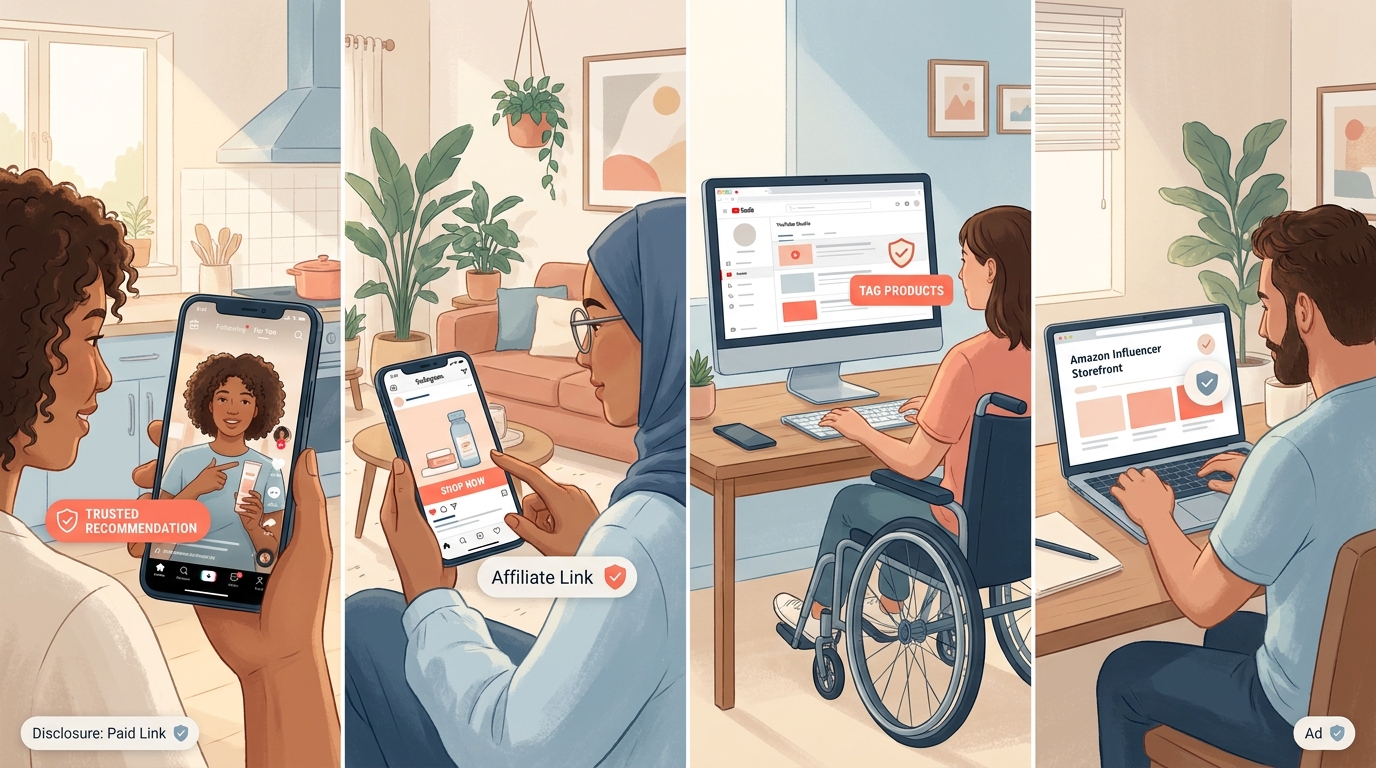
You can feel the mood shift. Shoppers are not just rolling their eyes at vague “obsessed” captions anymore. They are skipping links, clearing cookies, and calling out creators who hide commissions behind fake enthusiasm. If you make money from TikTok Shop, Instagram, YouTube, or Amazon, that frustration can hit your wallet fast. One sloppy disclosure, one unclear product tag, or one link that feels sneaky can cut clicks before you even notice the drop. That matters even more now that Amazon is paying on the exact item linked instead of giving creators that wider cart halo. Every tap has to count. The good news is this problem has a fix. Clear disclosures do not have to scare people off. Done right, they can work like a trust badge. They tell people, “Yes, I may earn from this, and I still picked it carefully.” In 2026, that kind of honesty is not just legally smart. It is becoming one of the easiest ways to win more confident clicks.
⚡ In a Hurry? Key Takeaways
- Clear affiliate disclosures can increase clicks because they reduce buyer suspicion instead of triggering it.
- Use a simple, repeatable label on every platform, such as “affiliate link,” “I may earn a commission,” and “gifted” when relevant.
- Trust is now a revenue issue, not just a legal one, especially with Amazon’s exact-ASIN payout rules and tighter TikTok Shop enforcement.
The old “just drop the link” trick is wearing out
For years, a lot of social commerce worked on a wink and a nod. A creator would say “you guys asked,” paste a shopping link, and collect commission quietly in the background.
That still happens. It just works less well now.
People have gotten better at spotting when a recommendation is really an ad. Platforms have also gotten stricter about how creators label sponsored posts, affiliate links, and shop content. So the old half-hidden approach can hurt you twice. You risk penalties from the platform, and you lose buyers who feel played.
That is why social commerce affiliate disclosure best practices 2026 are not just about avoiding fines or account trouble. They are about protecting conversion rates.
Why transparency is suddenly worth money
Amazon’s newer payout reality changed the math for creators. If you only earn on the exact ASIN you linked, not on the shopper’s full cart, weak trust hurts more. There is less room for a casual click to turn into useful commission.
On TikTok Shop and Instagram Shopping, the problem is different but just as serious. People are shown more products inside the app, often from creators they do not know well. If everything looks like an ad, your reputation becomes the filter.
That is the opening. A creator who is visibly clear about what is sponsored, what is affiliate, what was gifted, and what they genuinely use can stand out in a feed full of mushy sales talk.
Think of disclosure as a trust badge, not a warning label
A lot of creators still worry that saying “I may earn a commission” will kill the sale. Sometimes the opposite is true.
Why? Because a clean, obvious disclosure answers the buyer’s biggest silent question right away. “Are you telling me this because you like it, or because you get paid?”
If you answer that honestly, many people relax. They may still buy. More importantly, they are less likely to feel tricked after the fact.
What a trust badge looks like in practice
It is not a literal badge from a platform. It is a pattern people learn to recognize from you.
For example:
- “Affiliate link. I may earn a commission if you buy.”
- “Gifted by brand, but this video is not sponsored.”
- “Paid partnership. I picked the shade myself and here is what I liked and did not like.”
That kind of language feels plain and human. It also makes you sound more credible than “link in bio babes!!!” with no context.
What creators should do on each platform
TikTok Shop
TikTok Shop is built for quick impulse buys. That means trust has to be built fast.
Start with the spoken disclosure in the video if the post is shoppable, sponsored, or affiliate-driven. Then repeat it in on-screen text and the caption. Keep it short. “TikTok Shop affiliate. I earn if you buy” is usually stronger than trying to bury the message in a pile of hashtags.
Also, do not overpromise. If you say something is the “best ever” or imply dramatic results without support, that can create both buyer backlash and platform risk.
Instagram is where vague language often causes the most trouble. “Obsessed,” “must-have,” and “you need this” are not disclosures. They are sales phrases.
If you are using product tags, use the platform’s paid partnership tools when required. In Stories, put the disclosure where people can actually see it. Tiny white text tucked into a bright background is asking for trouble.
If the post includes affiliate links in Stories, link stickers, or your bio hub, say so clearly in the Story frame itself. Do not assume a viewer will tap around and figure it out.
YouTube
YouTube gives you more room, so use it. Put a plain-English disclosure near the top of the description, not hidden after six paragraphs of gear links. If the video contains affiliate links, say it early in the video too.
For product roundups, a quick verbal line works well. “Some of the links below are affiliate links, which means I may earn a small commission at no extra cost to you.” Simple. Clear. Normal.
You can also separate products into categories like “I bought this,” “gifted,” and “sponsored.” That small bit of structure helps viewers trust your list.
Amazon storefronts and affiliate links
With Amazon now making exact-item clicks more important, accuracy matters more than ever. Link the exact product variation when possible. If your video shows the black version, do not send people to a general page with five confusing options unless you explain it.
And if something similar but cheaper would work just as well, say that too. Counterintuitively, mentioning a lower-cost option can make people trust your recommendation more.
The 5-part disclosure system that actually works
If you want a repeatable process, use this every time.
1. Label the relationship
Tell people what kind of money or product connection exists.
- Affiliate
- Sponsored
- Gifted
- Brand trip
- Own product
2. Put it where people will see it
A disclosure hidden in a collapsed caption is weaker than one in the first line, on-screen text, or spoken audio.
3. Use normal words
Avoid legal soup. “I may earn a commission” is better than jargon most viewers will skim past.
4. Match the content to the claim
If you say “honest review,” include at least one limitation, tradeoff, or who the product is not for. Otherwise it reads like ad copy.
5. Stay consistent
The real magic is repetition. When followers see the same clear approach every time, it becomes part of your brand.
What not to do
Some habits are almost designed to make buyers suspicious.
- Using unclear tags like #sp, #collab, or #partner without context.
- Burying the disclosure after dozens of hashtags.
- Pretending a gifted item was something you just “found.”
- Linking to a different product than the one shown.
- Claiming you “use this every day” when it is clearly a one-off promo.
- Posting five glowing product pushes in a row with no organic content between them.
None of those mistakes just look messy. They chip away at the buyer’s willingness to trust your next recommendation.
Why clear disclosures can improve clicks, not reduce them
This is the part many creators miss. The goal is not to get the most reckless clicks. It is to get the most confident clicks.
A suspicious click is fragile. The buyer may bounce, compare elsewhere, clear tracking, or decide you were hiding something.
A confident click is different. The shopper understands the relationship, feels respected, and is more likely to follow through.
That can mean fewer casual taps but better conversion quality. Given where platform rules and audience expectations are heading, that is usually a better trade.
How small creators can beat bigger ones here
You do not need a huge audience to win on trust. In fact, smaller creators often have an advantage because they can sound more personal and more believable.
If you are not trying to sell ten things a day, your recommendations carry more weight. A clear system helps turn that natural advantage into actual revenue.
Try this format:
- Why I picked it
- Who it is good for
- Who should skip it
- Whether the link is affiliate or sponsored
That format feels useful instead of pushy. It also gives people enough information to trust you without doing detective work.
At a Glance: Comparison
| Feature/Aspect | Details | Verdict |
|---|---|---|
| Vague disclosure | Hidden in hashtags, tiny text, or unclear terms like “partner” with no explanation | Bad for trust and risky for compliance |
| Clear trust-badge disclosure | Simple wording, visible placement, repeated in voice, text, and caption when needed | Best balance of transparency and conversion |
| Exact product linking | Sends shoppers to the precise item shown, especially important on Amazon and native shop posts | Helps every click work harder |
Conclusion
Creators are being squeezed from both sides right now. Platforms want cleaner disclosures and tighter compliance, while viewers are quicker to punish anything that feels sneaky. That is especially painful when Amazon pays only on the exact item linked and social shopping feeds are packed with posts that all blur together. But there is a practical upside here. If you build a simple, repeatable trust system across TikTok Shop, Instagram, YouTube, and Amazon, you stop treating disclosure like a legal chore and start using it as a sales advantage. Clear labels, honest wording, and precise links can help you lose fewer clicks to suspicion, protect your account, and stand out as someone worth buying from. In 2026, trust is not the soft part of social commerce. It is the part that keeps the money moving.