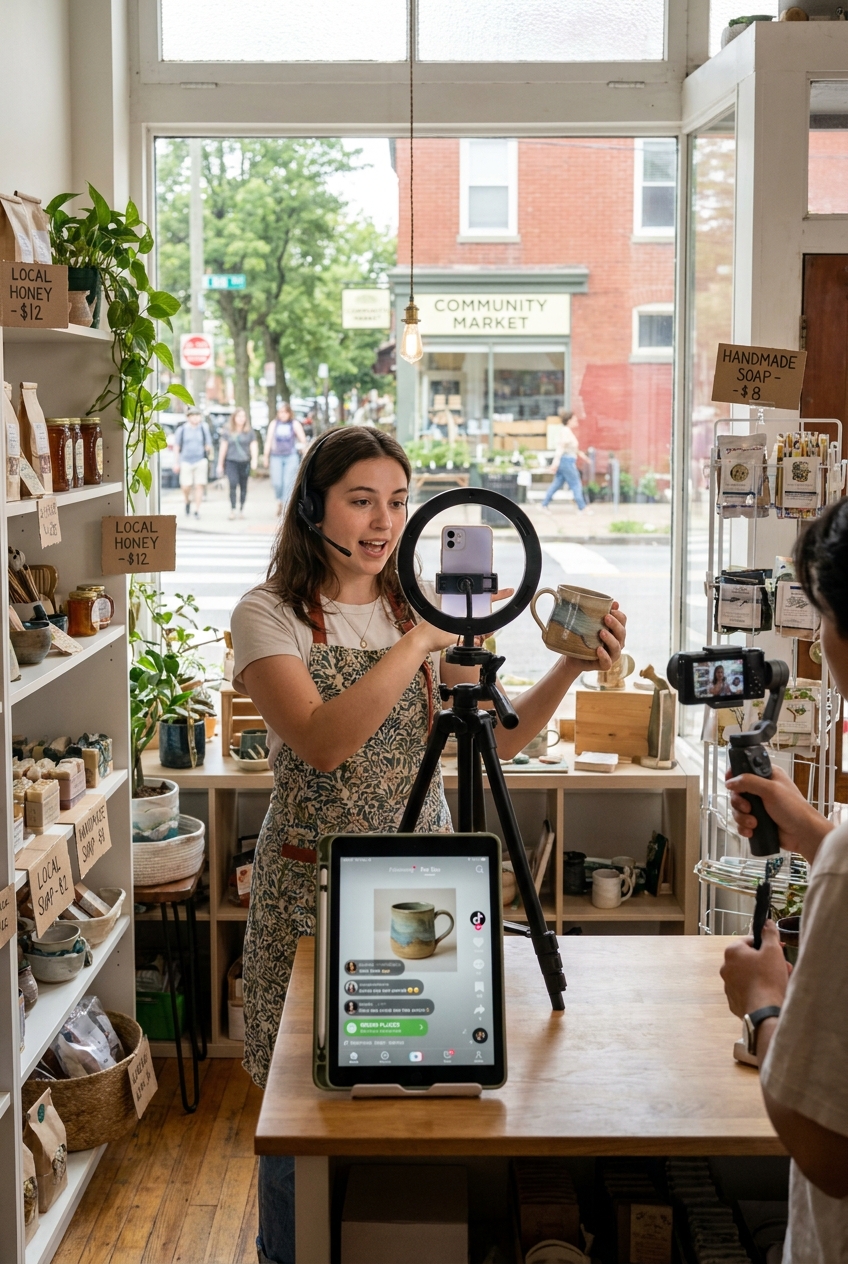
If you run a neighborhood shop, salon, boutique, or small food brand, TikTok Shop can feel like a party you were not invited to. The loud success stories usually feature skincare brands, gadget sellers, and big direct-to-consumer companies with teams, samples, and creator budgets. That makes a lot of local owners assume this is not for them. Fair enough. You are busy running a real business, not chasing every shiny app. But something has changed. TikTok Shop is not just for national brands anymore. Local stores are quietly showing up in livestreams, creator clips, and product demos that feel more like a trusted recommendation than an ad. The stores that start now have a real shot at grabbing attention before the space gets crowded and expensive. If you have been wondering how to use TikTok Shop for small local business, the answer is simpler than it looks. Start small, pick one product, and treat it like a real sales channel, not a side experiment.
⚡ In a Hurry? Key Takeaways
- TikTok Shop can work for small local businesses if you start with one easy-to-demo hero product instead of your full catalog.
- Fix your title, photos, and shipping promise first, then test short creator videos and one simple live session within seven days.
- Do not hand out free product blindly. Use small written creator agreements, track posts, and tie rewards to actual output.
Why local sellers suddenly have a real opening
TikTok Shop has moved past the “maybe this is a fad” stage. In some categories, it is turning into one of the fastest-growing retail channels. That matters because small businesses usually get punished for waiting too long. Early on, fees are often easier to stomach, competition is lighter, and creators are still open to trying new sellers.
That does not mean every store should jump in with both feet. It does mean the old excuse, “TikTok Shop is only for giant brands and teen products,” is getting weaker by the month.
The useful shift is this. Buyers are not only responding to polished ad campaigns. They are buying from videos that feel local, specific, and human. A neighborhood beauty supply store showing the one hair tool customers always ask about. A spice shop showing how to use a seasoning blend in under 20 seconds. A boutique owner trying on the one bag that sells out in-store every month. That sort of content can work because it answers a simple question fast. Why should I buy this?
How to use TikTok Shop for small local business without making it a full-time job
The biggest mistake small sellers make is thinking they need to upload everything, post every day, and become an influencer overnight. You do not. You need a controlled test.
Start with one hero product
Pick one product that fits most of these rules:
- It solves a visible problem.
- It can be shown in 10 to 30 seconds.
- It has decent margin after fees, shipping, and creator costs.
- It is easy to explain without a long backstory.
- Customers already ask about it in person.
Good examples include a best-selling facial tool, a giftable candle set, a salon aftercare bundle, a specialty sauce, a pet accessory, or a simple gadget with a clear use. Bad examples are products that need a five-minute explanation, custom items with messy fulfillment, or low-margin goods that leave you with pennies after shipping.
Think demo first, not inventory first
A product that sells in a store is not always a product that sells in a feed. TikTok Shop rewards things people can understand at a glance. Before listing anything, ask this: can a stranger “get it” with the sound off?
If the answer is no, it may still sell later, but it is not your launch product.
The three listing mistakes that quietly kill conversion
Many sellers blame TikTok traffic when the real problem is the product page. A shopper taps because the video worked. Then the listing loses them.
1. Weak product titles
“Summer Glow Bundle” sounds nice, but it tells a new buyer almost nothing. Your title should be plain and useful. Think product type, main use, and key detail.
Better example: “Hydrating Face Mist for Dry Skin, Travel Size, Rose + Aloe.”
You are not writing poetry. You are reducing doubt.
2. Bad or confusing photos
Your first image should show the product clearly. No clutter. No dark lighting. No tiny text. Then add images that answer common questions. Scale, texture, ingredients, color options, before-and-after if appropriate, and packaging.
A local business can actually beat a big brand here. Real photos from a real shop often feel more trustworthy than overdesigned studio shots.
3. A vague shipping and fulfillment promise
People buy quickly on TikTok. They also regret quickly. If your shipping time looks fuzzy, they leave. If your return policy feels hidden, they leave faster.
State your handling time clearly. Keep packaging clean and consistent. If you can offer local pickup for nearby buyers outside TikTok, mention that elsewhere in your brand content, but keep the TikTok Shop transaction flow simple and reliable.
The basic economics small sellers need to check first
Before you send one sample to one creator, run the math.
Your quick margin test
Take your selling price and subtract:
- Product cost
- Platform fees
- Shipping and packaging
- Affiliate commission
- Sample cost
- Any discount you plan to offer
If what is left feels too thin, do not hope volume will save you. It usually will not, especially at the start.
For many micro sellers, the sweet spot is a product with enough room to support a modest creator commission while still leaving clean profit. Bundles often work better than single cheap items. A $12 item may be hard to make worthwhile. A $32 to $58 bundle can be much healthier.
Creator partnerships: keep them tiny, clear, and serious
This is where many small sellers get burned. They send free products to a long list of creators, hear a lot of excitement, then get silence. Or they get one rushed post that brings no useful data.
Instead, create a very small agreement. Nothing fancy. Just clear.
What to include in a simple creator agreement
- The product being sent
- The number of videos or live mentions expected
- The posting window
- Whether the creator can also post on Instagram Reels or other channels
- The affiliate commission rate
- Any bonus for hitting sales targets
- Basic brand safety rules
The key is to reward consistency, not one-off hype. Two or three posts over two weeks usually tells you more than one big splash. The first video may educate. The second often converts. The third reminds buyers who almost checked out.
This is also a good time to think across platforms. If you are building short-form shopping content in general, Instagram’s New Live Video Ads Just Changed Social Shopping: How Small Brands Can Win Big Fast is worth reading because the same product demo habits and live selling discipline can carry across both channels.
What kind of creators should a local business look for?
Not the biggest ones. Usually not even close.
Look for creators who:
- Already talk about your category
- Have comments that show trust, not just views
- Can explain a product clearly
- Feel like a real person, not a walking coupon code
- Are local or regionally relevant if your business story matters
A micro creator with 8,000 engaged followers who makes clean demos can outperform a bigger account with vague lifestyle content. For local shops, neighborhood credibility matters. “I found this at a store in town” can be a strong hook.
A seven day TikTok Shop launch calendar you can actually use
Day 1: Pick the hero product
Choose one product or one small bundle. Check margin, stock, and shipping readiness. If you cannot ship it cleanly this week, do not launch it.
Day 2: Fix the listing
Write a plain-English title. Add five to seven strong images. Write a short description that answers what it is, who it is for, and why it is different.
Day 3: Shoot three simple videos
Keep them short.
- Video 1: problem and solution
- Video 2: how to use it
- Video 3: social proof or in-store favorite angle
You do not need a studio. Window light and a steady hand go a long way.
Day 4: Contact five to ten small creators
Send a short message. Mention why they fit. Offer the product, expected output, commission, and posting window. Be specific.
Day 5: Post your first two videos
Watch retention, clicks, and comments. Do people understand the product? If the comments are confused, your creative needs work before your ad budget does.
Day 6: Run a short live session
Even 20 to 30 minutes is enough. Demo the product. Answer common questions. Pin the product. Keep the tone relaxed and useful. Think shopkeeper, not game show host.
Day 7: Review the numbers and tighten
Look at views, product clicks, add-to-carts, conversion, average order value, and creator response rate. Then change one thing at a time. Usually the hook, title image, or price framing needs the first fix.
What local categories can do especially well right now
Beauty is still strong. Gadgets still move. But local businesses in these spaces have a real chance too:
- Salon aftercare and hair tools
- Boutique accessories and gift bundles
- Specialty foods and sauces
- Pet products
- Craft and hobby kits
- Wellness basics with clear use cases
The pattern is the same. If it looks good on camera, solves a simple problem, and can be explained fast, it has a shot.
Common horror stories, and how to avoid them
Too many free samples
Set a monthly sample budget. Once it is gone, pause. Free product is not free if no one posts.
No tracking
Use a simple spreadsheet. Track who received product, when they posted, what the content looked like, and what sales followed. If you do not track, you will repeat bad bets.
Messy fulfillment
One late shipment can turn a good video into a wave of annoyed comments. Do not scale content faster than you can pack orders.
Trying to sell everything at once
A cluttered storefront confuses buyers and creators. One hero product is easier to understand, easier to film, and easier to improve.
At a Glance: Comparison
| Feature/Aspect | Details | Verdict |
|---|---|---|
| Best launch strategy | One hero product, tight listing, three short videos, one test live | Best option for small local businesses |
| Creator approach | Use small creators with clear agreements and repeat posting goals | Safer and usually more cost-effective than random mass sampling |
| Biggest risk | Thin margins, poor listings, and rushed fulfillment after a good video takes off | Manageable if you test small and track every cost |
Conclusion
TikTok Shop is no longer a weird side project for experimental brands. It is becoming a serious retail channel, and that is exactly why small local businesses should pay attention now, not later. The good news is you do not need a giant budget, a full catalog, or a Gen Z social team to begin. You need one product people instantly understand, a listing that removes doubt, and small creator deals built around steady output instead of wishful thinking. That is the practical opening in June 2026. While bigger brands are still soaking up headlines, local stores and micro brands can still get in while fees and competition are relatively manageable. If you run a boutique, salon, specialty food shop, or niche product business, this is your blueprint. Pick the hero item. Fix the page. Test videos. Track the math. By the weekend, you can have a real launch in motion instead of another browser tab full of doubts.