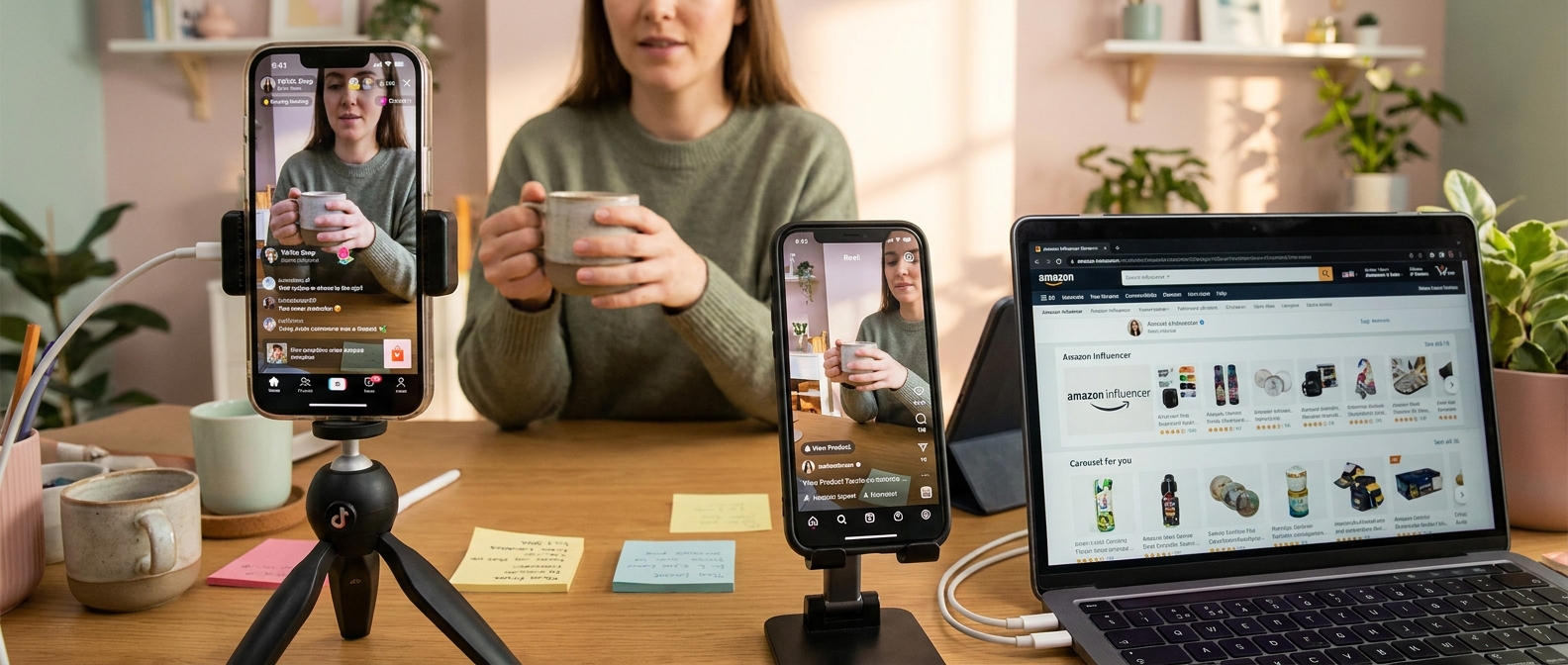
If you make money from creator shopping tools, you already know the stress. One week TikTok Shop is humming along, then a policy change lands. Amazon Influencer placements dip and the reporting looks foggy. Instagram changes shopping again and suddenly the flow you counted on feels half-built. That is why smart creators are quietly splitting their effort instead of putting their whole rent payment on one app. The goal is not to be everywhere in a chaotic way. The goal is to build one simple system where one product and one core piece of content can feed three different sales paths. If TikTok Shop slows down, your income should wobble a bit, not fall through the floor. If you are wondering how to do TikTok Shop Instagram shopping and Amazon Influencer at the same time, the short answer is this: one offer, three native formats, one weekly workflow, and clean tracking so you know what is actually paying you.
⚡ In a Hurry? Key Takeaways
- Yes, you should split across TikTok Shop, Instagram Reels and Amazon Influencer if shopping income matters to you. It cuts platform risk fast.
- Start with one hero product, make one short review or demo, then edit it into three platform-native versions instead of making three totally separate campaigns.
- Do not depend on one dashboard for the truth. Track links, payouts, posting dates and conversion notes in your own spreadsheet.
Why the “platform splitter” approach is catching on
Creators used to be told to focus on one channel and go all in. That still makes sense for audience building. It makes less sense for income protection.
Shopping revenue is different from views or followers. It is tied to policies, product eligibility, payout timing, placement rules and platform moods. Those can change fast.
So the new move is simple. Keep your voice consistent, but spread your checkout paths.
Think of it like this. Your content is the engine. TikTok Shop, Instagram shopping, and Amazon Influencer are three roads. If one road closes, the engine still runs.
What each platform is actually good at
TikTok Shop
TikTok Shop is strong when you have a product that benefits from a quick demo, a before-and-after, a reaction, or a live angle. It is built for impulse. People see, want, tap, buy.
The upside is speed. The downside is that creators can get rattled by payout freezes, compliance checks, shipping rules, or category changes.
Instagram Reels and shopping
Instagram is often better for trust and repeat exposure. A Reel can introduce the item. Stories can answer objections. A product tag or shop path can catch buyers later.
The upside is brand feel and audience familiarity. The downside is that shopping features keep changing, and not every account gets the same clean path.
Amazon Influencer
Amazon works well when buyers are already close to purchase. They know the item. They want proof, comparison, or a quick opinion before they click.
The upside is strong buying intent. The downside is that video placement and reporting can feel unpredictable, which makes some creators nervous about building too much around it.
The big mindset shift. Stop making “platform content” first
Make “buyer decision content” first.
That means your content should answer one of these questions:
- What problem does this product solve?
- Who is it for?
- Is it worth the money?
- How do you use it?
- What makes it better or worse than the alternative?
If your video answers those clearly, it can be adapted for all three places.
How to do TikTok Shop Instagram shopping and Amazon Influencer at the same time
Here is the practical setup. Keep it boring. Boring systems make money.
Step 1. Pick one hero product at a time
Do not start with ten products. Start with one.
Your hero product should be:
- Easy to show on camera
- Useful within 3 to 10 seconds of explanation
- Available on at least two of your platforms, ideally all three
- Unlikely to trigger confusing policy issues
If the same item is available in TikTok Shop and on Amazon, great. If Instagram shopping is direct for your own store, even better. If not, Instagram can still work as the trust-building layer that sends people toward your best shopping path.
Step 2. Make one master content block
Create one 30 to 60 second master video.
Use this simple structure:
- Hook. What problem are you fixing?
- Show the product fast.
- Demo it in real life.
- Say who it is for.
- Give one honest pro and one honest limit.
- End with a platform-friendly call to action.
Example: “If your phone always dies in your bag by 3 p.m., this tiny charger is why mine does not anymore.” Then show it. Use it. Mention size, charging speed, and one drawback. Done.
Step 3. Cut three native versions
This is where many people get lazy and lose money. Do not post the exact same file everywhere and call it strategy.
Make three versions from the same master.
TikTok Shop version: Faster hook, stronger demo, creator-style voice, clear product anchor. Think urgency and usefulness.
Instagram Reels version: Slightly cleaner edit, tighter captions, more lifestyle feel, stronger visual polish. Think trust and saveability.
Amazon Influencer version: More direct, less trendy, more practical. Think review energy, clear product benefit, simple proof.
Same product. Same core footage. Different finish.
Step 4. Build three shopping flows, not one
This matters more than people think.
Each platform should have its own native buying path.
- TikTok Shop: Product-tagged video, eligible listing, optional live mention, and comments ready for common questions.
- Instagram: Reel plus Story follow-up, product tag or shop link if available, and a highlight that keeps the item visible after 24 hours.
- Amazon Influencer: On-site video posted to the right product page, idea list or storefront placement where relevant, and a simple caption that matches buyer intent.
The mistake is forcing one platform’s buying behavior onto another. TikTok likes speed. Instagram likes familiarity. Amazon likes certainty.
Step 5. Use your own tracking sheet
If you only trust platform dashboards, you are flying half-blind.
Make a simple spreadsheet with these columns:
- Product name
- Date posted
- Platform
- Video angle or hook
- Link or listing used
- Views
- Clicks if available
- Orders or commissions
- Payout received date
- Notes on comments, issues, or policy flags
This helps you spot what is actually happening when one platform goes weird for a week.
A simple weekly workflow that normal people can keep up with
You do not need a media company setup. You need a routine.
Monday. Pick the product
Choose one hero item. Check stock, listing quality and platform eligibility.
Tuesday. Shoot the master video
Film one main demo plus 3 to 5 extra close-ups or use shots.
Wednesday. Edit the platform cuts
Make your TikTok, Instagram and Amazon versions.
Thursday. Publish TikTok and Amazon
TikTok often benefits from speed and quick comment follow-up. Amazon content can start aging on product pages.
Friday. Publish Instagram Reel and Stories
Use Stories to answer questions that came up on TikTok or Amazon. That saves time and makes Instagram feel more personal.
Weekend. Review the numbers
Do not obsess over one day. Look for patterns over a few weeks.
How to choose what goes where
Send your best impulse product to TikTok first
If the item has an obvious wow moment, TikTok is usually your test lab.
Send your trust-building content to Instagram
If the product needs context, styling, routine use, or a little more warmth, Instagram often helps.
Send your “already shopping” products to Amazon
If people are searching for a blender, desk lamp, tripod, or storage bin, Amazon is often where they want the final nudge.
Common mistakes that make multi-platform harder than it needs to be
Trying to grow three separate brands
You do not need three personalities. You need one clear point of view.
Ignoring platform-native details
Amazon buyers do not need a dance trend. TikTok viewers do not want a dry product lecture. Instagram needs a cleaner visual experience than many TikTok clips.
Using different products on every platform
That creates a mess. One product across three platforms teaches you faster.
Skipping backup income logic
The point is not just more reach. It is lower risk.
If one payout is delayed, the other two should still be moving. That is the whole game.
How to hedge before Q4 without burning out
Q4 is where many creators panic and overpost. Better idea. Build the system now.
By the time the holiday rush arrives, you want:
- 5 to 10 hero products already tested
- A repeatable edit style
- A tracking sheet with real history
- A feel for which products win on which platform
That way, when shopping traffic spikes, you are not guessing. You are repeating what already worked.
What success actually looks like
Success is not equal revenue from all three platforms.
It is better than that.
Success is when no single platform controls your mood, your planning, or your bank balance. Maybe TikTok drives discovery. Instagram helps people trust you. Amazon closes people who are ready to buy. That is a healthy mix.
At a Glance: Comparison
| Feature/Aspect | Details | Verdict |
|---|---|---|
| Best use case | TikTok Shop is great for impulse demos, Instagram for trust and repeat exposure, Amazon Influencer for high-intent buyers near checkout. | Use all three for different parts of the buyer journey. |
| Content workflow | One master product video can be cut into three versions with different pacing, captions and calls to action. | This is the easiest way to scale without doubling your workload. |
| Income safety | Each platform has changing rules, placements and reporting. Splitting your effort spreads that risk. | Do it before you need it, not after one platform slips. |
Conclusion
If your shopping income depends on one platform behaving perfectly, you are carrying more risk than you need to. Right now TikTok Shop sellers are watching policy shifts and logistics changes in real time, Amazon Influencers are complaining that reporting and placements feel less reliable, and Instagram’s shopping tools keep changing under their feet. So if you are asking whether to double down or hedge before Q4, the smart answer is usually both. Keep building where you are strongest, but put a backup structure in place now. One product. One core content block. Three platform-native shopping flows. That gives you immediate protection and a real path to growth. You keep the upside of TikTok, Instagram and Amazon without getting trapped by any one of them. At this point, multi-platform is not a fancy extra. It is basic survival, and a pretty sensible one.