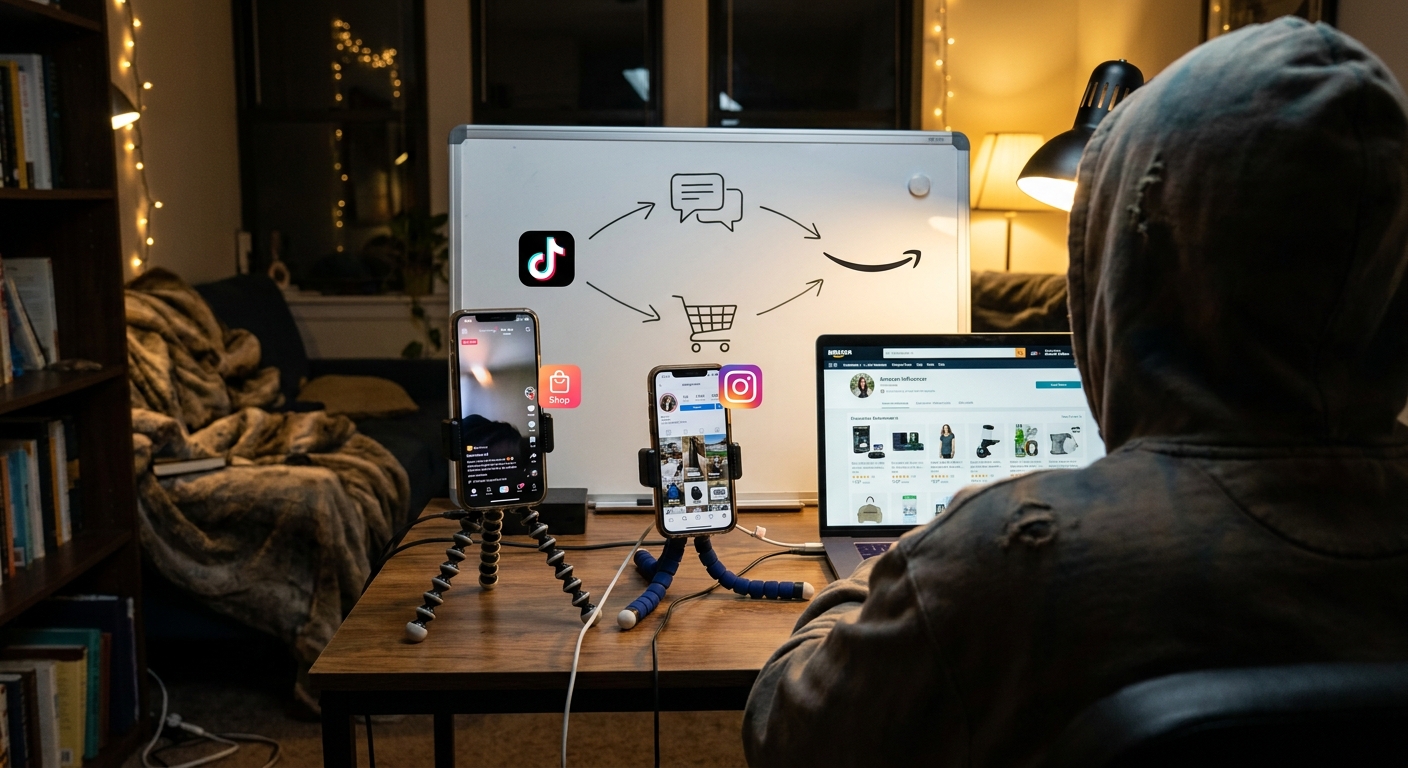
If you sell online, this is the kind of change that can sneak up on you. One day TikTok feels like a place for quick product demos and impulse buys. The next, it starts looking like the place where people discover you, ask questions, pay you, and come back again without ever leaving the app. That is exciting, but also a little unsettling. A lot of small brands, creators, and Amazon influencers are still treating TikTok Shop like a side project while putting their real strategy somewhere else. That may be a mistake. The bigger story is not a flash sale or a tiny feature tweak. It is that TikTok appears to be stitching together shopping, messaging, and payments into one tighter system. If that keeps moving forward, your sales strategy needs to change too. Not by betting everything on TikTok, but by using it wisely before your competitors do.
⚡ In a Hurry? Key Takeaways
- TikTok Shop is starting to look less like a simple storefront and more like a super app that mixes discovery, chat, checkout, and repeat buying.
- Start building a cross-platform funnel now. Use TikTok for attention and first contact, then use Instagram, YouTube, email, and your own store to deepen trust and keep customer access.
- Do not hand over your whole business to one app. If rules, reach, or fees change, your customer list and backup channels can save your income.
The real shift is bigger than shopping
Most people hear “TikTok Shop” and think cheap gadgets, beauty finds, and creators saying, “I did not expect this to be so good.” That is still part of it. But the more important move is what is happening around the sale.
TikTok is making it easier for shoppers to stay inside its world. They can find a product in a video, ask about it, get nudged toward a purchase, check out, and potentially return again, all with fewer reasons to click away. Add messaging and payment tools into that mix, and you no longer have “just another sales channel.” You have the start of a super app model.
That matters because super apps are sticky. Once people can browse, chat, buy, and pay in one place, they tend to stay there. Convenience wins.
Why this matters for small brands and creators right now
If you are a small business owner, a solo creator, or someone making affiliate income from Amazon and social platforms, your biggest risk is usually not bad content. It is dependency.
Too many sellers build their whole plan around one platform at a time. First it was Facebook. Then Instagram. Then Amazon. Then short-form video. Every time, the same thing happens. Early movers do well. Late adopters copy tactics. Then the platform changes the rules.
TikTok’s shopping, messaging, and payments strategy changes the game because it tightens the loop between attention and transaction. That is powerful. It can also trap you if you mistake rented ground for owned ground.
What the “super app shuffle” really means
Think of the big platforms as shuffling roles.
TikTok is moving from entertainment app toward relationship and commerce hub. Instagram still has strong brand presence and DMs, but shopping has felt less central than before. YouTube remains excellent for trust and long-term search value, but it is slower to convert impulse purchases. Amazon is still brilliant for ready-to-buy shoppers, but weak at helping you own the relationship.
So the shuffle is this. TikTok is trying to handle more of the full customer journey inside one app, while many sellers are still planning as if each platform only does one job.
What a WeChat-style path could look like
No, TikTok is not suddenly turning into WeChat overnight. But the direction matters. A WeChat-style setup means one app becomes the front door to several parts of daily digital life.
For commerce, that often includes:
Discovery
A user finds your product through video, live streams, recommendations, or creator mentions.
Conversation
They ask questions through chat or direct messages instead of leaving to hunt through your website.
Transaction
They pay inside the app with fewer steps and less second-guessing.
Retention
They come back through notifications, repeat offers, live events, and creator follow-ups.
That kind of closed loop is gold for a platform. It is also a warning sign for sellers who have not built any customer path outside it.
So should you go all in on TikTok Shop?
No. But ignoring it would be just as risky.
The smart move is not “all in.” It is “first in, with backups.”
You want TikTok to become your discovery engine and early relationship builder. Then you want other channels to support trust, search visibility, repeat orders, and list building. That gives you reach without becoming trapped.
A practical sales strategy for the next 90 days
If you want a tiktok shop super app shopping messaging payments strategy that protects your income, keep it simple.
1. Treat TikTok as the top of the funnel
Use TikTok for product discovery, creator partnerships, social proof, and fast feedback. Post demos. Answer objections. Show before-and-after use. Run short clips that solve one problem at a time.
The goal is not just views. It is getting people interested enough to ask, click, save, or buy.
2. Build message-ready selling assets
If messaging becomes a bigger part of the shopping flow, your team or your creator partners need fast answers ready.
Prepare responses for:
- Shipping times
- Sizing or compatibility questions
- Returns
- Discount timing
- Best product for a specific need
Think of this as your digital shop counter. If people can ask and buy in the same session, slow replies will cost you sales.
3. Keep your own customer list growing
This is the part people skip until it hurts. Every order should be a chance to build a customer relationship you control. That can mean email signup, SMS opt-in, warranty registration, VIP club access, or post-purchase education on your own site.
If TikTok sends the first sale, great. But do not let TikTok own every future sale too.
4. Use YouTube and Instagram for trust, not just duplication
Do not repost the same content everywhere and call it a strategy. Give each platform a job.
Use TikTok for quick hooks and fast conversion moments. Use Instagram for community and DMs. Use YouTube for reviews, comparisons, tutorials, and buyer reassurance. Use Amazon for shoppers who already trust Amazon’s checkout and shipping experience.
5. Make repeat buying easy outside the app too
If someone loves your product, the second order should not depend on them stumbling across another video. Include inserts, follow-up emails, bundles, refill offers, and loyalty rewards where allowed.
The first sale may be impulsive. The second sale should be planned.
What creators and Amazon influencers should do differently
This matters just as much if you are not a brand, but a person with an audience.
Many creators still think in terms of links. One post, one link, one commission. TikTok’s shift suggests that the stronger play may be relationship-based selling inside a tighter app loop.
That means creators should start asking better questions:
- Can I answer buyer questions quickly?
- Can I build trust beyond a one-time product mention?
- Am I collecting any audience access outside this platform?
- Do I have content on YouTube or Instagram that helps people who need more proof before buying?
If your entire income depends on whichever platform is hot this quarter, you do not have a business yet. You have exposure.
Three mistakes to avoid
1. Chasing every TikTok rumor
Feature gossip is distracting. The strategic signal matters more. TikTok is trying to reduce the number of steps between interest and payment. Plan around that.
2. Copying old Instagram tactics
TikTok buying behavior is often faster, more reactive, and more creator-led. A polished brand page alone is not enough. People want proof, personality, and quick answers.
3. Forgetting platform risk
If all your product discovery, support, checkout, and repeat orders sit inside one app, one policy shift can hit all four at once.
How to tell if this strategy is working
You do not need a complicated dashboard to start. Watch these signs:
- More direct product questions coming from TikTok users
- Better conversion on videos that answer buying objections
- Higher repeat purchase rates from customers who also join your list
- Improved sales when TikTok content is supported by YouTube reviews or Instagram follow-up content
If TikTok becomes stronger at keeping discovery, chat, and checkout together, your winners will usually be the brands and creators that remove friction but still keep a bridge to owned channels.
At a Glance: Comparison
| Feature/Aspect | Details | Verdict |
|---|---|---|
| TikTok’s role | Moving beyond short videos toward discovery, messaging, checkout, and repeat buying in one place. | Great growth opportunity, but do not rely on it alone. |
| Best strategy for brands | Use TikTok for first contact and momentum, then move customers into email, SMS, your site, Instagram, YouTube, and other channels you control. | Best balance of growth and safety. |
| Biggest risk | Letting one platform own discovery, support, payment, and customer access all at once. | Avoid by building a cross-platform funnel now. |
Conclusion
The useful takeaway today is not that TikTok has one more shopping feature. It is that TikTok is clearly signaling something bigger. It wants to be more than a video app. It wants to be an all-in-one shopping, messaging, and payment layer. For small brands, creators, and Amazon influencers, that matters a lot more than the latest algorithm rumor. If TikTok becomes the place where discovery, chat, checkout, and repeat orders all happen, the people who build a smart cross-platform funnel now will be in a much stronger position later. Use TikTok as the discovery and relationship engine. Then use Instagram, YouTube, Amazon, email, and your own store to deepen trust, diversify revenue, and keep control of your customer list. That is how you stay flexible, protect your income, and avoid getting caught flat-footed in the next platform shuffle.