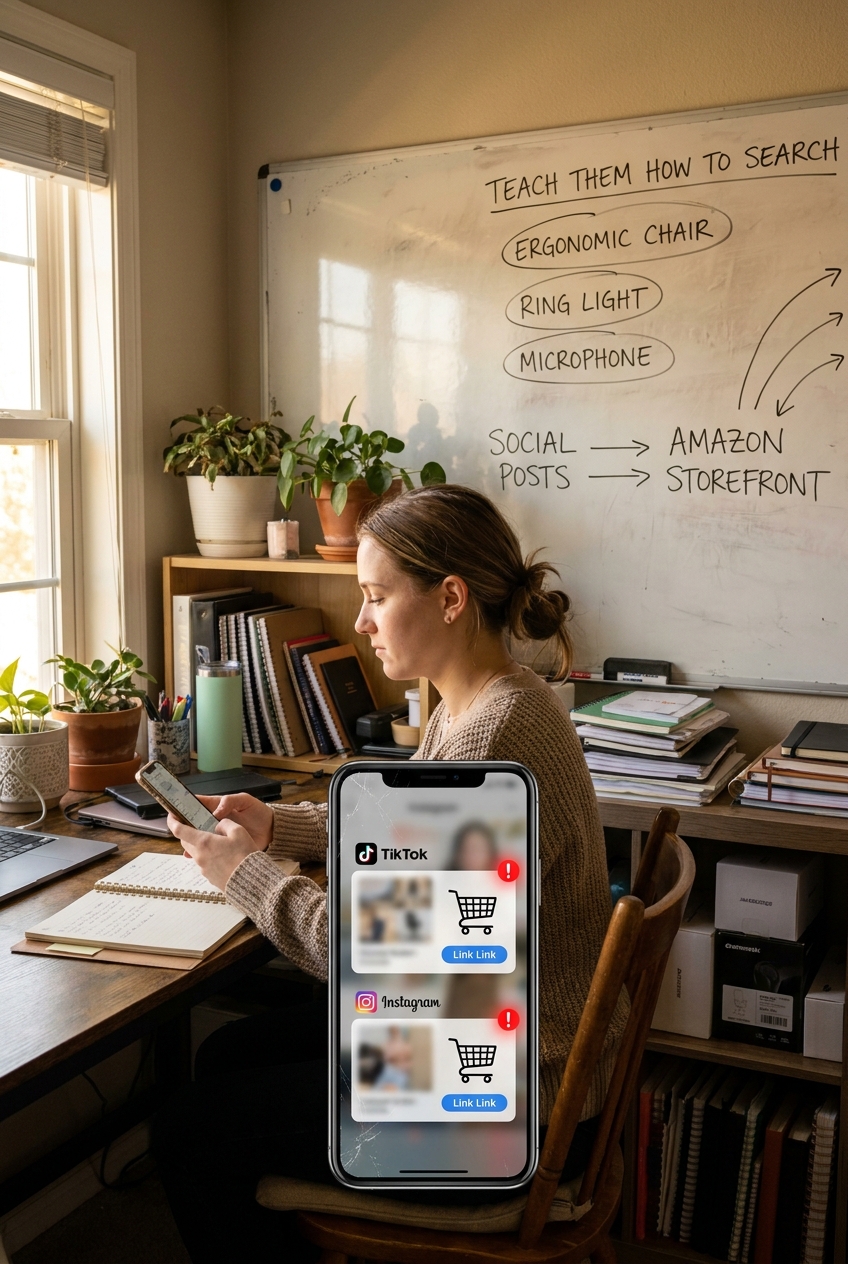
If you woke up to fewer clicks, more side-eye in the comments, and people proudly saying they “never click Amazon links,” you are not imagining it. A fresh wave of posts is telling shoppers to avoid creator links, especially Amazon and TikTok Shop links, because of cookies, tracking, and affiliate commissions. For creators and small brands, that hits right where it hurts. You can make a great video, build trust, spark interest, and still watch people copy the product name into search instead of tapping your link. That feels unfair, especially when affiliate income is part of how you keep making useful content. But this is not the end of social commerce. It is a behavior shift. People still want the product. They just want more control over how they buy it. If your plan has been “drop the link and pray,” it is time to change the playbook.
⚡ In a Hurry? Key Takeaways
- Shoppers not clicking Amazon influencer links does not mean they are not buying. It means they are buying through search, screenshots, and direct store visits instead.
- Start putting exact product names, model numbers, and easy on-screen search cues in your videos and captions so viewers can find your picks fast.
- A cleaner Amazon Influencer storefront and clear disclosure can help protect trust, even when people are skeptical about cookies and commissions.
What changed, and why it matters right now
The mood shifted fast. Over the last day, more shoppers have been sharing a simple message. Don’t click the link. Search for it yourself. The reasons vary, but they usually come down to privacy, tracking cookies, and not wanting creators to get a commission.
That last part may sting, but it is better to face it than pretend it is not happening. A growing slice of viewers enjoys creator content while avoiding the actual link. They will watch the review, save the video, screenshot the product, and then go buy it another way.
For anyone focused on shoppers not clicking amazon influencer links, this is the new problem to solve. Attention is still there. Intent is still there. The click is what is disappearing.
The new shopper behavior: watch everything, click nothing
This behavior is not as irrational as it sounds. Many shoppers have become more aware of how online tracking works, even if they only know the basics. Some believe every affiliate link follows them around the web. Some just do not like feeling “sold to.” Others think skipping the link helps them get a better price, even when it usually does not.
And yet they still love recommendation videos.
That is the contradiction. Social commerce content still works. Product demos still drive demand. The buyer just wants one extra step between your content and their cart.
What this looks like in real life
A viewer sees your “best desk gadgets” video. They love the lamp, the cable organizer, and the tiny USB fan. Instead of clicking, they pause the video, zoom in on the box, and search Amazon directly. Or they type a rough version of the name into TikTok Shop and hunt for it there. You created the sale, but the platform may not credit you for it.
Why “just use better links” is not enough
Some creators will respond by changing link shorteners, hiding affiliate URLs, or pushing harder with “link in bio” reminders. That may squeeze out a few more clicks, but it does not fix the trust problem.
If people are actively choosing not to click, friction is now part of the shopping journey. Your job is to reduce that friction without sounding defensive.
Think of it like a store where customers want to browse without talking to staff. If you chase them around the aisles, they leave. If you label the shelves clearly, they buy.
How to win buyers who refuse to click
1. Put the exact product name on screen
This is the biggest quick fix. Stop making viewers guess. If you say “my favorite milk frother” but never show the full brand and model, people will either give up or buy a different item.
Include the exact product name in the video itself, not just the caption. Better yet, add:
- Brand name
- Full product title
- Model number if there is one
- Color or size if that matters
That helps the viewer find the right product whether they click or search. It also makes your content more useful, which builds trust.
2. Add “search this” cues instead of only “click here” cues
This is where many creators need to loosen their grip. If shoppers want to search, help them search.
Try on-screen text like:
- Search: “OXO Good Grips salad spinner”
- Amazon search: “Anker 3-in-1 cube”
- Storefront tab: “Kitchen favorites”
This sounds small, but it respects the viewer’s preference. Ironically, that can make them more likely to trust your storefront later.
3. Organize your Amazon Influencer storefront like a real store
If people are avoiding direct links but still willing to browse your storefront, make that storefront easy to use. Too many creator storefronts are a junk drawer. Random products. No categories. No logic.
Use clear idea lists and sections such as:
- Under $25
- Kitchen tools I actually use
- Travel gear worth packing
- Desk setup basics
- Seen in my videos
One of the smartest moves right now is creating a “Seen in Videos” list with the exact item names viewers keep asking about. If they do not want your direct product link, they may still use your storefront as a map.
4. Say the quiet part out loud
People can smell dodgey behavior. If you act weird about commissions, trust drops fast. Be plain about it.
Something as simple as, “If you use my link, I may earn a small commission at no extra cost to you. If you’d rather search it yourself, here’s the exact name,” can calm things down.
That line does two useful things. It discloses the affiliate relationship, and it shows you are not trying to trap anyone into clicking.
5. Make your captions searchable, not cute
Funny captions are fine. Searchable captions pay the bills.
If your caption says, “This little thing changed my life,” that is entertaining but not useful for a link-shy shopper. If it says, “Product: ThermoPro TP19H meat thermometer. Search this on Amazon if you don’t want to use the link,” now you are helping people act.
Use plain language. Use the product name early. Think like the person who is half-watching while folding laundry and plans to search later.
6. Build comment-friendly buying paths
Comments are where this trend will show up first. People will ask for the name instead of the link. Good. Meet them there.
Pin a comment with:
- The exact product name
- Your storefront category
- A short note about affiliate links
Example: “It’s the Ninja Creami NC301. It’s also in my Amazon storefront under ‘Kitchen favorites.’ If you use the direct link I may earn a commission, but feel free to search it too.”
That kind of response feels calm and transparent. It lowers resistance.
What small brands should do if creators are seeing fewer clicks
If you run a small brand, do not panic if your creator partners report softer affiliate numbers. It may not mean the campaign failed. It may mean attribution got messier.
Ask creators to include product names clearly in video and audio. Give them a short, consistent naming format. If your product title is a tangled mess, simplify how it is spoken on social. “GlowSip 40oz Tumbler with Handle” is easier to remember than a giant keyword-stuffed listing title.
You should also track lift beyond affiliate clicks. Look at branded search volume, direct Amazon traffic, storefront traffic, and even repeat comments asking where to find the product. Those are clues that the content is still moving buyers.
What not to do
Do not guilt your audience
Saying “support me by clicking my link” is honest, but overdoing it can backfire. If people already feel defensive about tracking and commissions, guilt adds more friction.
Do not hide what the product is
Some creators try to force clicks by withholding the name. That might get a short-term bump, but it burns trust. Once people feel manipulated, they stop engaging.
Do not depend on one platform path
If all your income depends on a single link type, you are exposed. Today it is backlash over affiliate links. Tomorrow it could be a platform change, a storefront bug, or a commission cut.
A better strategy for 2026: content first, click second
The creators who handle this well will stop treating the link as the star of the show. The content is the star. The link is just one route to purchase.
That means your job is to make the buying path flexible:
- Clickable link for shoppers who are fine with it
- Exact product name for shoppers who want to search
- Organized storefront for people who want to browse
- Pinned comments for people who decide later
This is less about squeezing every click and more about becoming reliably useful. When viewers trust that you are helping, not cornering them, they keep coming back.
At a Glance: Comparison
| Feature/Aspect | Details | Verdict |
|---|---|---|
| Direct affiliate links | Fastest path to attribution, but some viewers now avoid clicking due to cookie and commission concerns. | Still useful, but no longer enough on its own. |
| On-screen product naming | Shows the exact brand, product name, and model so viewers can search on their own. | Best immediate fix for shoppers not clicking amazon influencer links. |
| Amazon storefront structure | Organized lists like “Seen in Videos” and clear categories help viewers browse without needing a direct product link. | Strong long-term move for trust and conversion resilience. |
Conclusion
This helps the community today because creators and small brands are waking up to a new reality where viewers openly avoid affiliate links but still binge social commerce content. The good news is that interest has not disappeared. It has simply changed shape. If you adapt to this watch-everything, click-nothing behavior with smarter product naming, on-screen search cues, and a better Amazon Influencer storefront, you can protect your income from sudden drops in link clicks, platform policy changes, and rising creator skepticism. The goal now is simple. Make it easy to buy, even when people do not want to click. If you do that well, you stay useful, trusted, and much harder to ignore.