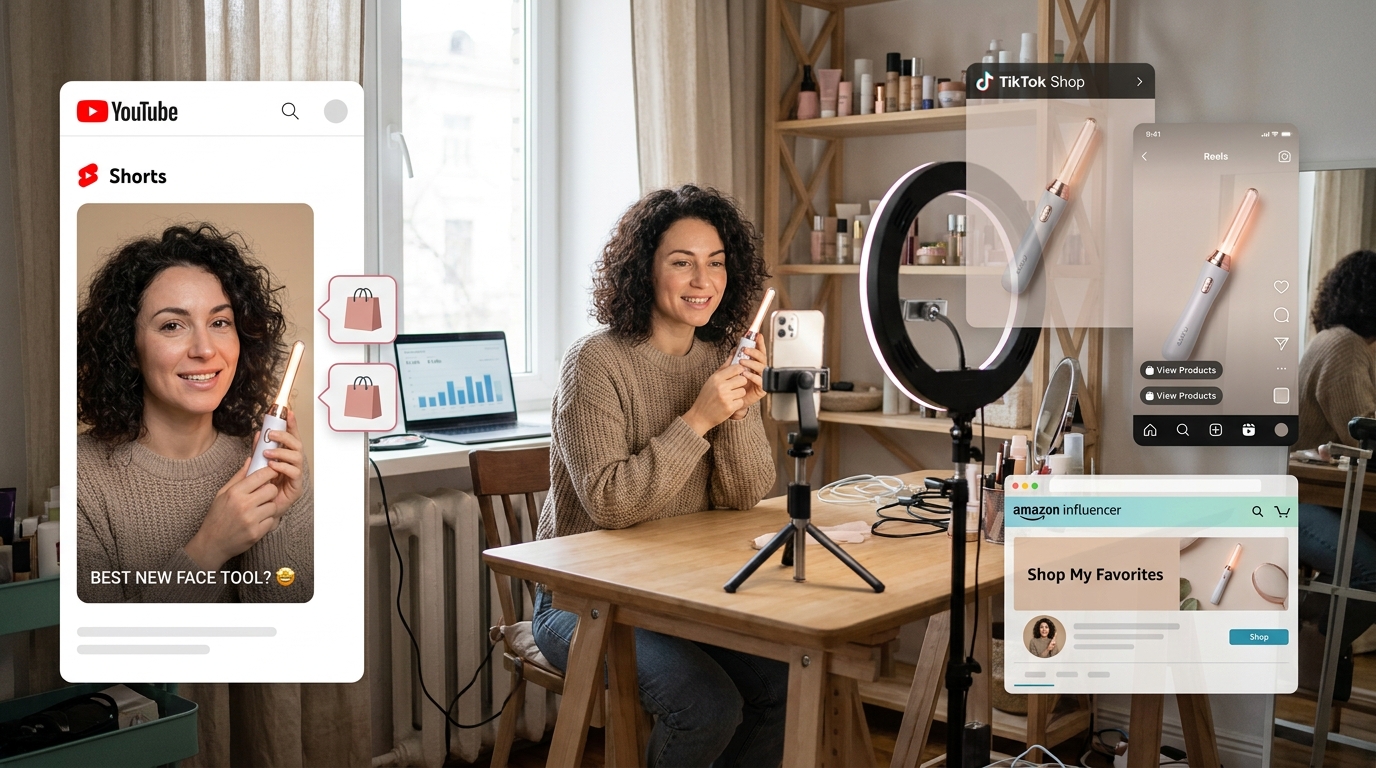
YouTube keeps tapping you on the shoulder to turn on Shopping and tag products in Shorts. I get why many creators have ignored it. Nobody wants to make videos feel like a yard sale, tank their views, or spend hours tagging products that never sell. That hesitation made sense last year. It is a little harder to ignore now. YouTube has quietly added a new twist to its YouTube Shopping affiliate partnerships boost bonus strategy. For a limited window, some Shopping Shorts can be “boosted” by brands and used as paid ads, while the creator can earn a cash bonus on top of normal affiliate commissions. That changes the math. Suddenly, tagging products is not just about hoping a few viewers buy. It can also turn an existing Short into something a brand may put ad dollars behind. If you have been stuck choosing between YouTube Shopping, TikTok Shop, Instagram, or Amazon, this is a rare chance to test without guessing.
⚡ In a Hurry? Key Takeaways
- YouTube’s limited-time Shorts boost bonus means some tagged Shopping Shorts can earn you a cash bonus plus regular affiliate commissions if brands choose to boost them as ads.
- The smart move is to post the same product story across YouTube Shorts, TikTok, Instagram, and Amazon-style placements, then compare clicks, conversions, and watch performance during the June 15 to July 15 2026 test window.
- Do not tag random junk just to chase the bonus. Pick products that already fit your audience, or you risk cluttering your videos and muddying your data.
What this YouTube bonus actually means
Here is the plain-English version. YouTube is pushing Shopping harder, especially in Shorts. The new piece is that select Shopping Shorts can be picked for a temporary bonus setup where brands pay to boost your already-posted tagged content as ads. If your clip is boosted during the June 15 to July 15 2026 window, you may earn extra cash on top of your normal affiliate cut.
That matters because it gives creators two ways to make money from one video. First, the usual affiliate commission if someone buys. Second, a possible bonus if the branded, tagged Short gets boosted.
It is not magic money. Not every creator will get it. Not every Short will be boosted. And not every product should be tagged. But it does turn YouTube Shopping from “maybe useful someday” into “worth a controlled test right now.”
Why creators have been dragging their feet
The fear is real. Shopping features can make creators worry about three things.
1. Killing the vibe of the video
People come for entertainment, advice, or personality. If every Short starts screaming “buy this,” viewers tune out.
2. Hurting reach
Many creators suspect tagged content gets treated differently by the algorithm, even when there is no clear proof. That alone can stop people from experimenting.
3. Picking the wrong platform
TikTok Shop looks hot. Amazon feels familiar. Instagram is still in the mix. YouTube has scale, but many creators are unsure whether viewers are actually ready to shop there.
This is exactly why the bonus window is useful. It gives you a reason to run a real test instead of arguing with yourself in circles.
The smart play is not “go all in.” It is “run a clean test.”
If you want a sensible YouTube Shopping affiliate partnerships boost bonus strategy, think like a small business owner, not a gambler.
Start with one product story, not ten random tags
Pick one product category that already fits your channel. If you make cooking Shorts, maybe it is one air fryer accessory. If you make beauty content, maybe one tinted sunscreen. If you review desk setups, maybe one budget light bar.
Then build one simple story around it. A problem. A quick demo. A result. Keep that story as similar as possible across platforms.
Post versions of the same idea everywhere
Use the same product angle on:
- YouTube Shorts with Shopping tags
- TikTok Shop or a TikTok affiliate version
- Instagram Reels with product links if available
- Amazon storefront or affiliate link placement where it makes sense
You are not copying lazily. You are controlling the variables. That is how you get useful data.
Track four numbers, not just views
Views are nice. They are not enough. Watch these instead:
- Click-through rate on the product
- Conversion rate or actual sales
- Average watch time and completion rate
- Total earnings, including any YouTube boost bonus
A platform with fewer views can still win if buyers there actually convert.
How to keep Shopping Shorts from feeling like ads
This is where many people get into trouble. They tag products before they earn trust. The fix is simple.
Lead with the problem
Bad: “Here is a blender you should buy.”
Better: “My protein shakes kept coming out chunky until I changed one thing.”
Show, do not pitch
Demonstrate the product in use. Keep the language natural. If your Short still works even with the sound off, you are on the right track.
Tag only what matters
If the star of the video is one item, tag that one item. Do not turn a 20-second clip into a mini catalog.
Make the video useful even if nobody buys
The best shopping content still teaches, solves, compares, or entertains. The product is part of the answer, not the whole point.
Who should try this right away
This bonus test is especially worth your time if you fit one of these groups:
- Creators already posting Shorts regularly
- Channels with natural product tie-ins like beauty, tech, home, fitness, food, parenting, or DIY
- Amazon affiliates who want another sales path
- TikTok Shop creators who want a backup plan
- Smaller creators who need better proof before committing to one platform
If your content has nothing to do with products, do not force it. A shopping tag is not a personality trait.
Who should be careful
Not every creator should sprint into this.
Very trust-based niches
If your audience follows you for serious advice, mental health support, personal finance guidance, or highly sensitive topics, product tagging can feel jarring if handled badly.
Creators without clear disclosures
Be upfront when content includes affiliate links or paid promotion elements. Clear labeling protects trust and keeps you on safer ground with platform rules.
Anyone chasing bonus money with bad-fit products
Short-term cash can do long-term damage if the items do not match your audience. A boosted clip is not helpful if viewers feel tricked.
A simple 30-day testing plan
If you want to use this window well, keep the plan boring and disciplined.
Week 1: Pick your product lane
Choose one to three products max. Prefer products you already use, can explain quickly, and can demonstrate visually.
Week 2: Create three angles
Make Shorts around:
- A problem/solution angle
- A comparison angle
- A “what surprised me” angle
Week 3: Publish across platforms
Post equivalent versions to YouTube, TikTok, Instagram, and your Amazon-related setup if you use one. Try to keep timing similar.
Week 4: Review hard numbers
Look at sales, watch time, click behavior, comments, and any bonus activity from YouTube boosts. Then decide what deserves more of your time in Q3.
What not to assume about the bonus
Do not assume this turns every creator into a paid ad machine. It does not.
- It is limited-time.
- It appears to apply to select Shopping Shorts.
- Brand boost interest will likely depend on product fit, video quality, and performance.
- Your regular affiliate earnings still matter more than the bonus if you are thinking long term.
So yes, the bonus is exciting. But the real value is the test environment it creates. It gives you a cleaner way to compare platforms while there is extra upside on YouTube.
At a Glance: Comparison
| Feature/Aspect | Details | Verdict |
|---|---|---|
| YouTube Shopping bonus upside | Some tagged Shorts can earn normal affiliate commissions plus a limited-time cash bonus if brands boost them as ads during June 15 to July 15 2026. | Worth testing now |
| Risk to viewer experience | Over-tagging or forcing product mentions can make Shorts feel cluttered and less authentic. | Keep tags selective |
| Best strategy vs other platforms | Run the same product story across YouTube, TikTok, Instagram, and Amazon-related channels so you can compare sales, watch time, and overall earnings. | Use side-by-side data, not gut feelings |
Conclusion
If you have been side-eyeing YouTube Shopping and waiting for a reason to care, this is probably it. The limited-time bonus does not guarantee easy money, but it does make the experiment more worthwhile. YouTube just turned select Shopping Shorts into something brands can boost as ads, and that boosted content can pay a cash bonus on top of affiliate commissions during the June 15 to July 15 2026 window. That gives creators a practical way to test YouTube against TikTok Shop, Instagram shopping, and Amazon storefront strategies without flying blind. Keep your product picks tight, make the videos genuinely useful, and compare results across channels. By the time Q3 rolls around, you should have real numbers instead of hunches. That is the kind of clarity most creators have been missing.