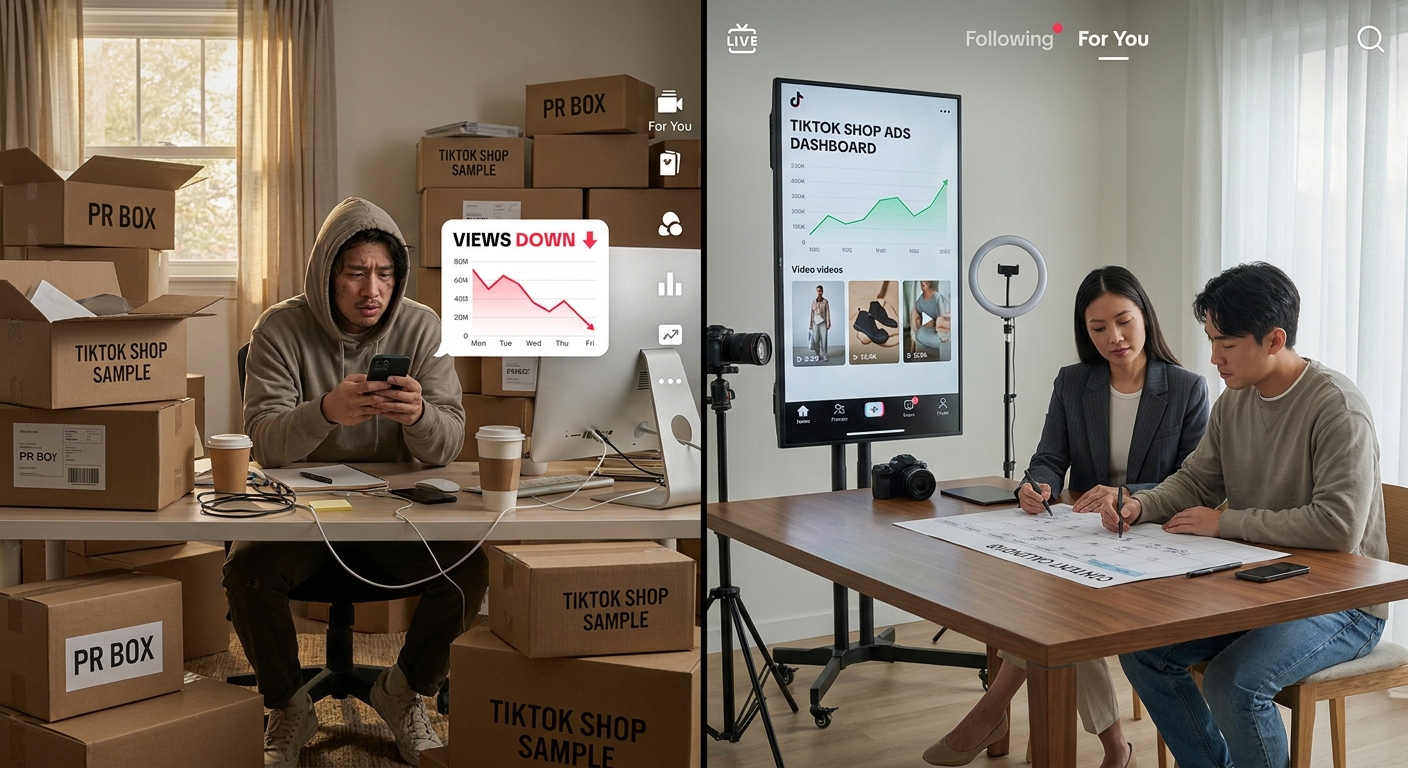
If your TikTok Shop numbers fell off a cliff in June, you are not imagining it. A lot of creators woke up to a harsh new reality. Free samples are not the easy growth engine they were a few months ago, and brands that used to ship products to dozens of affiliates are seeing a lot less return. That hurts, especially if your whole system depended on sending out product, posting a quick haul, and hoping one clip caught fire. TikTok Shop’s affiliate policy changes June 2026 seem to reward stronger content, clearer business terms, and actual sales performance, not volume for the sake of volume. The good news is this is not the end of TikTok Shop income. It is a reset. Creators need to act more like media partners. Brands need to stop treating samples like lottery tickets. The people who switch fastest to paid plus commission, tighter sample rules, and ad reuse will have the best chance of recovering fast.
⚡ In a Hurry? Key Takeaways
- TikTok Shop’s June 2026 changes made the old free-sample affiliate model far less reliable, especially for low-effort content.
- Creators and brands should move to paid plus commission deals, smaller test campaigns, and sample agreements tied to content quality or sales.
- The safest way to protect revenue now is to reuse your best affiliate videos in Shop Ads instead of relying only on organic reach.
What changed, in plain English
The biggest shift is simple. TikTok Shop appears to be giving less room to mass sample campaigns and weak affiliate posts. If a brand used to send 100 units to 100 creators and get 100 near-identical unboxings back, that playbook now looks shaky.
Creators are also feeling pressure from the other side. Samples do not automatically turn into views anymore. Some are finding that product-only deals are not worth the time, editing, posting, and follow-up. If a post flops, they worked for free.
That is why so many people are calling this a pay-to-post reality. Not because commission is dead. It is not. But because many creators now need a base fee, or at least a much better upside structure, before they can justify the work.
Why the old free-sample model stopped working
Too many low-effort posts flooded the system
TikTok Shop was built on speed. For a while, that worked. Brands mailed out products. Affiliates filmed quick clips. Some videos hit big. Plenty did not, but the winners covered the waste.
Then everyone copied the same formula. Feeds got crowded with repetitive haul videos, vague product praise, and almost no real testing. Users got bored. Platforms notice that stuff.
Free product is not really free
For brands, samples cost money, shipping, handling, and admin time. For creators, a “free” item still costs planning, filming, editing, revisions, and the risk of hurting audience trust with junk products.
Once visibility tightened, that hidden cost became impossible to ignore.
Sales matter more than activity now
The TikTok Shop affiliate policy changes June 2026 seem to push both sides toward better performance signals. That means fewer freebies, more selective partnerships, and more attention on conversion.
In other words, posting is no longer the win. Selling is.
What creators should do next
1. Stop accepting every sample
If you say yes to everything, your page turns into a clearance bin. That was risky before. Now it is even worse.
Be pickier. Ask yourself:
- Would I talk about this if no one paid me?
- Does this fit what my audience already likes?
- Can I make a useful video about it, not just an unboxing?
If the answer is no, pass.
2. Ask for paid plus commission
This is the cleanest reset for most creators. A small posting fee covers your time. Commission keeps you motivated to make something that sells. It also helps brands feel like they are paying for effort and results.
You do not need to act like a giant agency. Keep it simple:
- One video price
- Optional usage rights fee
- Commission rate
- Bonus if sales pass a target
That structure is easier to defend than “send me stuff and we’ll see what happens.”
3. Make videos that answer real buyer questions
Low-effort haul clips are getting squeezed. Useful content still has a chance.
Try angles like:
- What I liked after 7 days
- Who this product is actually for
- Before and after use
- 3 things I wish I knew first
- Comparison with a more expensive option
This kind of content helps people decide. Decision-making content usually sells better than generic excitement.
4. Negotiate usage rights early
If a brand wants to turn your post into an ad, that has value. Put that in writing before you post. A lot of creators leave money on the table here.
Even a modest creator can say, “My fee covers organic posting. Paid ad use is separate.” That is normal. It is not rude.
What brands should do next
1. Stop sending samples like confetti
This is the big one. If your plan is still “ship to everyone and hope,” you are probably wasting inventory.
Build smaller test groups instead. Pick creators based on fit, not just follower count. Ten well-matched creators can beat 100 random ones.
2. Use performance-gated sampling
If you are worried about paying too much up front, there is a middle ground.
Try deals like:
- Sample plus required content brief
- Paid post after concept approval
- Higher commission if sales target is hit
- Second sample wave only for creators who convert
This protects your budget without asking creators to gamble with all the risk.
3. Give creators a better brief
A vague message like “Make this go viral” is not a strategy.
Tell creators:
- The product’s best use case
- The buyer pain point
- The claims they can and cannot make
- The top comments or objections customers have
- Which older ads or posts actually converted
That gives them something useful to build on.
4. Turn winning affiliate posts into Shop Ads
This might be the most important fix of all. Organic reach is less predictable. If an affiliate video proves it can hook attention and drive clicks, do not just admire it. Put budget behind it.
Shop Ads can extend the life of a strong post and help you get more value from creators who already know how to sell your product.
This is where “pay to post” becomes less scary. If a creator makes a good video, and you can reuse it in ads, the math often works better than burning through piles of free samples.
A better deal structure for 2026
Here is a model that makes sense for both sides:
For creators
- Base fee for one post
- Commission on tracked sales
- Bonus tiers for hitting targets
- Extra fee for ad usage rights
For brands
- Start with a small batch of creators
- Approve content angles before shipping large quantities
- Track conversion, not just views
- Scale only the creators and videos that prove they work
That is less exciting than the old viral lottery system. It is also a lot more sustainable.
Red flags to watch for
For creators
- Brands asking for multiple videos for free
- No written agreement on timing or usage
- Products with shaky quality or questionable claims
- Commission-only deals on items with no proven demand
For brands
- Creators with nice views but no sign they can drive sales
- Cookie-cutter content that looks like every other Shop post
- Mass outreach with no audience matching
- Paying for posts but never testing top performers in ads
How to know if your new strategy is working
Do not judge the reset by vanity metrics alone. Look at:
- Conversion rate
- Cost per sale
- Revenue per creator
- Repeatability of winning content angles
- How well paid posts perform once used in Shop Ads
If a creator gets fewer views than before but sells more units, that is progress. If you send fewer samples but your return improves, that is progress too.
At a Glance: Comparison
| Feature/Aspect | Details | Verdict |
|---|---|---|
| Free-sample only campaigns | Low upfront cash, but weak control, lots of wasted product, and less reliable visibility after June 2026 changes. | Poor fit for most brands now |
| Paid plus commission deals | Covers creator effort, keeps performance incentive in place, and creates clearer expectations on both sides. | Best all-around reset |
| Reusing winning affiliate posts in Shop Ads | Turns proven content into a scalable sales asset instead of relying on organic luck alone. | Smart move for serious sellers |
Conclusion
TikTok Shop is not dead. The lazy version of it might be. That is the real story behind the TikTok Shop affiliate policy changes June 2026. The old free-sample, spray-and-pray setup broke fast, and a lot of creators and brands got caught standing in the middle of it. The fix is not complicated, but it does require a mindset change. Pay for real work. Tie bigger rewards to real sales. Be stricter about samples. Reuse the affiliate videos that actually perform in Shop Ads. That helps the community right now because both sides need a practical playbook, not more hype. If creators and brands make this reset now, they can still build something profitable instead of wasting another month chasing a system that no longer works the way it used to.