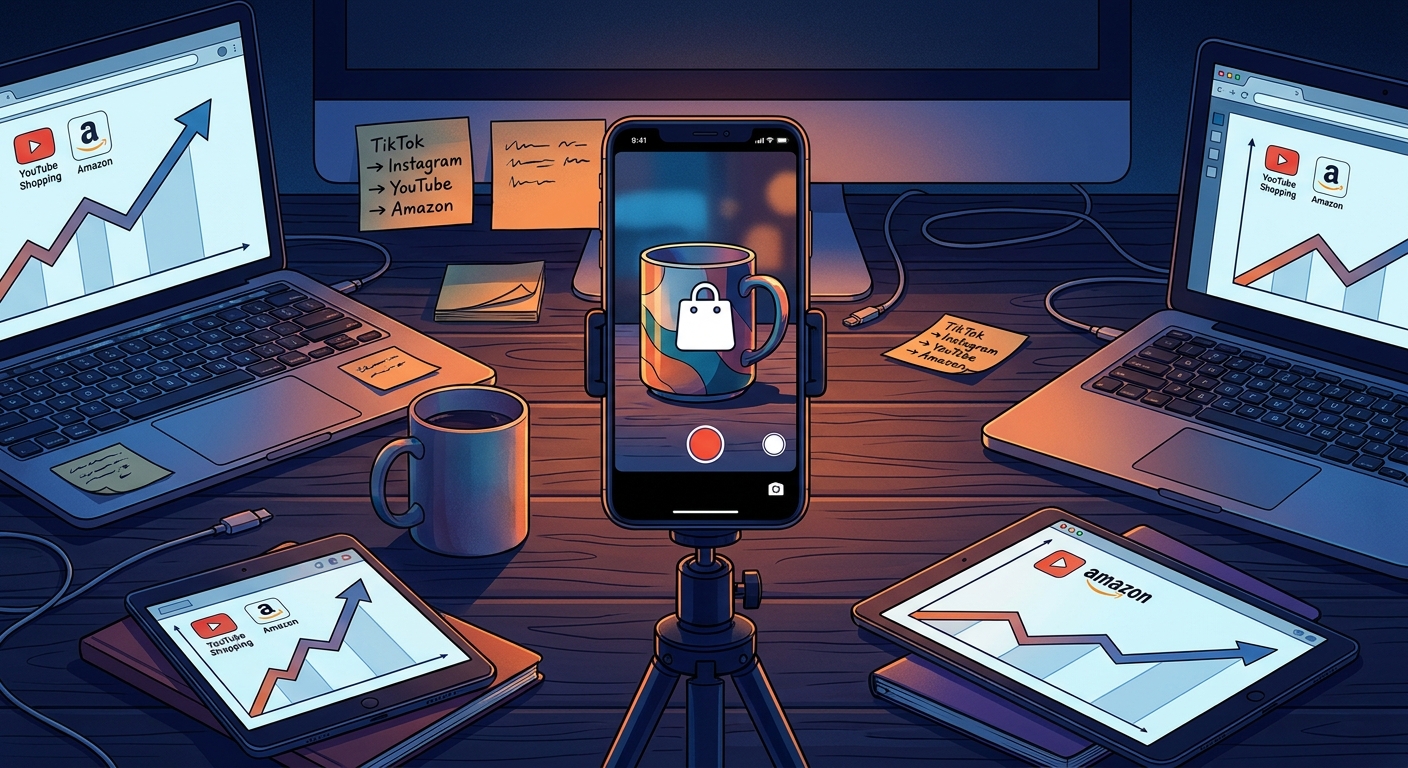
You post a Short. It gets views. Then a little shopping sticker appears, and suddenly YouTube is deciding what product sits on your video. That is exciting if it works. It is also annoying if you never asked for it, cannot tell where the tag came from, or realize it is pointing viewers somewhere that pays you less than your Amazon storefront would. A lot of creators are running into exactly that problem right now with YouTube Shorts shopping auto tagging.
The big shift is simple. Shopping on Shorts is no longer a side feature you can ignore. It is drifting toward default behavior. If you do nothing, YouTube may still try to match products to your content. That means you need a basic system. Check what gets tagged. Decide when to keep auto tags and when to swap in manual ones. Make sure your YouTube setup does not quietly fight with your Amazon Influencer links, TikTok Shop posts, or Instagram product tags. A little cleanup now can save missed commissions and awkward compliance issues later.
⚡ In a Hurry? Key Takeaways
- YouTube Shorts shopping auto tagging can add product stickers by default, so creators need to review every tagged Short instead of assuming YouTube got it right.
- Use a simple workflow: let YouTube suggest tags, then manually keep, remove, or replace them with the products that best match your offer and payout plan.
- Be careful with disclosures, affiliate rules, and channel-to-store setup so you do not lose commissions or create conflicts with Amazon, TikTok Shop, or brand deals.
What is actually happening with YouTube Shorts shopping auto tagging?
YouTube is pushing more creators to turn on Shopping. Once that is active, the platform can try to identify products in your videos and attach shopping stickers or product links to Shorts. Sometimes that is based on items in your connected store. Sometimes it is based on products YouTube thinks appear in the clip.
That sounds helpful on paper. In real life, it can be messy.
A makeup creator may mention three lip products, but YouTube highlights the wrong shade. A gadget reviewer may show a desk setup, and the sticker picks the microphone instead of the laptop stand they actually wanted to sell. A fashion creator may have Amazon links in their bio, but the YouTube tag pushes traffic through a different setup entirely.
This is why people are paying more attention now. The shopping sticker is small, but it changes where the buyer goes and how you get paid.
Why creators are frustrated
The main complaint is not that shopping stickers exist. It is that they appear quietly, with limited context, and many creators are not sure how much control they really have.
1. The tag may not be the product you wanted
Auto tagging is only as good as the match. If YouTube guesses wrong, your Short can send warm traffic to a weak product match.
2. The sticker placement feels automatic
Some creators notice the shopping element after publishing, not during a careful sales setup. That makes it feel less like a marketing choice and more like platform drift.
3. Your commission path may change
If you already use Amazon Influencer links, a brand’s direct affiliate offer, or another storefront, YouTube’s shopping flow may not send viewers where you earn best.
4. Compliance gets murky fast
If a product is sponsored, gifted, affiliate-linked, or region-restricted, you need to know exactly what viewers are seeing. Guessing is not good enough.
If this sounds familiar, you may also want to read The New ‘Auto Tag Trap’: How YouTube’s AI Shopping Tags Can Quietly Kill Or Multiply Your Creator Commissions Overnight, which digs into how auto tags can affect revenue after a video is already live.
The practical workflow that works
You do not need a giant team or a fancy spreadsheet fortress. You just need a repeatable checklist.
Step 1: Turn on Shopping, but do not set it and forget it
If YouTube is prompting you to enable Shopping, fine. Turn it on if it fits your business. But treat that as opening the door, not handing over the keys.
After activation, check:
- Which store or product source is connected
- Whether your channel is linked to your own store, approved retailers, or brand product feeds
- What products YouTube is eligible to show on Shorts
If you cannot explain your own setup in one sentence, pause and map it out first.
Step 2: Let auto tagging suggest, then review manually
This is the sweet spot for most small creators.
Do not reject auto tagging completely. It can save time. But do not trust it blindly either.
For each Short that mentions, shows, compares, or demonstrates a product, review the attached tags before and after publishing if needed. Ask three quick questions:
- Is this the exact item I meant to feature?
- Is this the item most likely to convert?
- Is this the path that pays me best without breaking any rules?
If the answer to any of those is no, change it manually if your setup allows. If you cannot change it, consider whether that Short should have Shopping active at all.
Step 3: Pick one hero product per Short
Most Shorts are too fast for a shopping pileup. If viewers get one sticker, make it count.
A good rule is this. One Short, one hero product, maybe one backup.
If you post a skincare routine, your hero product might be the serum, not all nine products on the bathroom shelf. If you post a home office setup, the hero item might be the chair if that is where your audience actually asks for links.
Simple usually sells better than crowded.
Step 4: Match YouTube to your existing Amazon strategy
This is where many creators leave money on the table.
If your Amazon Influencer storefront is already your strongest converter, do not assume YouTube shopping tags automatically support that goal in the best possible way. Look at your earnings path by platform:
- YouTube Short with shopping sticker
- YouTube description or pinned comment with Amazon link, if allowed and appropriate
- Instagram product tag
- TikTok Shop product link
They are not interchangeable. The same product can pay differently, convert differently, and create different customer behavior depending on where the click happens.
For many creators, the best move is a blended approach. Use YouTube Shopping on Shorts where the native sticker improves impulse buying. Keep Amazon storefront links strong for deeper roundups, list videos, favorites collections, and longer buying journeys.
Step 5: Track by video type, not just by total revenue
If you only look at one monthly shopping number, you will miss the pattern.
Instead, break your Shorts into buckets:
- Direct product demos
- Routine or lifestyle clips
- Trend or meme-style Shorts
- Comparisons and reviews
- UGC or sponsored clips
Then look at which types get the best click and sales results from YouTube shopping stickers. Often the winners are not the videos you expected.
Random trend clips may get views but weak purchase intent. A simple “three things I actually use every day” Short may bring fewer views and more money.
How to decide when to keep auto tags and when to override them
Keep the auto tag when:
- The product match is exact
- The item is clearly visible and central to the video
- The payout and retailer path make sense
- The sticker supports what the viewer already wants to buy
Override or remove it when:
- YouTube matched the wrong item or version
- The tagged product has weak availability, price, or margin
- The Short is educational, not transactional
- The product creates disclosure or contract issues
- You would rather send buyers through your tested Amazon storefront path
Think of auto tags as draft suggestions, not final decisions.
Where creators get tripped up with Amazon, TikTok Shop, and Instagram
The mistake is thinking every platform can be run the same way.
Amazon storefronts
Amazon works well for trust, search behavior, and “show me your whole setup” shopping. But a native YouTube sticker may grab the click before a viewer ever reaches your storefront. That is not always bad. It just means you should compare actual results instead of assuming your old setup still wins.
TikTok Shop
TikTok often rewards direct in-app shopping behavior. If a product performs there, that does not guarantee the same item will do well in a YouTube Short. Different audience mindset. Different buying mood.
Instagram product tags
Instagram often supports more polished visual discovery. YouTube Shorts can feel more casual and search-friendly. The same product might need a different creative angle and a different call to action.
The smart move is not to force one system everywhere. It is to let each platform do what it does best while keeping your product choices consistent.
Compliance matters more than people think
This part is boring until it becomes expensive.
If a Short includes affiliate-linked products, sponsored placements, free samples, or brand partner terms, make sure your shopping setup matches your disclosure habits. You do not want a product sticker appearing on a clip that was meant only as general inspiration, or a sponsored item being tagged without the right labels in place.
Check:
- Affiliate disclosures in descriptions where needed
- Paid promotion labels when required
- Brand contract language about direct links and retailer preferences
- Whether your tagged product is actually available in your main audience regions
Small creators often assume compliance is a big-brand problem. It is not. It is a small-creator payment problem too.
A simple weekly review routine
If you post Shorts regularly, this is enough for most people:
Every Monday
- Review last week’s Shorts with shopping stickers
- Check which products were tagged
- Remove obvious bad matches
Every Wednesday
- Compare click and sales patterns by Short type
- Note which products get saves, comments, or repeat questions
Every Friday
- Update your next batch of Shorts with one clear hero product each
- Confirm disclosures and retailer links
- Decide where YouTube shopping should lead and where Amazon should do the heavy lifting
That is it. Thirty minutes of review can fix a month of drift.
What good looks like
A healthy YouTube Shorts shopping setup usually looks like this:
- Auto tagging is turned on, but monitored
- Manual product selection is used on your best sales content
- Each Short has a clear product purpose
- Your Amazon storefront is still used where it helps the customer buy a bundle, collection, or full setup
- You are checking for bad matches before they become lost commission
You do not need perfect control. You need enough control that YouTube is not making product decisions for you by accident.
At a Glance: Comparison
| Feature/Aspect | Details | Verdict |
|---|---|---|
| Auto tagging | Fast and convenient, but product matches can be off or less profitable than your preferred path. | Useful as a starting point, not a hands-off strategy. |
| Manual product selection | Takes more effort, but gives better control over what appears, what converts, and how you get paid. | Best for top-performing Shorts and sponsored content. |
| Using YouTube with Amazon storefronts | Can work well together if YouTube handles impulse buys and Amazon handles full collections, recommendations, and setup lists. | Strong combo if you compare commissions and keep disclosures clean. |
Conclusion
YouTube Shorts shopping auto tagging is no longer a cute extra to test someday. It is becoming part of the default furniture. That means ignoring it is a decision too, and usually not a good one. The smartest approach is not to fight every sticker or trust every sticker. It is to use a simple workflow. Let YouTube suggest. Review what appears. Keep the tags that help. Replace the ones that do not. Then line that up with your Amazon Influencer strategy, your brand deals, and your disclosure rules. That helps creators and small brands protect margins, avoid messy compliance surprises, and start earning from Shorts they are already posting anyway. In short, do not let YouTube decide what to sell for you unless you have checked the receipt first.