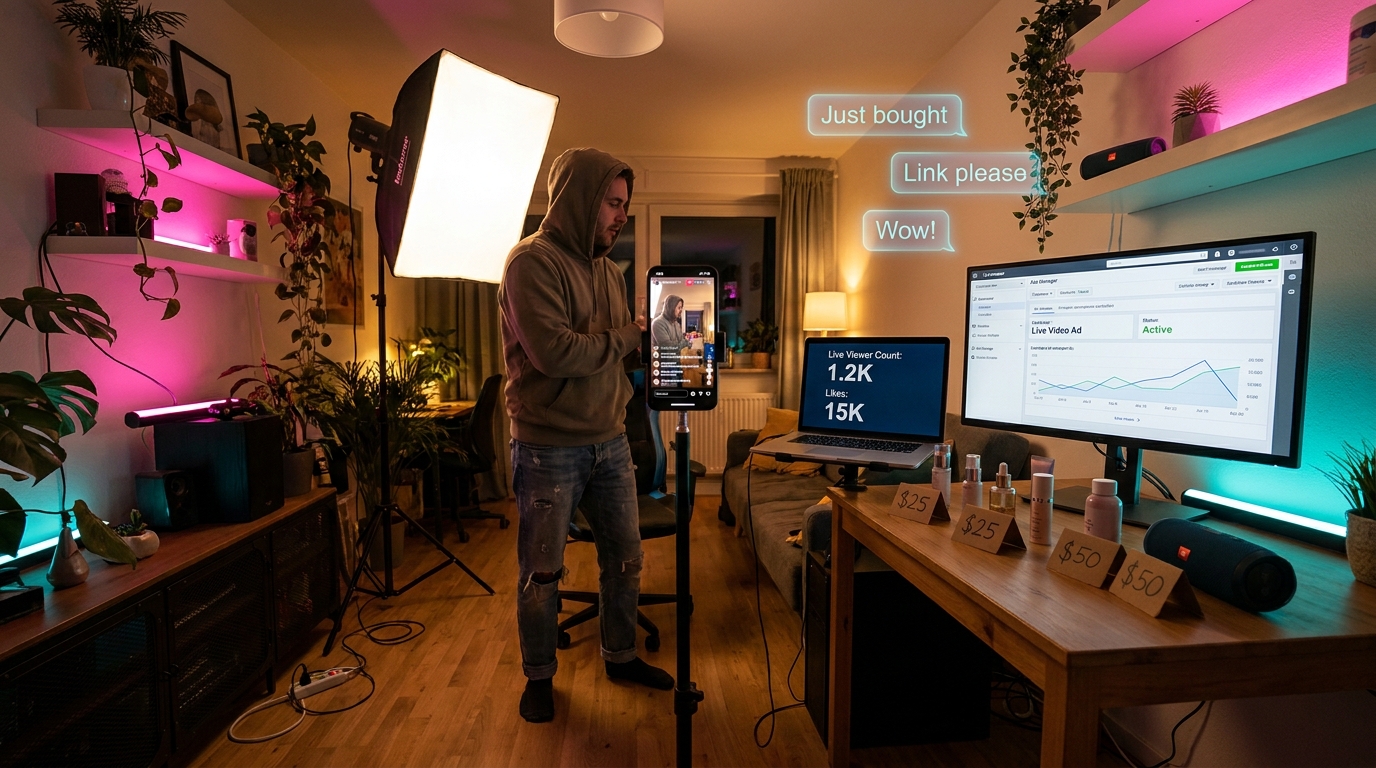
If you run a small brand, this kind of update can feel annoying on sight. Meta adds a shiny new ad format, bigger brands rush in, and everyone else wonders if they are about to get priced out again. That frustration is fair. But this week’s rollout of Live Video Ads for Instagram and Facebook shopping streams is one of those rare moments where small sellers may actually have an edge, because the feature is brand new, the auction is still cheap, and most competitors have not built a good live selling process yet.
That makes this a smart moment to test an Instagram Live Video Ads shopping strategy before Prime Day prep and Q4 budgets flood the system. Add in expanded affiliate tagging and faster in-app checkout, and Meta is clearly trying to make live shopping easier to discover and easier to buy from. You do not need a TV-sized budget to see if it works. You need a simple offer, a short live plan, and a small test budget you can afford to lose while you learn.
⚡ In a Hurry? Key Takeaways
- Yes, small brands should test Meta’s new Live Video Ads now, because early ad prices are often lower before the crowd shows up.
- Start with one product theme, one 20 to 30 minute live, and a modest paid boost to warm and lookalike audiences.
- Do not scale based on views alone. Track clicks, comments, add-to-carts, and actual live-stream sales before raising budget.
What Meta just changed, in plain English
Meta’s Cannes 2026 announcements point to one thing. Instagram and Facebook want live shopping to matter again.
The big changes are pretty simple:
- Live Video Ads can now promote shopping streams beyond your followers.
- Expanded affiliate tagging lets creators earn commission from products in your catalog.
- Faster checkout keeps more buyers inside the app instead of sending them off to a clunky website.
Put those together and Meta is trying to fix the three old live shopping headaches. Not enough people saw the stream. Creators had no strong reason to push your products. Too many shoppers dropped off before payment.
That is why this matters. This is not just another button in Ads Manager. It is a full push to make social shopping easier to find and easier to finish.
Why this could be good news for small brands
Usually, when a platform adds a paid feature, the fear is simple. Bigger budget wins.
Sometimes that is true. But new ad formats often go through a brief honeymoon period. Fewer advertisers are using them. Creative standards are not settled yet. The auction can be underpriced. That gives small brands room to learn while everyone else is still in meetings.
Live shopping also rewards something money cannot fully fake. Personality. Clarity. Product knowledge. Fast replies. A founder who knows the product inside out can often beat a polished but boring brand video.
That is especially true if you sell products that benefit from being shown live, like beauty, fashion, home gadgets, kitchen tools, collectibles, handmade items, or anything people want to see demonstrated in real time.
The real opportunity behind an Instagram Live Video Ads shopping strategy
A strong Instagram Live Video Ads shopping strategy is not “go live and hope.” It is using paid reach to put a useful, sales-focused live stream in front of the right people at the right time.
Think of it as part product demo, part QVC, part community event.
What live ads can do that regular posts often cannot
Regular Reels and posts are great for discovery. But live streams do a different job. They create urgency, answer objections on the spot, and let shoppers see the product from more than one angle.
Someone comments, “Does this run small?” You answer immediately.
Someone asks, “Can I use this on sensitive skin?” You explain and show the label.
Someone says, “I’ll buy if there’s a bundle.” You offer one live.
That back-and-forth is where conversions can happen.
Why affiliate tagging matters too
This part should not be overlooked. If creators can tag from your catalog and earn commission, small brands suddenly have a more realistic path to partnerships.
You do not need to hire a celebrity creator. You can work with niche creators who already talk to the kind of shopper you want. Give them a clear commission offer, a live theme, and a product set built for demonstration.
If you also sell on other platforms, this is a good time to compare where discovery is heading. For local and neighborhood-based shopping, TikTok’s New ‘Local Feed’ Is Quietly Turning Neighborhoods Into Shoppable Markets shows how social commerce is starting to reward proximity and relevance, not just follower count.
A simple test plan for small brands
You do not need a giant launch. You need a clean test.
Step 1: Pick one sales angle
Do not try to sell your whole store.
Choose one of these:
- A hero product
- A starter bundle
- A seasonal set
- A problem-solving demo
- A limited-time offer for live viewers
The narrower the focus, the easier it is for viewers to understand why they should care.
Step 2: Build a 20 to 30 minute live outline
Winging it sounds natural, but it usually falls apart fast.
Use a simple structure:
- First 3 minutes. Hook and explain what viewers will get.
- Next 10 minutes. Show the product in action.
- Next 5 minutes. Answer common objections.
- Next 5 minutes. Show bundle, offer, or bonus.
- Final minutes. Urgent close and Q&A.
Repeat key points for late joiners. People enter lives at random times.
Step 3: Promote the live with a small paid budget
This is where the new ad format matters.
Start with a test budget small enough that it will not hurt if results are mediocre. For many small brands, that may be $50 to $300 per live test, depending on margins.
Prioritize audiences like:
- Past website visitors
- Instagram engagers
- Customer list lookalikes
- Video viewers from past product content
Cold broad targeting can work later. At the start, stack the odds in your favor.
Step 4: Offer one reason to buy now
Live shopping needs a little tension.
Try:
- Live-only bundle pricing
- Free shipping during the stream
- Gift with purchase
- Limited stock callout
- Early access to a new item
Keep it real. Fake urgency is easy to spot and hard to recover from.
Step 5: Measure the right things
Views are nice. Sales are nicer.
Track these numbers after every live:
- Cost to drive viewers into the stream
- Peak live viewers
- Average watch time
- Comments and questions
- Product clicks
- Add-to-cart rate
- Checkout conversion
- Total revenue and profit after ad spend
If the comments are active but sales are weak, your product pitch or checkout flow may be the problem. If viewers drop quickly, your opening is probably too slow.
What not to do
There are a few easy mistakes that can make live ads look worse than they really are.
Do not send paid traffic to a boring live
If your stream feels like a stiff presentation, ad spend will only help more people ignore it.
Energy matters. So does pacing.
Do not feature too many products
Choice overload kills momentum. One to three products is plenty for an early test.
Do not ignore your setup
You do not need studio gear. But viewers do need to hear and see clearly. Use decent lighting, a stable phone mount, and a microphone if possible.
Do not forget replay value
Some shoppers will not buy live, but they may buy from the replay clip or retargeting ad later. Save the best moments and cut them into short follow-up content.
Who should test this first
Not every business needs to jump in today.
This is a stronger fit if you are:
- A DTC brand with visual products
- A TikTok Shop seller who already knows how to demo products on camera
- An Amazon Influencer or creator with product storytelling skills
- A founder-led brand where trust and personality drive conversion
- A local seller who can mix demos, offers, and community connection
If your product is hard to explain live or has a very long buying cycle, this may be less effective right away. In that case, use live mainly for education and audience building first.
How this fits with the rest of your channel mix
Do not treat Meta live shopping like your whole business plan. Treat it like a test lane.
If you already do short-form video on TikTok, Reels, or Amazon, you likely have most of the raw material you need. The difference is packaging it around live interaction and in-app buying.
One smart approach is to let each platform do what it does best:
- TikTok for discovery and trend response
- Instagram and Facebook for live selling and retargeting
- Amazon for high-intent shoppers who want fast trust and fulfillment
That way, you are not betting the farm on one new feature.
At a Glance: Comparison
| Feature/Aspect | Details | Verdict |
|---|---|---|
| Live Video Ads reach | Lets brands promote shopping streams beyond current followers while the ad auction is still relatively fresh | Worth testing now, before competition drives up costs |
| Affiliate tagging | Creators can earn commission from your catalog, giving small brands a simpler way to recruit selling partners | High potential if you have niche creators and clear commission terms |
| In-app checkout speed | Faster buying flow reduces the chances that shoppers drop off before payment | Important for conversion, but only if your offer and live pitch are strong |
Conclusion
Small brands are right to be skeptical whenever Meta rolls out a new ad toy. But this one looks more useful than most. Meta’s Cannes 2026 announcements show that Instagram and Facebook are pushing live shopping harder than they have in years, with Live Video Ads to promote streams, wider affiliate tagging so creators can earn from your catalog, and faster checkout that keeps buyers in-app. Because these changes were announced this week, the live ad auction may still be underpriced. Early movers can often grab cheaper reach before bigger performance teams pile in. So the smart move is not blind excitement. It is a controlled test. Pick one product angle, run one clean live, spend a modest budget, and watch the numbers. For scrappy brands, TikTok Shop sellers, and Amazon Influencers, that is enough to find out whether Meta’s new live tools deserve real money before Prime Day and Q4 get crowded.