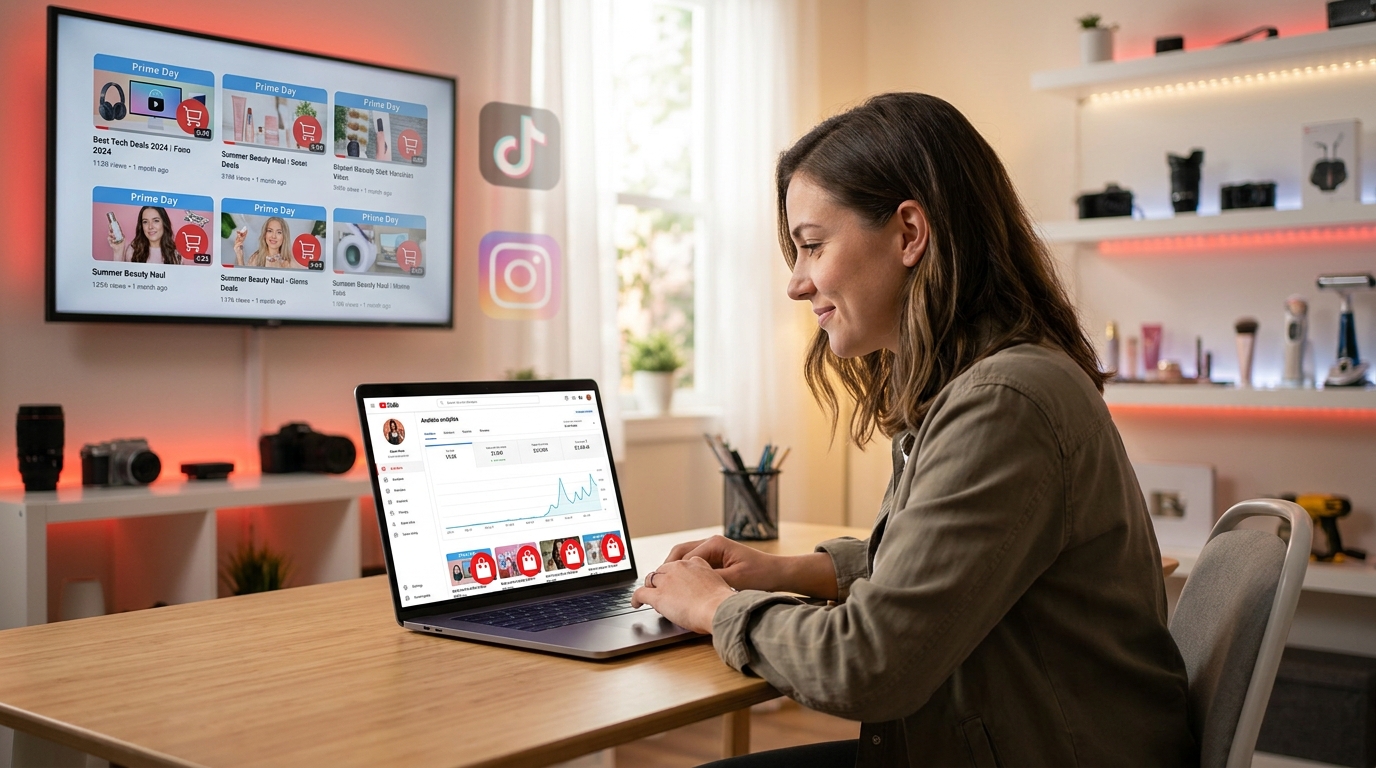
Prime Day week is brutal if you are a small creator. Every app suddenly turns into a shouting match about deals, coupons, and “must buy” lists. You post something useful, and it disappears under a pile of louder accounts with bigger budgets. That frustration is real. The good news is that YouTube may be the one place where smaller channels still have a fair shot, because shopping content there can keep showing up in search long after a TikTok clip or Instagram Story is gone. That makes a smart YouTube shopping strategy for small creators worth serious attention right now. You do not need a giant audience. You need buyer-focused video topics, clean product tagging, and links that send viewers to the place most likely to convert, whether that is Amazon, TikTok Shop, or your own store. While everyone else fights for fast feed traffic, YouTube gives you a chance to catch people who are already looking to buy.
⚡ In a Hurry? Key Takeaways
- YouTube is becoming a strong shopping channel for smaller creators because search-based videos can keep sending buyer traffic after Prime Day noise fades.
- Start with buyer-keyword videos like “best Prime Day desk accessories under $50” and tag the exact products in the video, description, and pinned comment.
- Do not send every viewer to one place. Cross-link to Amazon Influencer storefronts, TikTok Shop, or your site based on where each product is most likely to convert.
Why YouTube matters more than it did last year
Most social shopping advice still revolves around TikTok and Instagram. That makes sense if you are chasing quick spikes. But quick spikes are not the same as durable traffic.
YouTube works differently. A well-titled deal video can show up when someone searches “best Prime Day microphone for podcasting” or “Prime Day skincare deals worth it.” That viewer is not casually scrolling. They are shopping.
That is the opening. Small creators usually cannot outpost or outspend bigger names. But they can be more specific, more useful, and faster to answer buyer questions.
That is the core of a good YouTube shopping strategy for small creators. You are not trying to beat giant creators at fame. You are trying to beat them at relevance.
What YouTube’s shopping push means for smaller channels
YouTube has been making shopping features easier to use across videos, Shorts, and channel content. For smaller creators, that matters because it lowers the gap between “I made a review” and “I made a review that can actually sell.”
In plain English, you can now do more than talk about a product. You can connect the content to the product in a clearer way through tags, descriptions, shopping links, and channel setup. That reduces friction for viewers who are ready to buy.
And timing matters. Prime Day creates a rare moment when buyer intent is everywhere. If your video answers a shopping question at that exact moment, even a modest channel can punch above its weight.
Start with buyer keywords, not creator ideas
This is where many small channels get buried. They make videos based on what they want to say, not what shoppers are typing.
Better video angles for shopping traffic
Instead of a broad title like “My Prime Day Picks,” use something tighter:
- Best Prime Day home office deals under $100
- Prime Day beauty tools that are actually worth buying
- Best budget USB microphone deals for creators
- Prime Day kitchen gadgets I would buy again
Those topics match real shopping intent. They also give YouTube more context about who should see the video.
Use simple keyword placement
Put the buyer phrase in the title. Use it again naturally in the first two lines of the description. Say it out loud early in the video. Add a pinned comment with the same buying theme and product links.
You do not need to stuff keywords like it is 2009. Just be clear.
How to structure a video so people actually click and buy
A shopping video is not just content. It is a path.
Use this simple format
Start with the promise. Tell viewers exactly what kind of deals they will get in the next few minutes.
Then sort products by use case or budget. That helps non-techie viewers follow along without feeling lost. “Best under $25” is easier to scan than a random pile of items.
For each product, cover three things:
- What it is
- Who it is for
- Why this deal matters right now
Then give a quick reality check. If a product is only a good buy at the sale price, say so. That honesty builds trust, and trust converts better than hype.
Product tagging is where small creators can quietly win
Tagging sounds boring. It is not. It is one of the easiest ways to make your content more useful during a shopping rush.
What to tag
Tag the exact product shown or discussed. Not a vague category. Not a “close enough” replacement unless you clearly say it is an alternative.
Where to reinforce the tag
Match the product tag with:
- The spoken mention in the video
- The item listed in the description
- The pinned comment
- A simple on-screen label if you edit your own video
This consistency helps both people and platforms understand what is being recommended. It also cuts down on confusion when a viewer is ready to buy but not ready to hunt.
Do not force every sale through one link
This is the mistake I see all the time. A creator sends every viewer to one marketplace because it feels simpler.
Simpler for you is not always better for the buyer.
Use a multi-link conversion path
If one product performs best on Amazon, send viewers to your Amazon Influencer storefront. If another item is getting stronger traction on TikTok Shop, point viewers there too. If your own site has the better margin or bundle, include that option.
The point is not to confuse people with ten links. The point is to give each featured product its best buying path.
If you want the bigger picture on how these platforms are colliding during sale season, Prime Day 2026 Is Quietly Becoming ‘Influencer Day’: How To Ride The Multi‑Platform Shopping Wave In 24 Hours lays out why this is no longer just an Amazon moment.
Shorts can feed long-form, not replace it
Shorts are useful during Prime Day because they are fast to publish and easy to test. But the real value comes when they point people toward a longer, searchable video.
A simple combo that works
Post a Short on one product or one mini category. Something like “3 Prime Day desk deals under $30.” Then direct viewers to your full video with the complete list.
This gives you two bites at the apple. Fast discovery from Shorts, and longer shelf life from the main video.
What small brands should do if they are not really “creators”
You do not need to become a full-time personality. You just need to answer shopping questions in a helpful way.
If you are a small brand, make short YouTube videos around the exact objections buyers have right now. Compare sizes. Explain setup. Show what is included in the box. Clarify which version is worth buying.
That kind of content may not look flashy, but it often catches high-intent shoppers who are one answer away from making a purchase.
Common mistakes that waste Prime Day traffic
Going too broad
“Best Prime Day Deals” is a giant pond full of whales. “Best Prime Day lighting for YouTube creators” is a smaller pond with much better odds.
Hiding the shopping links
If viewers need detective skills to find your product links, you will lose sales. Put them in the description and pinned comment.
Talking like every product is amazing
People can smell fake excitement. If two items are skippable, say so. That makes the good picks feel more credible.
Ignoring after-Prime-Day value
Your video should still make sense a week later. Mention that prices can change, but keep the review useful even after the event.
A practical posting plan for the next 24 hours
If you are trying to move fast, keep it simple:
- Pick one tight shopping category you actually know well.
- Find 5 to 8 products with clear buyer appeal.
- Write a title around a real shopping phrase.
- Record a 5 to 8 minute video with direct recommendations.
- Tag the exact products.
- Add marketplace-specific links where each item converts best.
- Cut one or two Shorts from the same footage.
That is manageable for a small team, or even one person.
At a Glance: Comparison
| Feature/Aspect | Details | Verdict |
|---|---|---|
| Traffic lifespan | YouTube deal videos can keep showing in search after Prime Day, unlike many feed-first posts on TikTok or Instagram. | Best for durable buyer traffic |
| Effort required | Needs better planning, keyword targeting, and product tagging than a quick social post, but each piece can work longer. | More work upfront, better payoff later |
| Conversion strategy | Works best when creators cross-link smartly to Amazon Influencer storefronts, TikTok Shop, or their own store instead of using one generic link. | Strong if links match buyer intent |
Conclusion
If you are feeling drowned out by Prime Day noise, you are not imagining it. The feeds are crowded, and small creators rarely win by shouting louder. But YouTube offers a different path. Right now, its shopping tools and search habits create a real opening for smaller channels that can answer buyer questions clearly. That is why a solid YouTube shopping strategy for small creators matters so much this week. Use buyer keywords, tag products properly, and send people to the right storefront for each item. This helps the community today because YouTube is quietly opening up shopping tools to smaller channels at the exact moment retail attention is peaking, and very few people in social commerce are talking about it. While others chase short-lived hits on TikTok and Instagram, you can build videos that keep bringing in shopping traffic long after the deal frenzy cools down.