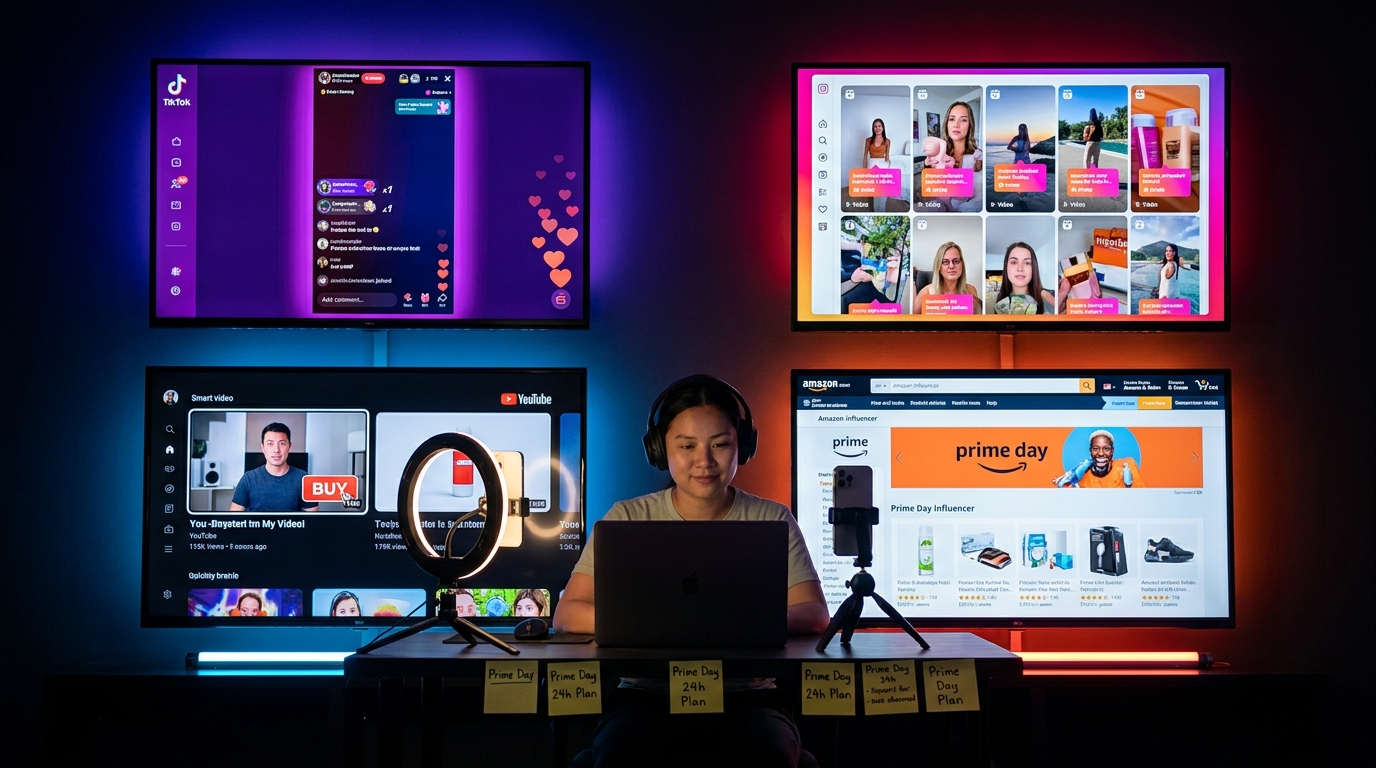
Prime Day keeps getting sold as an Amazon event, but for creators and small brands it now feels more like an everywhere-at-once sprint. That is exhausting. Amazon changes link tools, storefront options, and creator features just enough to keep everyone guessing. Meanwhile TikTok, Instagram, YouTube Shorts, and Pinterest all want you to treat their feeds like mini shopping channels. If you are a solo creator or a tiny team, you cannot post everywhere, remake all your assets, and hope for the best. You need a simple Prime Day 2026 social commerce strategy for Amazon influencers that works in one day, not a giant campaign deck. The good news is you probably already have most of what you need. Your old product clips, FAQ answers, customer comments, and best-performing posts can be turned into a 24-hour plan that sends traffic to trackable Amazon links and gives each platform a job instead of letting them eat your whole day.
⚡ In a Hurry? Key Takeaways
- Prime Day 2026 is no longer just about Amazon. The best results often come from short videos and stories on multiple platforms that all point back to one clean offer path.
- Use one hero deal list, one short video script, and platform-specific links so you can post fast without losing track of what actually converts.
- Do not waste the day making new creative from scratch. Reuse proven clips and check that every disclosure, affiliate link, and promo claim is accurate before posting.
Why Prime Day now feels like Influencer Day
Shoppers still buy on Amazon, but discovery happens all over the place first. Someone sees a “best Prime Day deals” Reel, saves a TikTok, clicks a Story, then opens Amazon later. That means the creator who shows up clearly and often can punch above their size, even without a giant ad budget.
The catch is timing. Bigger brands can carpet-bomb every channel. You cannot. So the smart move is not to copy them. It is to build one tight content loop that starts on social, ends on Amazon, and stays easy to measure.
Think of Prime Day as a 24-hour newsroom. You are not making a documentary. You are publishing useful updates quickly.
The rule that saves you time: one offer hub, many entry points
Before you post anything, decide where every click should go. For most creators and small brands, that should be one of these:
- Your Amazon storefront page
- A curated idea list
- A landing page with deal categories and Amazon links
Do not send one post to ten different product links unless there is a very good reason. People click less when they feel lost. Give them one obvious next step.
What your hub should include
- Top 5 to 10 deals only
- Clear categories like home, beauty, office, travel, tech
- “Best under $25” or “worth buying now” labels
- Updated prices if possible, or wording like “price may change fast”
- Trackable links or separate link routes by platform
If you are using Instagram heavily, it is worth watching how platform shopping features are changing. Instagram’s New Live Video Ads Just Changed Social Shopping: How Small Brands Can Win Big Fast is a useful reminder that live and video shopping tools are getting more aggressive, which makes quick, personality-driven deal content more important for smaller sellers.
Your 24-hour Prime Day 2026 social commerce strategy for Amazon influencers
Night before, 60 to 90 minutes
This is setup time. Do not skip it.
- Pick one hero theme, like “10 Prime Day buys I’d actually recommend”
- Pull 5 to 10 products with live or likely deals
- Create one simple note with product name, hook, price point, and why it matters
- Build your storefront or list in the order you plan to talk about it
- Create separate tracking links for Instagram, TikTok, YouTube, email, and Pinterest if your tools allow it
- Prepare a disclosure line for captions and Stories
You are making a cheat sheet. Tomorrow you will be too busy to think from scratch.
Hour 1, launch post
Post one short vertical video on your strongest platform first. Not every platform. Your strongest one.
Keep the structure simple:
- Open with urgency. “Prime Day deals are already live, and these are the first 5 I checked.”
- Show products fast
- Use captions on screen
- End with one call to action. “Full list in my storefront” or “link in bio for all my live picks”
Then repost that same clip with small edits to at least one other platform. Maybe TikTok to Reels, or Shorts to Pinterest Idea content. Trim the intro if needed. Change the caption. Keep the core video.
Hours 2 to 4, story bursts and link reminders
This is where a lot of sales happen because Stories feel current. Use them like rolling updates, not polished ads.
- Post 3 to 5 Story frames
- Frame 1: “I’m tracking the best Prime Day deals all day”
- Frame 2: one standout product with a quick opinion
- Frame 3: poll, “Want kitchen deals or tech deals next?”
- Frame 4: link sticker to your hub
- Frame 5: disclosure and reminder that prices can move
This also gives you a signal about what people want next, which matters more than guessing.
Hours 5 to 8, answer questions in public
Open your comments, DMs, and replies. The questions people ask are your next posts.
If someone asks, “Is that air fryer really worth it?” do not answer only in DM. Turn it into:
- A 15-second Reel
- A TikTok reply video
- A Story talking head clip
- A pinned comment under your original post
This is low-effort and high-value because it sounds human, not scripted. It also helps your content keep moving through each platform.
Hours 9 to 12, publish a category roundup
By midday, some people are just joining the shopping wave. Give them a reset post.
Examples:
- Best Prime Day tech under $50
- 3 home deals I would buy again
- Prime Day office upgrades for remote workers
Use the same footage where possible. Different packaging, same product. New angle, same link hub.
If you have email or a text list, send one short message here. Keep it focused. “These 7 deals are still live. I updated the list at 1 PM.” That update language matters. It tells people the page is current.
Hours 13 to 18, go live only if you can keep it simple
Many creators feel pressure to go live. You do not have to. A messy live is worse than a clean short video.
Go live only if you can do one of these well:
- Walk through your top 10 picks
- Compare two similar products
- Answer “what should I buy” questions in real time
Even 15 minutes can work. Keep your product list open beside you. Pin your link. Repeat your best three recommendations. Done.
Hours 19 to 24, urgency and cleanup
Now shoppers fear missing out. This is your best moment for clear reminders.
- Post “still live” updates only for deals you checked
- Reshare your best-performing morning video
- Post one “last call” Story set
- Move expired deals off the top of your hub
- Pin the post that got the most saves, comments, or clicks
Do not fake urgency. Real urgency is enough on Prime Day.
How to reuse assets you already have
This is where small teams can win back time.
Turn one old review into five fresh posts
- Original review clip becomes a “still worth buying?” Reel
- Best quote becomes a Story slide
- Product close-up becomes a Pinterest pin
- Common objection becomes a TikTok reply
- Before-and-after shot becomes a carousel
You are not being lazy. You are being realistic.
Use comment screenshots as creative
If buyers have said “I bought this because of you” or “this solved my problem,” use that. A screenshot plus a product clip is often more convincing than a glossy brand ad.
Where to spend your energy by platform
Best for Stories, Reels, and link reminders. Strong if your audience already trusts your taste. Keep the link path short. If you can support it, live sessions can help, especially as Meta keeps pushing shopping-friendly video formats.
TikTok
Best for fast hooks, opinion-driven picks, and question-based videos. Do not over-produce. Shoppers there respond well to “I checked the deals so you don’t have to” energy.
YouTube Shorts
Good for evergreen deal clips that may keep getting views even after the first rush. Use simple titles and strong opening text.
Quietly useful for category roundups like dorm, kitchen, travel, office. Pins can catch late shoppers who are searching, not scrolling.
Email or SMS
Still one of the best conversion tools if you have it. One or two smart sends beat five spammy blasts.
Tracking sales without making yourself crazy
You do not need enterprise analytics to learn what worked.
- Use different links or tags by platform when possible
- Label posts clearly in your own notes, like “IG Reel 9 AM” or “TikTok FAQ 2 PM”
- Check clicks at three points: midday, late afternoon, final evening push
- Note which product categories got comments, not just clicks
That last part matters. Sometimes comments tell you what tomorrow’s winners are before the sales data catches up.
Common mistakes that waste Prime Day traffic
- Sending every post to a different product page
- Making brand-new creative all day instead of reposting winners
- Talking only about discounts, not usefulness
- Forgetting disclosures on affiliate content
- Leaving dead or expired deals at the top of your page
- Spending hours editing when shoppers want speed
The goal is not perfect content. It is trusted, timely content.
What a solo creator can realistically post in one day
Here is a sane version:
- 2 short videos
- 2 to 3 Story bursts
- 1 category roundup post
- 1 email or text update
- 3 to 5 public replies repurposed from audience questions
That is enough. Really.
At a Glance: Comparison
| Feature/Aspect | Details | Verdict |
|---|---|---|
| Best traffic source | Short-form video on one or two strong platforms, backed by Stories or comments that keep pointing to a single Amazon hub | Start narrow, not everywhere |
| Best use of limited time | Reuse old reviews, UGC, screenshots, and FAQ answers instead of creating polished new campaigns | Reuse wins over reinvent |
| Best way to measure results | Separate links or tags by platform, plus simple notes on post time, clicks, and top questions | Good enough tracking beats no tracking |
Conclusion
Prime Day 2026 is days away and the early deals are already live, so the window to stand out is brutally short. That is exactly why a simple system beats vague advice. Pick one hub. Use one hero theme. Post fast, answer real questions, and keep pushing people back to a trackable list instead of scattering attention across random links. You do not need to outspend mega influencers or big retailers. You need to be clearer, quicker, and more useful for 24 hours. If you use assets you already have and give each platform a specific job, you can turn Prime Day search traffic into real sales across Amazon and social instead of watching it drift past you.