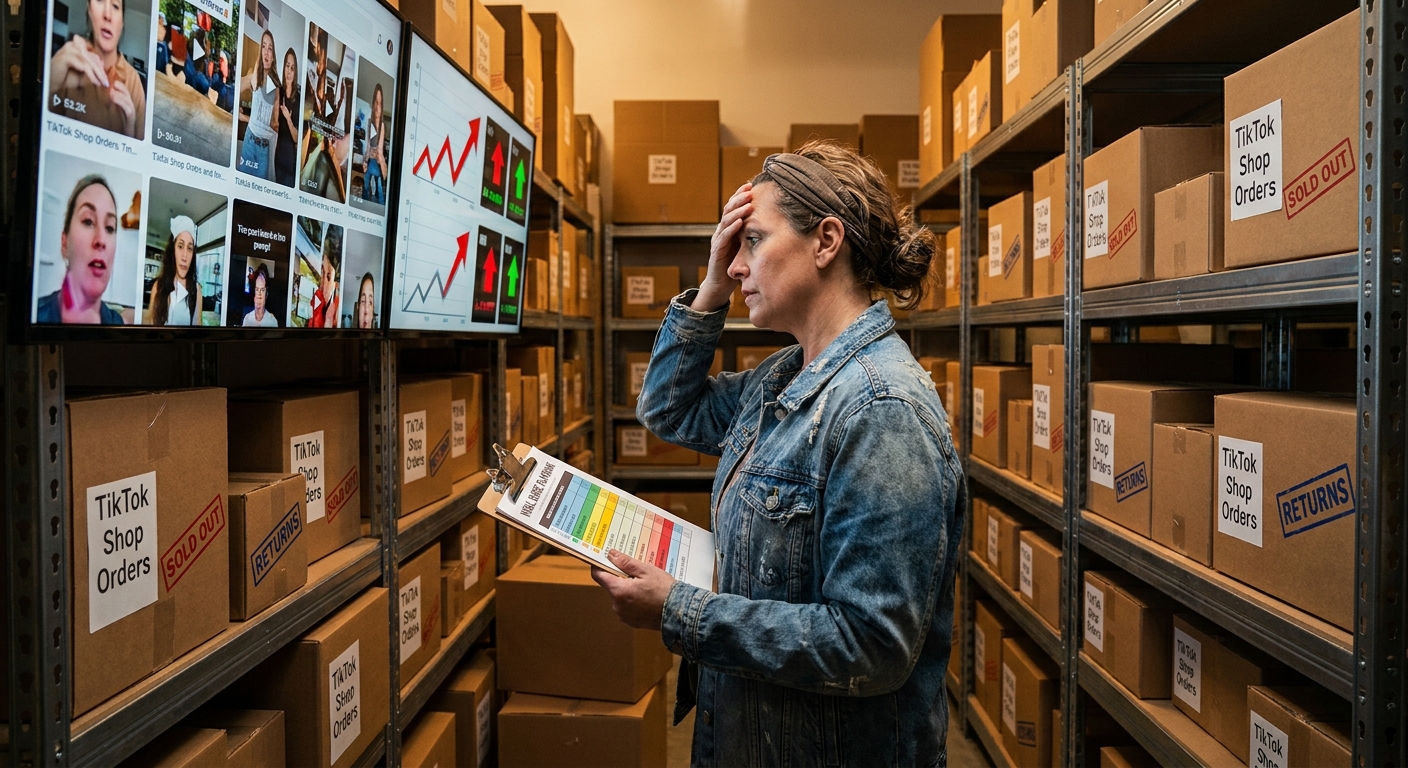
Nothing tests a small brand quite like waking up to 10,000 TikTok Shop orders and realizing your “great problem to have” is actually three problems at once. You need stock now. You need to ship fast. And you need enough cash left over for the return wave that often shows up two or three weeks later. If that sounds painfully familiar, you are not doing anything wrong. TikTok Shop can create demand spikes that look nothing like Amazon or a normal online store. One creator video hits, your best seller disappears, customer messages pile up, and the same creators who helped you grow may stop pushing your product because you keep going out of stock. The good news is that this is fixable. You do not need enterprise software or a giant ops team. You need a simple system for tiktok shop inventory management for viral orders and returns, built around buffers, fast decision rules, and a plan for the aftershock, not just the first sales surge.
⚡ In a Hurry? Key Takeaways
- TikTok Shop demand is not steady. Treat it like a series of surprise spikes, followed by delayed returns.
- Start with a “viral surge” plan: hold backup stock, cap creator pushes when inventory gets tight, and reorder in smaller, faster batches.
- Do not restock based only on day-one sales. Wait for early cancellation and return signals so you do not trap cash in excess inventory.
Why TikTok Shop creates inventory whiplash
On a normal ecommerce store, demand usually moves in a more predictable way. You run ads, sales go up. You stop ads, sales cool off. TikTok Shop is messier.
A single creator can change your week in an hour. Then another creator can revive a product you thought had peaked. Then the returns start landing right when you finally panic-restocked.
That is the whiplash.
For small brands, the danger is not just stock-outs. It is bad timing. You buy too little, and you ship late. You buy too much, and your cash gets stuck on shelves while refunds eat into the next payout.
The three-part pattern many sellers are seeing
Most of these blowups follow a familiar pattern:
- Orders spike overnight from one or two videos.
- Operations slow down because packing, labels, and customer service were built for normal volume.
- Returns and refunds rise later, often after the replacement stock has already been ordered.
That last part is the one too many brands miss. Viral demand feels like proof that you should go all in. Sometimes it is. Sometimes it is just a short burst with a messy tail.
The mistake that hurts most
The biggest mistake is treating viral sales as stable demand.
If you get 8,000 orders from a breakout video, it is tempting to reorder as if that pace will continue for a month. But TikTok attention is jumpy. It can vanish just as fast as it arrived.
So the question is not, “How do I keep every product in stock at all times?” For most small brands, that is unrealistic.
The better question is, “How do I stay available enough to keep momentum without betting the company on one hot week?”
A simple viral surge system that small brands can actually use
You do not need a huge operations team to get more stable. You need rules.
1. Split inventory into two buckets
Do not put every unit into live available stock.
Create:
- Sellable stock, what TikTok Shop can see right now
- Surge reserve, units held back for viral spikes, replacements, and damaged shipments
Even a 10 to 20 percent reserve can buy you time when a creator post suddenly takes off.
This matters because going fully out of stock does more than pause sales. It can hurt creator trust. If affiliates keep sending traffic to dead listings, many will move on.
2. Set a reorder trigger based on velocity, not just units left
Many brands reorder when inventory drops below a fixed number. That is too slow for TikTok Shop.
Instead, watch days of cover. In plain English, that means how many days your current stock will last at the current sales rate.
Example:
- You have 2,000 units left.
- You sold 1,000 units in the last 24 hours.
- You do not really have “plenty” of stock. You have about two days of cover.
That should trigger an immediate decision, even if 2,000 sounds like a big number on paper.
3. Reorder in stages
Do not place one giant refill order just because one giant day happened.
Use a staged approach:
- Stage 1: emergency top-up for the next 7 to 14 days
- Stage 2: larger restock only after you see whether sales hold and returns stay manageable
This lowers the chance that you will be sitting on too much stock when the hype cools or return rates climb.
4. Give creators an inventory status signal
If you work with creators or affiliates, tell them when a product is in a safe stock window, low stock window, or pause window.
Keep it simple:
- Green: push freely
- Yellow: limited push, no large-scale blasts
- Red: pause promotion until fulfillment catches up
This sounds basic, but it can stop a good campaign from turning into a support disaster.
How to plan for returns before they hit
Returns are not just a customer service issue. They are an inventory timing issue and a cash issue.
On TikTok Shop, return spikes often lag behind the sales spike. That means your dashboard can look amazing right when risk is building underneath it.
Build a “do not spend yet” rule
When a viral product hits, do not commit every dollar from that surge to new inventory right away.
Set aside a return reserve. Even a rough rule is better than none.
For example:
- Hold back a fixed percentage of sales for 21 to 30 days
- Adjust that percentage based on category, sizing issues, defect risk, or past return rates
If your product is fashion, beauty, or anything impulse-driven, be extra careful. Those categories can look fantastic at checkout and much less fantastic at return time.
Separate usable returns from dead stock
Not every returned item should go right back into sellable inventory.
Create three buckets:
- Resellable, unopened or clean and ready
- Refurbish or inspect, possible to recover later
- Write-off, damaged, opened, or not worth reprocessing
If you mix all returns back into “available stock,” your counts stop being trustworthy. Then you oversell. Then the late-shipping complaints begin.
What to track every morning
You do not need a giant spreadsheet with 80 tabs. You need a short list you will actually check.
Your daily TikTok Shop ops dashboard
- Units sold in the last 24 hours
- Units sold in the last 3 days
- Current sellable stock
- Surge reserve stock
- Days of cover at current pace
- Open orders waiting to ship
- Cancellation rate
- Return request rate by order week
- Top creator traffic sources
The key one many founders miss is return request rate by order week. That helps you see whether last week’s viral spike is becoming this week’s refund problem.
How to avoid angry customers when you are overloaded
If shipping is slipping, silence makes it worse.
Customers can forgive delays more easily than confusion. The same goes for creators.
Use blunt, human communication
Tell customers:
- their order was received
- shipping is delayed because of unusual demand
- the realistic ship window
- how to get help if timing no longer works for them
Tell creators:
- which SKUs are safe to promote
- which are running low
- when fresh stock should be live
This is not glamorous, but it protects the relationship. A creator is much more likely to work with you again if you are honest before things break.
When to say “not yet” to more creator deals
Growth is exciting. But if your fulfillment pipeline is already stretched, saying yes to every new creator can backfire.
Pause new pushes when:
- backlog is rising faster than you can pack
- days of cover fall below your safety threshold
- support tickets are piling up
- your return reserve is getting thin
This feels painful in the moment. But it is often smarter than winning more orders you cannot ship well.
Best practices for tiktok shop inventory management for viral orders and returns
If you want one practical playbook, start here:
The lightweight version
- Hold back 10 to 20 percent of stock as surge reserve
- Track days of cover every day, not just units on hand
- Reorder in two stages, not one giant bet
- Set aside a returns cash reserve for 21 to 30 days
- Classify returned inventory before putting anything back on sale
- Give creators a simple green, yellow, red stock status
- Pause promotion before service quality collapses, not after
That is the heart of good tiktok shop inventory management for viral orders and returns. Not perfection. Just enough structure to survive a hit without creating a second crisis.
At a Glance: Comparison
| Feature/Aspect | Details | Verdict |
|---|---|---|
| Restocking method | One big reorder after a viral day feels fast, but it can trap cash if demand drops or returns rise. Staged restocks are slower emotionally, but safer financially. | Use staged restocks. |
| Inventory visibility | Looking only at units on hand can be misleading. Days of cover gives a truer picture when sales suddenly jump. | Track velocity, not just stock count. |
| Returns handling | Treating all returns as reusable inventory creates bad counts and overselling. Returned items need inspection and separate buckets. | Sort returns before resale. |
Conclusion
TikTok Shop rewards speed, but it punishes sloppy operations. That is why so many small brands are feeling this inventory whiplash right now. The sales rush is real, but so is the hangover that comes after it. Most social commerce advice still focuses on hooks and creator tactics, while almost nobody talks about what happens when those hooks actually work. That is where brands get hurt. If you put even a basic viral surge system in place now, you give yourself room to keep saying yes to creator deals without drowning in stock-outs, late shipments, and refund chaos. You do not need to predict every spike perfectly. You just need a plan that expects TikTok Shop to be spiky and weird. The brands that build for that reality now are the ones most likely to stay calm, stay in stock, and quietly outlast competitors still treating it like a normal ecommerce channel.