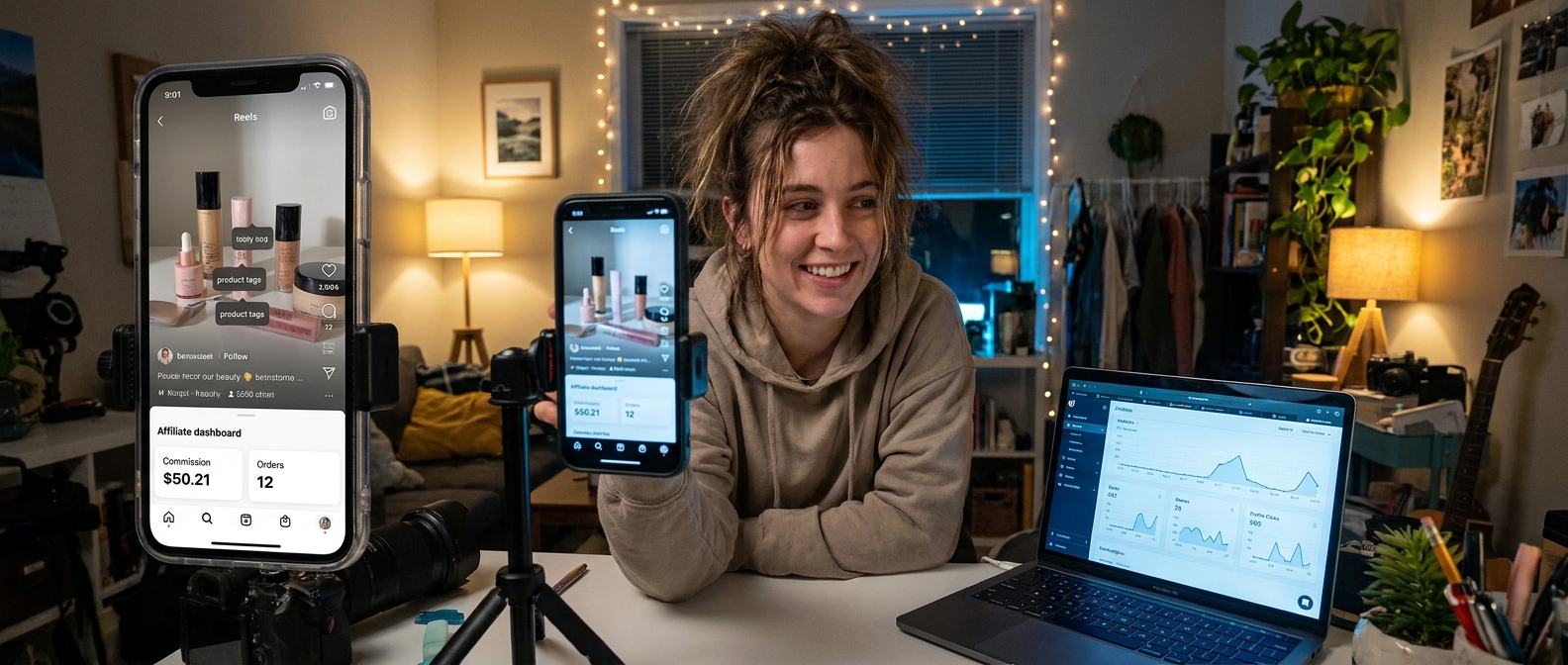
If you are tired of watching TikTok Shop change the rules every other week while your Instagram Reels quietly collect views but not sales, you are not imagining things. A lot of small brands and solo creators are stuck in that exact spot. They tag a product, post a decent Reel, then wonder why nothing happens. The shift is easy to miss, but Instagram has been moving toward shopping intent, not vanity metrics. That means saves, shares, product taps, and profile clicks matter more than a post that gets random reach with no buyer interest. For small teams, this is good news. You no longer need a giant catalog, an agency, or a complicated storefront to start making Reels act like mini product pages. With native affiliate links and better product tagging, Instagram is quietly becoming a simpler, steadier place to sell. The trick is to build content around shopper behavior, not creator ego.
⚡ In a Hurry? Key Takeaways
- Instagram’s new affiliate and product-tagging tools make a strong instagram reels affiliate shopping strategy 2026 option for small brands that want sales, not just views.
- Start with Reels that solve one problem, show one product clearly, and ask for one next step such as “save this,” “tap the tag,” or “check my profile.”
- Do not judge success by reach alone. Track saves, shares, profile visits, product clicks, and commission data so you do not mistake attention for buying intent.
Why Instagram is suddenly more interesting than TikTok Shop for small sellers
TikTok Shop can still work. Plenty of businesses are proving that every week. But it can also feel messy. Policies shift. Eligibility changes. Categories get weird. One week a format works, the next week the traffic dries up.
Instagram, by contrast, is doing something less flashy and possibly more useful. It is making normal content more shoppable. Instead of forcing every creator to become a full store operator, it is giving them affiliate tools, product tagging, and ranking signals that reward actual buyer behavior.
That matters because small teams do not need more dashboards. They need fewer moving parts and more ways to turn existing videos into money.
If your audience already follows you on Instagram, this is a big opening. You can make recommendation-style Reels, tag products, earn commission, and send strong intent signals to the algorithm without building a giant ecommerce machine first.
What changed in the Instagram reels affiliate shopping strategy 2026 playbook
1. Reels are being judged more by intent than by raw popularity
Views still matter, of course. But Instagram has become more interested in what people do after watching. Do they save it for later. Do they share it with a friend. Do they tap your profile. Do they click the product tag.
That is a major change for small brands because intent is easier to win than mass entertainment. You may not beat a comedy account on views, but you can absolutely beat them on “I want to buy this later.”
2. Affiliate links are no longer just for giant creators
Instagram has made native affiliate options and product tagging more useful for creators who do not run a full in-app shop. That means a beauty creator can recommend a serum. A home organizer can tag storage bins. A local boutique owner can feature outfits without making every post feel like an ad.
That setup is especially handy if you also sell through Amazon, Shopify, or partner platforms and want Instagram to act like the discovery layer.
3. Shoppable media now starts with the story, not the catalog
The old idea was simple. Upload products, add tags, hope people buy. The new reality is better. Start with a problem, a demo, or a point of view. Then make the product the answer. That is how Reels turn into micro-stores.
What a “micro-store” inside Reels actually looks like
Think of a micro-store as a cluster of 5 to 15 Reels around one need, one audience, or one product category. Not a giant storefront. Not a random posting spree. A tight set of videos that answer common buyer questions.
For example:
- “Best desk setup fix for back pain”
- “Three travel products I actually used on a red-eye”
- “How I style one black dress for work and dinner”
- “The kitchen tool I did not expect to use every day”
Each Reel stands alone, but together they build buying confidence. People save one, share another, click your profile, then start browsing. That is the storefront effect.
A practical content formula small brands can ship this week
The 20-second shopper script
Here is a simple Reel structure that works well for affiliate shopping content:
- Hook the problem in the first 2 seconds.
- Show the product fast, with no mystery.
- Explain why it helps in plain English.
- Show one real use case.
- Give one call to action.
Example:
“If your tote bag is basically a junk drawer, this organizer fixed mine. It gives me separate pockets for cables, lip balm, receipts, and chargers. I can switch bags in ten seconds now. Save this if you are tired of digging for your keys.”
Notice what is missing. No big speech. No fake urgency. No hard sell. Just a clear problem and a useful fix.
Three Reel angles that work especially well
The before-and-after angle. Messy desk to clean desk. Frizzy hair to styled hair. Empty wall to finished room.
The mistake angle. “I was using this wrong.” “What I stopped buying.” “Why this cheaper tool ended up being better.”
The shortlist angle. “Three things worth buying under $25.” “My two most-used camera accessories.” “One thing I would repurchase instantly.”
These formats feel helpful, which is exactly why they generate saves and shares.
CTA tweaks that fit Instagram’s current ranking signals
A lot of creators still end every video with “link in bio” and call it a day. That is not always enough.
Try matching your CTA to the behavior Instagram seems to reward most:
For saves
Use lines like “Save this for your next Target run” or “Save this if you are comparing options later.”
For shares
Use “Send this to the friend who always loses their charger” or “Share this with someone setting up a new apartment.”
For profile clicks
Use “I put the full list on my profile” or “I tested three more options on my page.”
For product taps
Use “Tap the product tag if you want the exact one” or “I tagged the version I actually bought.”
Small change. Big difference. You are giving people a reason to do the next action instead of hoping they guess.
How to choose products without turning your feed into a garage sale
This is where many affiliate setups go wrong. People start tagging everything. The account loses focus. Trust drops.
A better rule is this: pick products that match one of these three things.
- Your audience’s repeating problem
- Your personal use case
- Your existing content theme
If you run a fitness page, recovery tools, water bottles, and training gear make sense. If you run a local boutique, styling clips, try-ons, and accessories fit naturally. If you teach home office productivity, desk gear and organization products are fair game.
Random products kill momentum. Consistent product categories build a shopping identity.
Measurement habits that actually tell you if it is working
Here is the trap. A Reel gets 30,000 views, and everyone celebrates. But no one saved it, no one clicked the tag, and no one visited the profile. That is entertainment, not commerce.
For an instagram reels affiliate shopping strategy 2026 setup, track these instead:
- Saves per Reel
- Shares per Reel
- Profile visits after posting
- Product tag taps
- Outbound clicks if you use approved link paths
- Commission earned by content type
- Comments that show buying intent, such as “Which size did you get?”
After two weeks, sort your Reels into buckets. Which hooks earned saves. Which demos earned product taps. Which CTAs drove profile clicks. That gives you a usable playbook instead of vague “content insights.”
What small local brands should pay attention to
If you are a neighborhood business, this does not mean you should ignore TikTok. It means you should stop thinking in either-or terms. Instagram can handle your evergreen recommendation content while TikTok handles discovery spikes and live selling.
That is especially true for shops that already post outfit clips, treatment demos, food videos, or behind-the-scenes content. Those posts can become shopping touchpoints with better scripting and smarter product tags.
If you are also exploring TikTok, our piece on TikTok Shop’s New ‘Local Seller Boom’: How Neighborhood Stores Can Turn Lives And Livestreams Into Real Sales is worth reading alongside this one. The two platforms now reward different kinds of buyer behavior, and smart sellers can use both without cloning the same strategy.
Common mistakes that keep Reels from becoming storefronts
Talking too long before showing the product
If it takes 8 seconds to reveal the item, many viewers are gone already.
Using weak captions
“Obsessed” is not a sales strategy. “This fixed my pantry chaos in one afternoon” is much stronger.
Posting one affiliate Reel and quitting
Shopping intent builds over a series. One video rarely does all the work.
Ignoring comments
Comments are buyer clues. If people ask about price, color, sizing, setup, or alternatives, that is your next Reel script.
Choosing broad products with no obvious use case
The more generic the item, the more context you need. Show exactly why it matters in real life.
A 7-day starter plan
If you want a simple test, do this over the next week:
Day 1
Pick one product category tied to your audience’s daily problem.
Day 2
Write five hooks using pain points, not product features.
Day 3
Film three short demos in natural light. Keep each under 25 seconds.
Day 4
Add product tags and write captions built for saves or shares.
Day 5
Post the first Reel and reply to every useful comment.
Day 6
Post a second Reel with a different angle. Try shortlist or mistake format.
Day 7
Review saves, profile clicks, and tag taps. Double down on the best-performing hook.
That is enough to tell whether your audience wants shopping content from you. You do not need a perfect funnel before you start.
At a Glance: Comparison
| Feature/Aspect | Details | Verdict |
|---|---|---|
| Setup complexity | Instagram now lets creators use affiliate links and product tags without needing a huge in-app store buildout. | Better for small teams that want a lighter setup. |
| What the algorithm seems to reward | Saves, shares, profile clicks, and shopping intent appear more important than simple reach alone. | Good fit for useful, product-led Reels. |
| Best use case | Turning demos, reviews, roundups, and problem-solution videos into “micro-stores” for affiliate income or assisted sales. | Strong diversification move beyond TikTok dependency. |
Conclusion
Instagram is not shouting about this shift, but small brands should pay attention. In the last few weeks it has pushed harder into native affiliate links inside Reels and added better ways for creators to tag products and earn commissions without opening a full-blown shop. At the same time, the platform seems to be rewarding saves, shares, and profile clicks more than empty reach. That combination turns ordinary content into shoppable media for Amazon, Shopify, and other partners. For tired founders, creators, and local sellers who are worn out by TikTok Shop rule changes and Amazon feature churn, that is a real opportunity. Start small. Build a handful of useful Reels around one buyer problem. Use clearer hooks, better CTAs, and tighter measurement. If you do that, you can create a working micro-store inside your Instagram content this week, no agency required and no giant ad budget needed.