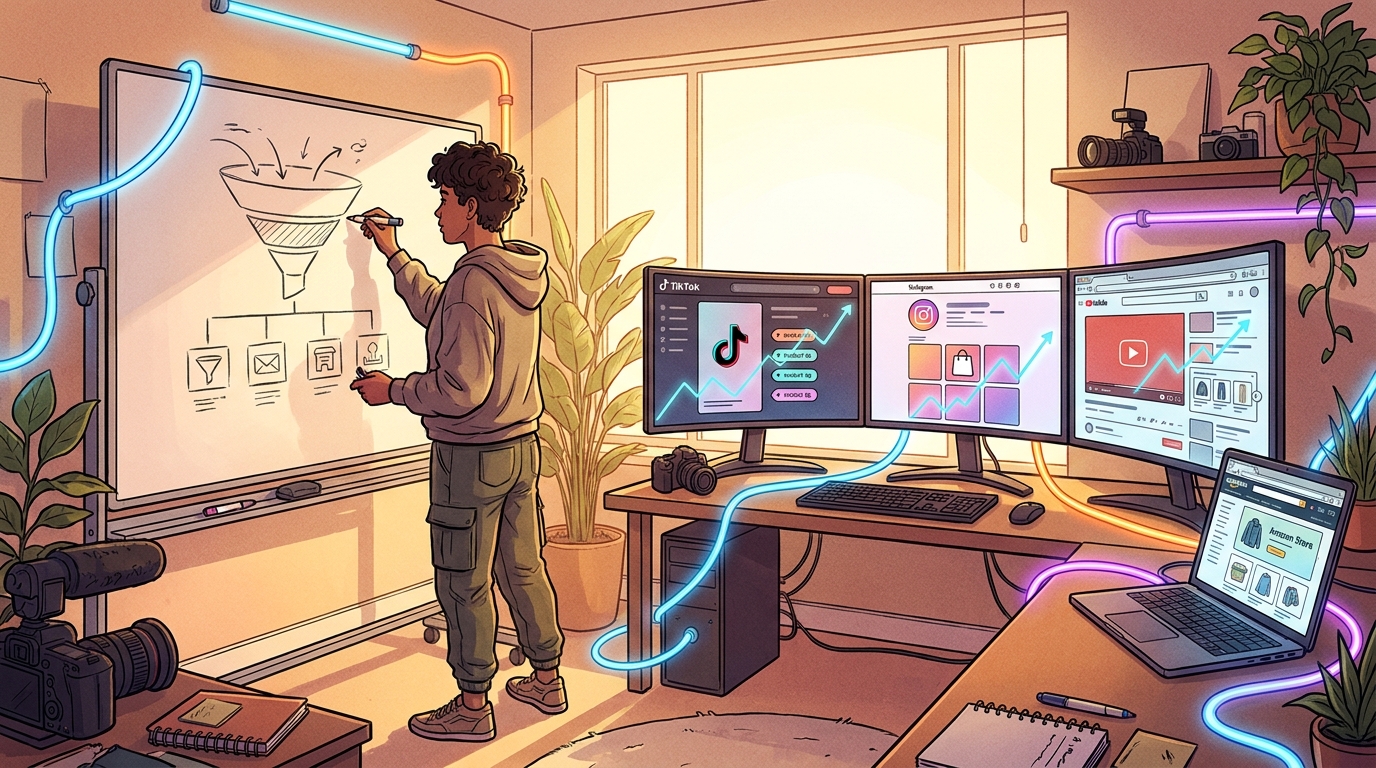
If you are an Amazon creator right now, you are not imagining it. The ground really is shifting under your feet. Commissions can feel softer, reporting feels less clear than it used to, and the old habit of tossing affiliate links into every bio, caption, comment, and Linktree page is getting harder to manage and easier for shoppers to ignore. That is frustrating, especially when you are doing more work and getting less certainty back. The bigger story is not just that Amazon changed a few things quietly. It is that shoppers are being trained by TikTok Shop, Instagram, and YouTube to expect one simple place where they can browse everything you recommend. That means your Amazon storefront is no longer just a nice extra. It is becoming your home base. The smart move now is to build a storefront everywhere system that sends people from short video content to one clean shopping destination.
⚡ In a Hurry? Key Takeaways
- Amazon’s quiet shift means creators should treat their storefront as the main shopping hub, not just one more link.
- Build one consistent storefront path across TikTok, Instagram, and YouTube so every short video points buyers to the same easy-to-browse place.
- This approach gives you a little more protection when commissions change, reports get fuzzier, or one platform’s algorithm suddenly cools off.
The old “spray links everywhere” model is wearing out
For a while, the playbook was simple. Post a product. Drop a link. Repeat that process everywhere.
That worked when shoppers were willing to hop across tabs, open clunky link pages, and dig around for the exact item you mentioned in a 20-second clip. People are less patient now. Social platforms trained them to expect fewer steps.
If someone sees your kitchen gadget on a Reel, your skincare routine on TikTok, or your desk setup on YouTube Shorts, they do not want a scavenger hunt. They want one clear place to keep shopping.
That is the real shift behind this Amazon influencer storefront strategy across TikTok Instagram YouTube. Your storefront is starting to matter more than the individual affiliate link.
What Amazon quietly changed
Amazon did not exactly put up a giant billboard announcing this. But creators have noticed a pattern. More traffic is being funneled toward storefront-style shopping behavior, while old-school reporting clarity and easy one-off link confidence do not feel as strong.
The result is subtle but important. Amazon appears to be rewarding a more organized shopping journey. Instead of sending people to random product pages one by one, creators are better off giving buyers a place to browse collections, idea lists, videos, and category picks in one spot.
That matters because a storefront does a few things a raw product link cannot:
- It keeps shoppers in your world longer.
- It encourages binge shopping.
- It makes your recommendations feel curated, not scattered.
- It gives you one destination to use across platforms.
Why TikTok, Instagram, and YouTube are pushing this change faster
Short-form video is no longer just content. It is a storefront preview.
TikTok Shop made that painfully obvious. People now expect to see a product in action and buy it with minimal friction. Instagram is doing the same with product tagging and in-app shopping habits. YouTube is moving harder into shopping features tied to creators and videos.
So even when the final purchase still happens on Amazon, the buyer expectation has changed. They want a clean path.
That is why this is bigger than Amazon alone. If you have not been following how platforms are bundling shopping, messaging, and payments together, it is worth reading The New ‘Super App Shuffle’: How TikTok’s Quiet Shopping, Messaging And Payments Push Could Rewrite Your Whole Sales Strategy. It helps explain why the “one place to discover and buy” habit is getting stronger so fast.
What “storefront everywhere” actually means
This does not mean pasting the exact same thing on every platform and calling it a strategy.
It means building one shopping home base, then making every piece of content feed into it naturally.
Your content is the door
TikToks, Reels, Shorts, story posts, carousels, livestream clips. These grab attention and create interest.
Your storefront is the room people walk into
Once they are interested, they need a place that feels organized. Think category shelves, not a junk drawer.
Your collections are the actual shopping experience
Best home office gear. Summer travel picks. Under-$25 beauty buys. New mom essentials. Dorm room basics.
That is the setup that helps buyers keep going after the first click.
How to build an Amazon influencer storefront strategy across TikTok Instagram YouTube
1. Pick one clear storefront promise
Your storefront should answer one simple question fast: “What kind of stuff will I find here?”
If your page is a mix of toddler snacks, gaming chairs, anti-aging serum, and camping knives with no structure, people bounce.
Create clear collections based on how your audience already thinks:
- As seen on TikTok
- My daily makeup routine
- Home office favorites
- Small apartment kitchen must-haves
- Travel gear I actually use
Simple beats clever here.
2. Match your short videos to storefront categories
Each video should have an obvious landing place.
If you post a Reel about three pantry organizers, send shoppers to your “Kitchen Organization” storefront section. If you post a Short about your filming setup, send them to “Creator Gear.”
This is better than sending them to one product page, because many people will want to browse similar items once they arrive.
3. Use the same language on every platform
Consistency helps more than people realize.
If your TikTok says “Shop my work-from-home setup,” your Instagram bio says “Office picks,” and your YouTube description says “desk items,” you are making shoppers think too hard.
Pick one label and use it everywhere. Same words. Same category name. Same destination.
4. Stop treating the bio link like a junk drawer
Too many creators have bio links with 18 buttons. That is not helpful. That is digital clutter.
Your top path should be obvious. For many creators, that now means:
- Shop my Amazon storefront
- Browse my latest finds
- See everything from my videos
You can still keep other links, but your main buyer path should be easy to spot.
5. Build platform-specific content, not platform-specific shops
This part is important. Your videos should fit each app. Your shopping destination should still feel unified.
TikTok can be fast, casual, and demo-heavy. Instagram can be more polished and visual. YouTube Shorts can be more search-friendly and explanation-based.
But all three should guide people toward the same organized storefront system.
What creators should do if reporting feels fuzzier
This is where a lot of people feel stuck. If your reporting gives you less detail, it is harder to know which individual post drove what.
You may not be able to fix Amazon’s reporting. But you can make your own system cleaner.
Track by content bucket
Instead of obsessing over every single post, look at themes:
- Beauty
- Kitchen
- Tech
- Travel
- Seasonal gift guides
If one category keeps getting strong response, double down there.
Watch click behavior outside Amazon too
Look at which videos get saves, comments asking for links, profile taps, and repeat questions. Those are buying signals even when the commission dashboard is not telling the full story.
Use naming discipline
If you keep changing collection titles, it gets harder to spot what is working. Stay consistent long enough to see patterns.
How brands should adapt too
This is not only a creator problem. Brands need to stop thinking in isolated campaign posts and start thinking in shopping paths.
If you send a creator one hero product and ignore the rest of the buyer journey, you are missing the point. Shoppers often want comparison, bundles, alternatives, and related items.
Brands should ask:
- Does this creator have a relevant storefront category for us?
- Can our product sit inside a broader themed collection?
- Are we helping the creator build a binge-shopping path, not just a one-click post?
The winners here will be the brands that fit naturally into a creator’s shopping ecosystem.
A simple storefront everywhere setup you can copy
Step 1: Create 5 to 8 storefront categories
Think evergreen first. Categories that will still make sense three months from now.
Step 2: Map content to each category
Make a list of your usual video topics and assign each one a storefront destination.
Step 3: Update bios and link pages
Make the storefront the clearest shopping option.
Step 4: Mention the category in the content
Say things like “I put all my desk picks in my Amazon storefront” or “Everything from this series is in my kitchen favorites list.”
Step 5: Refresh collections weekly
Do not let your storefront feel abandoned. New videos should connect to updated collections.
Step 6: Review what shoppers keep asking for
Your comments are telling you which categories deserve more attention.
What not to do
- Do not make a new random list for every single post.
- Do not bury your storefront under too many unrelated links.
- Do not assume one viral video means your whole strategy is working.
- Do not copy TikTok Shop tactics blindly if your audience still buys mostly on Amazon.
- Do not wait for perfect reporting before cleaning up your shopping system.
At a Glance: Comparison
| Feature/Aspect | Details | Verdict |
|---|---|---|
| Old affiliate link strategy | Single product links scattered across bios, captions, comments, and landing pages. Works for quick hits but creates friction and weakens the bigger shopping journey. | Less reliable now |
| Storefront everywhere strategy | Short-form content across TikTok, Instagram, and YouTube all points to one organized Amazon storefront with clear collections and themes. | Best long-term move |
| Platform-by-platform reaction mode | Creators change tactics every time Amazon, TikTok, Instagram, or YouTube tweaks shopping features, without building one stable system underneath. | Exhausting and fragile |
Conclusion
The useful shift here is not just “Amazon changed something again.” It is that shopping is getting centralized around clearer creator hubs, while discovery keeps happening in short videos all over the place. That helps the community right now because Amazon has quietly pulled more people into storefronts, TikTok Shop traffic is exploding, and YouTube and Instagram are pushing in-video shopping harder every week. If you build an organized storefront everywhere system now, you do not have to panic every time commissions move, reports get downgraded, or an algorithm changes its mind. You give buyers one easy place to keep shopping your recommendations, and that is often better for them and better for your business.