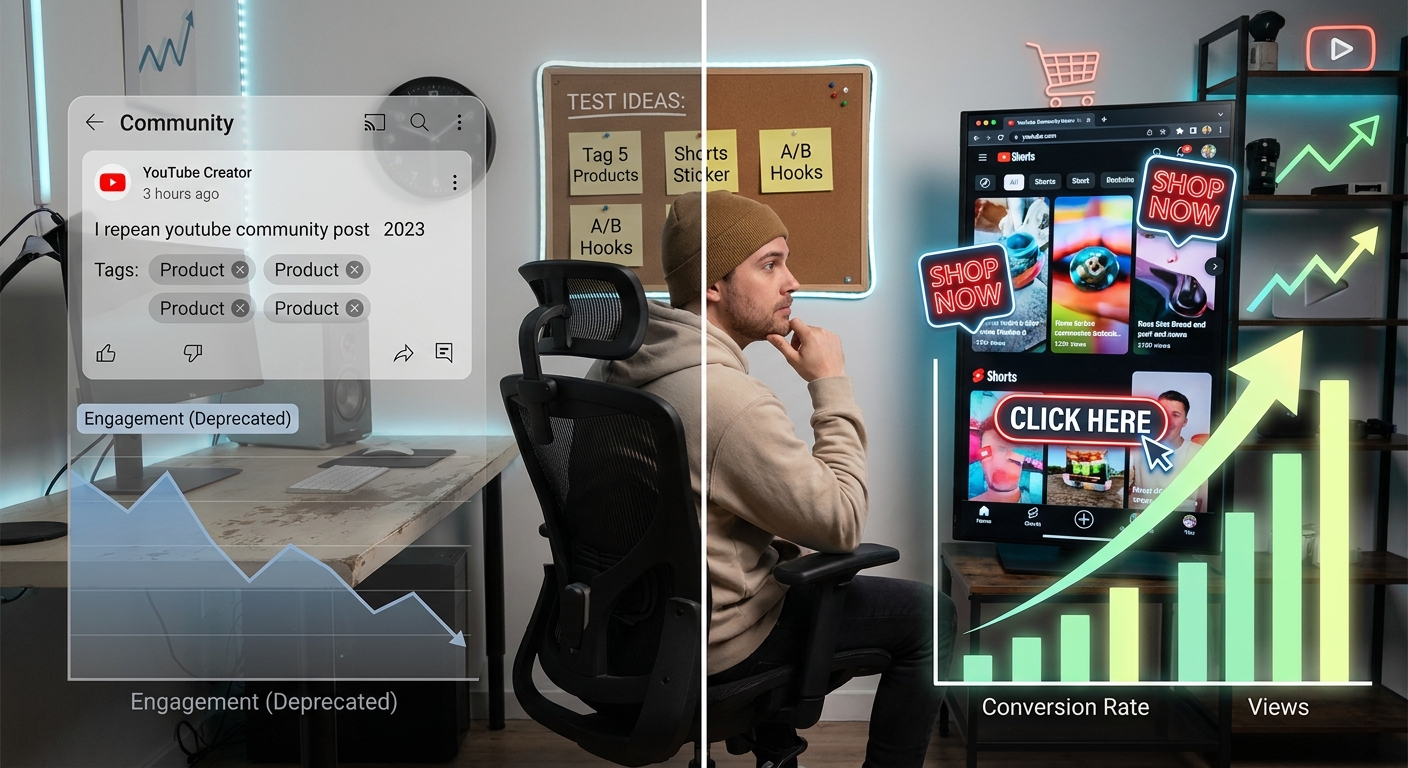
If you logged into YouTube Studio and felt like the shopping tools had moved again, you are not alone. A lot of creators are annoyed right now, and for good reason. You spend months learning one feature, building a workflow around it, then YouTube quietly changes the rules. This time, it is product tags inside Community posts being wound down. That matters because plenty of channels used posts as a simple, low-effort way to keep products in front of viewers between videos. Now the obvious question is, where do those shopping clicks go next? The short answer is this. YouTube is not backing away from shopping. It is narrowing the surfaces it seems to believe actually convert. If you are trying to figure out YouTube Shopping product tags in posts removed what to do now, the answer is to stop treating posts as a storefront and start putting more energy into Shorts, video-level tagging, and affiliate-ready formats that YouTube is still clearly supporting.
⚡ In a Hurry? Key Takeaways
- YouTube is removing product tags from Community posts, so creators should not count on posts as a shopping surface going forward.
- Shift your effort toward Shorts product stickers, tagged long-form videos, livestream shopping, and affiliate tagging where YouTube is still actively building.
- Do not panic and rebuild everything at once. Check your analytics first, then move links, product mentions, and calls to action into formats that viewers actually tap.
What happened with product tags in posts?
YouTube appears to be winding down product tagging inside Community posts. For creators, that means one less built-in way to make a casual update shoppable. If your channel used posts to highlight a deal, restock, or quick recommendation, that path is getting weaker or disappearing entirely.
That sounds small until you remember how many creators used posts as the easy middle ground. Not a full video. Not a live stream. Just a quick post with a product attached. For some channels, that was a useful little sales lane.
Now that lane is closing.
Why YouTube would remove a feature people were using
Tech platforms do this all the time. They do not always kill the least loved feature. They often kill the one that does not fit where they want user attention to go.
And right now, YouTube seems much more interested in shopping moments that happen inside video behavior, not beside it.
Think about the pattern. Shorts keep getting shopping tools. Affiliate tagging keeps getting attention. Livestream shopping still makes sense for demos and urgency. Long-form videos can show, explain, compare, and sell in one place. Community posts, by comparison, are quick to consume and quick to skip.
That does not mean posts were useless. It means YouTube may not have seen them as a strong enough place to keep investing shopping resources.
What this really means for creators and brands
The big lesson is not just “one feature is gone.” The lesson is that YouTube is quietly telling you which behavior it wants to reward.
Posts are becoming more of a relationship tool
Community posts still matter for polls, updates, teasing content, and keeping your audience warm. They are just looking less like a checkout lane.
Video is still the main shopping engine
If someone is going to buy, YouTube seems to prefer that decision happen while they are actively watching. That makes sense. Video builds trust better than a static post. A creator can explain why a product is useful, show it in action, and answer objections before the viewer leaves the page.
Shorts are not just for reach anymore
For a lot of creators, Shorts used to be treated like top-of-funnel fluff. That is changing. Product stickers and quick recommendation formats can turn a short burst of attention into a direct shopping action.
YouTube Shopping product tags in posts removed what to do now
If that is the search in your head right now, here is the practical answer.
1. Move product discovery into Shorts
If you have products that used to live in posts, start testing them in Shorts instead. Keep it simple. One product per Short is often easier for viewers to follow. Show the problem, show the item, show the result.
Do not make it feel like an ad read every time. Think more like a friend saying, “Here is the thing that fixed this annoying problem for me.”
2. Tag products inside long-form videos that already get search traffic
This is the smarter long-game move. If you have evergreen videos that keep pulling viewers from search, update those with relevant shopping tags where available. A video that ranks for months can quietly outsell a dozen throwaway posts.
3. Use Community posts to feed the formats that can still sell
Posts are not dead. They just need a new job. Use them to point people to your Short, your full review, your live shopping stream, or your latest recommendation video. In other words, stop asking the post to close the sale. Ask it to start the journey.
4. Clean up your calls to action
If your old workflow was “make post, add product tag, done,” you need a new template. Build one. For example:
Short video. Clear verbal mention. On-screen product name. Tagged item if available. Backup link strategy in description or approved affiliate setup. Follow-up Community post that sends people to the video.
5. Check analytics before changing everything
This part matters. Some creators are about to overreact. Before you scramble, look at where your shopping clicks were actually coming from. If Community post product tags were only a tiny slice, this change may feel worse than it really is.
If they were meaningful for your niche, then yes, this is a real workflow problem. But even then, your best replacement is likely a mix of Shorts and product-tagged videos, not another static surface.
Where YouTube still seems to be investing
If you want to follow the trail, do not focus on what disappeared. Focus on what keeps getting polished.
Shorts product stickers
This is one of the clearest signs. YouTube wants shopping to happen in motion, while attention is high. Shorts are fast, visual, and easy to test in volume.
Affiliate tagging
This matters for creators who do not run their own store. YouTube has good reason to make affiliate shopping smoother because it gives more creators a reason to monetize without needing their own product catalog.
Livestream shopping
Not every niche can pull this off, but for beauty, gadgets, home gear, and collectibles, live shopping still fits naturally. It creates urgency and lets creators answer real-time questions that often block a purchase.
Product mentions inside videos viewers already trust
This is the least flashy but often the most reliable. A useful review, roundup, or tutorial can keep converting long after it is published.
What brands should do differently
Brands should stop assuming every YouTube surface matters equally. That is how budgets get wasted.
If you work with creators, ask a simple question. Where is the viewer most likely to act? Usually, it is not in the static update they skim while waiting for lunch. It is in the clip, review, demo, comparison, or live session where the product makes immediate sense.
So if product tags in posts are going away, brands should shift support toward creators who can build shopping into video naturally. Give them assets that actually help. Demo angles. FAQ answers. Before-and-after use cases. Clear affiliate terms. A decent landing page. The basics still matter more than the platform trick of the month.
Common mistakes to avoid right now
Treating every post loss like a business-ending problem
It is frustrating, yes. But it is not the end of YouTube Shopping. It is a redirect.
Stuffing products into every Short
People can smell desperation fast. If every clip feels like a storefront, trust drops. Mix in useful content that earns the click.
Ignoring evergreen videos
Creators love new formats because they feel exciting. But your old how-to video with steady traffic may still be your best sales tool.
Forgetting the audience experience
The shopping feature is not the strategy. The audience need is the strategy. Features come and go. Helping viewers pick the right thing stays useful.
A simple plan for the next 30 days
If you want a calm, practical reset, try this:
Week 1
Audit where your shopping clicks and conversions actually came from. Separate posts, Shorts, long-form, live streams, and description links if you can.
Week 2
Pick three products that used to perform well in posts. Turn them into three Shorts with simple product-focused storytelling.
Week 3
Update your best evergreen videos with stronger product mentions and shopping support where available.
Week 4
Use Community posts to push viewers toward the best-performing Short or video, instead of trying to sell directly inside the post itself.
That gives you a testable replacement plan without blowing up your whole content calendar.
At a Glance: Comparison
| Feature/Aspect | Details | Verdict |
|---|---|---|
| Community post product tags | Being removed or wound down, which makes posts less useful as direct shopping tools. | Do not build your future strategy here. |
| Shorts product stickers | Still aligns with where YouTube is putting shopping attention, especially for quick discovery and impulse interest. | High priority for testing now. |
| Tagged long-form videos and affiliate tools | Good fit for reviews, tutorials, comparisons, and evergreen search traffic that can convert over time. | Best long-term foundation. |
Conclusion
Today a lot of creators and brands are spinning their wheels trying to figure out why some YouTube shopping tools quietly disappear while others suddenly drive all the sales. The removal of product tags in posts is frustrating, especially if that feature had become part of your routine. But the bigger picture is actually useful. YouTube is showing you where it still believes shopping works best. Inside Shorts, inside videos, inside affiliate-friendly formats, and in moments where viewers can see a product do something instead of just sitting next to a caption. That is the real takeaway. Stop wasting energy on dead surfaces. Put your effort into the formats YouTube is still improving and that viewers are more likely to act on. If you make that shift now, this change can be less of a setback and more of a course correction.