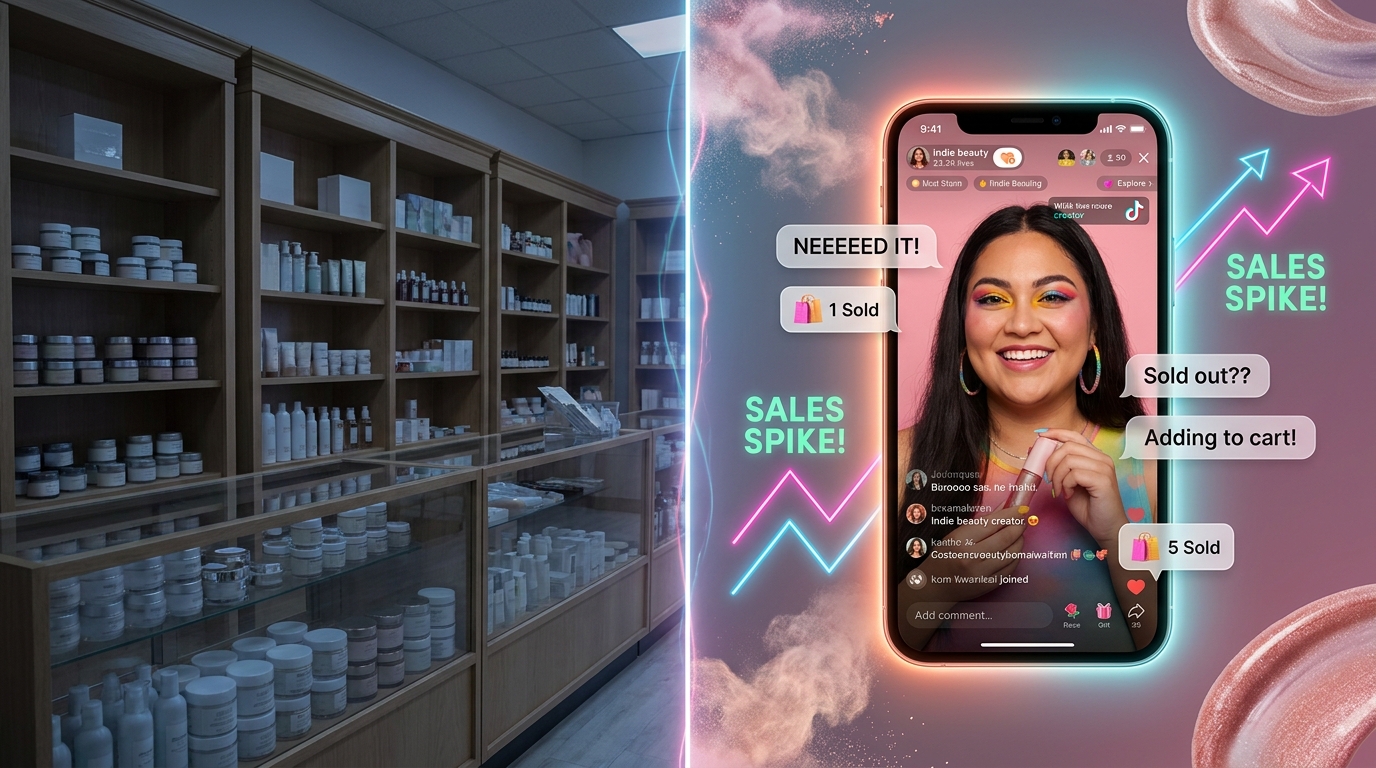
If you run an indie beauty brand right now, this shift probably feels unfair. You spent years trying to crack wholesale, polish your packaging, and earn shelf space, only to watch a creator with a ring light sell out a lip oil in a weekend. That is not hype anymore. It is the new buying path. For beauty founders, the old retail ladder of pitch buyers, win placement, then hope for discovery is getting weaker fast. TikTok Shop has mashed discovery, trust, demo, and checkout into one scroll. That changes who wins. It also changes what you need to do this week, not next quarter. The good news is smaller brands can still move fast if they stop treating TikTok as a side marketing channel and start treating it like a sales floor. The goal is not to go viral for bragging rights. The goal is to build a repeatable TikTok Shop beauty brands strategy that creates demand without blowing up your margins, inventory, or customer experience.
⚡ In a Hurry? Key Takeaways
- TikTok Shop is changing beauty retail because discovery and checkout now happen in the same moment, often through creators instead of stores.
- Start with one or two hero products, a simple creator commission offer, and a stock plan that can handle sudden spikes.
- Do not chase views alone. Protect margins, shipping speed, and customer trust so a viral hit turns into a real brand, not a one-week blip.
The old beauty playbook is breaking
For a long time, the dream path was clear. Get into Sephora, Ulta, or a respected boutique. Use that credibility to grow. Add paid ads. Build a field team. Expand shelf space.
That path still matters for some brands. But it is no longer the only path, and in some cases it is not even the fastest one.
TikTok Shop is changing beauty because it removes the gap between “I heard about this” and “I bought this.” A creator applies the product on camera. People see texture, finish, shade, and reaction in real time. Then they tap to buy without leaving the app.
For beauty, that is especially powerful. This category has always depended on visual proof, trusted recommendations, and impulse buying. TikTok Shop packs all three into one feed.
Why beauty is getting hit first
Beauty products are made for short video. A cleanser foams. A serum glows. A concealer covers in seconds. A lip stain lasts through coffee. These are easy stories to show, and easy for viewers to understand fast.
That gives TikTok Shop a huge advantage over traditional retail. In a store, your product sits on a shelf next to ten similar ones. Online through TikTok, your product can be demonstrated by a person the buyer already trusts.
And creators are following the money and the momentum. If you want proof that social commerce attention is moving away from older programs, read Why Creators Are Quiet Quitting Amazon Influencer And Flocking To TikTok, Instagram And YouTube Shopping. That creator shift matters because your future sales team may not be retail associates or ad buyers. It may be dozens of small creators making convincing videos from their bathroom counters.
What indie brands need to do this week
1. Pick your hero products, not your full catalog
This is the first mistake many brands make. They upload everything and hope something catches. That usually creates confusion.
Instead, choose one to three products with these traits:
- Easy to understand in under 10 seconds
- Strong visible before-and-after effect
- Clear problem solved, like redness, dry lips, shine, or breakouts
- Simple price point that feels like an impulse buy or easy trial
- Low shade or fit complexity, unless you already have a good matching story
If you sell skincare, a hero product might be a cleanser, spot treatment, or overnight mask with a clear result. If you sell makeup, think about products that “show” well. Mascara, blush sticks, lip oils, setting sprays, and correctors often do better than complicated full routines.
The question is simple. Can a stranger understand why this product matters before they scroll away?
2. Build a creator offer that is good enough to get attention
You do not need celebrity creators. In fact, for many indie brands, smaller creators are a better fit. They are often cheaper, more responsive, and better at making content that feels honest.
Your starter creator program should include:
- A free product seeding list
- A commission rate that is actually worth their time
- A short brief with talking points, but room for their own style
- A promise on shipping speed and in-stock inventory
Do not over-script creators. Beauty buyers can smell fake enthusiasm in seconds. Give creators the truth, not a corporate paragraph. Tell them what the product does, who it is for, what results customers talk about, and what claims they should avoid.
Also, do not bet everything on one big creator. Spread your risk. Ten creators with modest but believable videos are often safer than one expensive post that may or may not land.
3. Keep commission deals simple and risk-balanced
If you are a smaller brand, you need offers that protect cash while still motivating creators.
A practical setup might look like this:
- Free product for qualified creators
- Affiliate commission on tracked sales
- Bonus payout only after a sales threshold is reached
- Short test window, like 2 to 4 weeks, before raising spend
This matters because TikTok Shop can create weird spikes. One creator might do nothing. Another might suddenly move 4,000 units in two days. A test structure lets you learn without handing out large flat fees too early.
Be honest about your economics. If you cannot support deep discounts and high commissions at the same time, do not pretend you can. Better to create a smaller but sustainable offer than win sales that lose money.
4. Fix fulfillment before you chase volume
This part is boring until it is a disaster.
If a video hits and you get thousands of surprise orders, everything weak in your operation gets exposed at once. Inventory accuracy. pick-and-pack speed. customer support. return handling. shipping promises. all of it.
Before pushing hard, answer these questions:
- How many units can you ship in 24, 48, and 72 hours?
- Do you have backup packaging supplies?
- Can your warehouse handle a 5x spike without errors?
- Who updates customers if there is a delay?
- Do you have a reorder trigger before stock gets dangerously low?
A viral hit is only good news if customers receive what they ordered on time. If your first big TikTok moment ends in delayed shipping and angry comments, the algorithm can hand you visibility faster than your team can handle it.
5. Make content that sells the product, not just the brand mood
A lot of beauty brands still post like they are making glossy campaign ads. Nice lighting. slow-motion textures. vague captions. beautiful, but not very useful.
TikTok Shop usually rewards practical content. Show the application. Show the texture. Show who it is for. Show what problem it solves. Show the result in normal lighting.
Good hooks are plain and specific:
- “I did not expect this lip oil to last through lunch.”
- “My redness calmed down in three uses.”
- “This blush is for people who always overdo blush.”
- “If every cleanser makes your face feel tight, try this.”
Pretty branding still matters. But if buyers cannot quickly understand the benefit, the scroll wins.
How to turn TikTok sales into real brand equity
The risk with TikTok Shop is obvious. You can get trapped in one-off spikes. A product goes viral, sells fast, then disappears. That is exciting, but it is not a business plan.
To build something more durable, use TikTok sales as the top of a bigger relationship.
Capture customers after the first purchase
Use package inserts, email signup incentives, and post-purchase education to move customers into channels you control. Help them learn how to use the product well. Suggest the next product naturally. Ask for reviews. Invite them to follow your account for tutorials.
Your goal is to make the second purchase easier than the first.
Turn creator proof into reusable assets
When creators make strong videos, ask for permission to reuse them in ads, product pages, emails, and retail pitches. Social proof should not live for only 48 hours in a feed. It should strengthen every sales channel you have.
Feed retail with social proof, not the other way around
This is the part many founders miss. TikTok success can help you in retail, too. If you can show velocity, repeat creator demand, strong ratings, and clear customer love, you are walking into buyer meetings with proof that people already want the product.
That is very different from asking a retailer to “discover” you from scratch.
Common mistakes to avoid
Going too broad too fast
Do not launch ten products, twenty creators, and three offers all at once. You will not know what worked.
Choosing products that need too much explanation
If the benefit takes a full paragraph to explain, it may struggle in short-form commerce.
Ignoring customer support
Fast growth brings more “where is my order?” messages, shade questions, damaged package claims, and refund requests. Plan for that.
Confusing virality with profitability
A product can sell well and still hurt the business if discounts, commissions, shipping, and returns eat the margin.
Letting creators make risky claims
This is especially important in skincare. Do not let creators drift into medical claims, unrealistic promises, or language that could create legal trouble. Clear guidance matters.
A simple 7-day decision tree for beauty founders
If you need a practical starting point, here is a one-week plan.
Day 1: Pick your top 1 to 3 TikTok-ready products
Choose based on visible results, simple message, good margin, and available inventory.
Day 2: Stress-test your fulfillment
Map what happens if orders jump 5x. Find the weak spots now.
Day 3: Set a creator offer
Decide your sample budget, commission range, bonus thresholds, and usage rights for content.
Day 4: Build a short creator brief
Include product facts, ideal customer, key hooks, claim limits, and shipping details.
Day 5: Start outreach
Target creators who already talk about your category in a natural way. Do not chase follower count only. Watch how they explain products.
Day 6: Prepare your post-purchase flow
Make sure email, SMS, inserts, and review requests are ready before volume arrives.
Day 7: Review the economics
Check margin after commission, discount, shipping, returns, and platform fees. If the math is ugly, fix it before you scale.
At a Glance: Comparison
| Feature/Aspect | Details | Verdict |
|---|---|---|
| Hero product selection | Products with quick visual proof, simple messaging, and strong margins tend to perform best on TikTok Shop. | Start narrow. One winning product beats a crowded catalog. |
| Creator partnerships | Smaller creators with believable demos and affiliate-style deals can drive strong sales without huge upfront cost. | Best early growth path for most indie brands. |
| Operational readiness | Inventory, shipping, customer service, and claim control can make or break a viral moment. | Do not scale until the back end can survive a spike. |
Conclusion
TikTok Shop is not just another marketing channel for beauty. It is changing how products are discovered, trusted, and bought. That is why legacy retail feels slower and why indie brands need a new plan now. The good news is you do not need a giant budget or a retail buyer’s approval to start. You need a clear TikTok Shop beauty brands strategy. Pick the right hero products. Set creator deals that make sense for both sides. Prepare your operations before a surprise hit wrecks customer trust. Then turn short-term sales into long-term brand value with repeat purchase systems and reusable social proof. Beauty is where this shift is showing up first and hardest, which makes it the best place to learn fast. If founders and marketers can move from “Sephora or bust” to “TikTok-first distribution” with discipline, they will not just survive this change. They may end up stronger because of it.