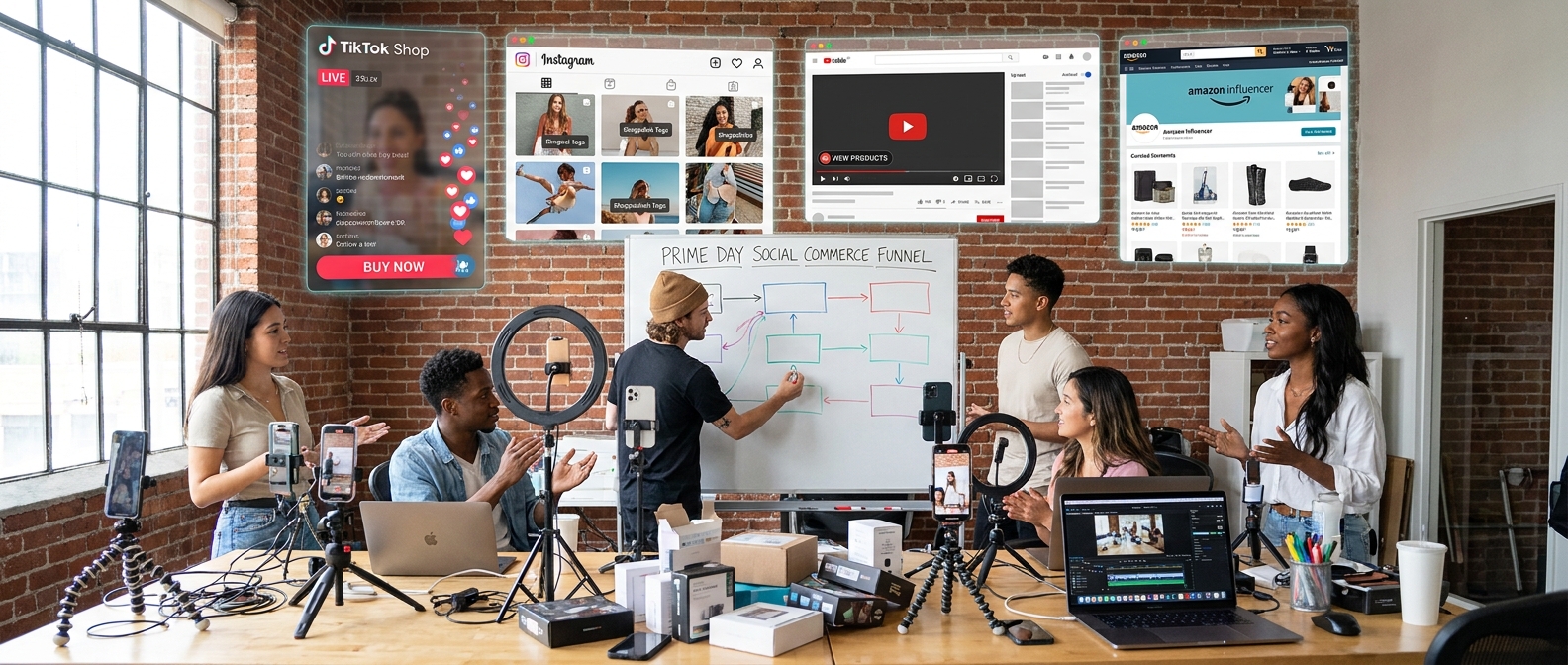
Prime Day is coming, TikTok Shop keeps minting breakout products, and a lot of creators are still stuck doing the same thing they did last year. Post a haul. Drop a link. Cross their fingers. If that sounds familiar, you are not behind because you are lazy. You are dealing with a social commerce market that keeps changing the rules mid-game. Amazon wants cleaner, more guided shopping. TikTok rewards fast, native product demos. Instagram is adding more paid and safety tools. YouTube Shopping is giving smaller channels a better shot. The old “just post everywhere” plan is not enough anymore. The better move is simpler and smarter. Build one clear offer, then shape it into platform-specific touchpoints that match how people actually shop on each app. That is the real shift happening right now. Creators are no longer just promoting products. The smart ones are quietly becoming the shopping layer between confused buyers and crowded marketplaces.
⚡ In a Hurry? Key Takeaways
- TikTok Shop and Amazon Influencer now reward guided recommendations more than random product hauls, especially around Prime Day.
- Start with one hero offer, then turn it into four connected touchpoints across TikTok Shop, Instagram Shopping, YouTube Shopping, and Amazon Influencer.
- Watch platform rules, commission changes, and disclosure requirements closely, because fast sales are great until a post gets limited or an account loses access.
The old social commerce playbook is breaking
For years, creators could get away with being broad. A favorites video here. A quick affiliate story there. Maybe an Amazon storefront link in bio. That worked when shoppers were happy to click around and do the homework themselves.
Now they expect help.
TikTok Shop trained people to buy inside the content flow. Amazon is pushing shoppers toward smarter discovery with AI-assisted recommendations and tighter control over how products are surfaced. That means buyers are getting used to a guided path, not a pile of links.
This is the big change. Social commerce is shifting from “look at what I bought” to “here is the exact product for this exact problem, and here is why.”
Why TikTok Shop is setting the pace
TikTok Shop is not winning because it has every product. It is winning because the shopping experience feels native to the feed. People see a problem, watch a quick demo, hear a creator explain who it is for, and can buy before they lose interest.
That is a huge deal for small brands and creators. It lowers friction. It also raises the bar.
What works on TikTok Shop now
The strongest TikTok Shop posts usually do three things fast:
- Name the problem in the first few seconds.
- Show the product in use, not just in packaging.
- Give a reason to buy now, like Prime Day price matching, limited stock, or a direct comparison.
A random haul can still pop off. But it is no longer a strategy. It is a lottery ticket.
Amazon is learning from social, even if it looks different
Amazon still matters because shoppers trust it when they are ready to buy, especially during Prime Day. But the company is changing too. Its influencer ecosystem is getting stricter, and its shopping tools are getting more recommendation-driven.
That matters for anyone building a TikTok Shop and Amazon Influencer Prime Day social commerce strategy. Amazon is not just a checkout page anymore. It is becoming a discovery engine that wants cleaner input, better content, and more useful guidance.
What this means for creators
If your Amazon content is just “my storefront is linked,” you are probably leaving money on the table. Prime Day shoppers want shortcuts. They want categories, picks, and reasons.
Think less like a link-dropper and more like a personal shopper.
Instead of linking to 40 beauty deals, build a “Prime Day starter kit under $50” or “three upgrades that actually made my home office better.” That is closer to how AI shopping assistants and social feeds are training people to browse.
The four-touchpoint strategy small brands and creators should use
Here is the practical part. If you have one offer, one product bundle, or one seasonal angle, do not reinvent it four times. Adapt it four times.
Let’s say your core offer is simple: a portable blender that is discounted for Prime Day and also available through TikTok Shop.
1. TikTok Shop: create the discovery hook
Your TikTok job is to stop the scroll and make the product feel useful right now.
- Lead with a specific use case, like “I stopped buying $9 smoothies after this.”
- Show it working in the first five seconds.
- Answer one objection quickly, like battery life, cleaning, or noise.
- Use the in-app product link so the path to checkout stays short.
Best format: short native demo, creator voiceover, clear caption, direct product tag.
2. Instagram Shopping: build trust and polish
Instagram is where many buyers double-check. They want to see if your product feels real, if your brand looks consistent, and if the creator actually uses what they post.
- Turn the TikTok idea into a Reel with cleaner visuals.
- Use Stories for FAQs, polls, and reminder stickers.
- Post one carousel with “who this is for” and “who should skip it.”
This is where Instagram can still help close sales, even if discovery starts somewhere else.
3. YouTube Shopping: answer the buyer’s last questions
YouTube is still one of the best places for high-intent shoppers. They are often a little later in the funnel. They search before buying.
- Make a short review or comparison video.
- Use YouTube Shopping tags where available.
- Focus on durability, alternatives, and real-world use after a week or two.
If TikTok creates interest, YouTube often handles the “okay, but is it actually good?” moment.
4. Amazon Influencer: catch the ready-to-buy shopper
Now bring the same offer into Amazon with much more structure.
- Create a storefront section tied to Prime Day.
- Group the hero product with two or three related add-ons.
- Write short, plain-language notes about why each item made the cut.
- Use idea lists and review content where eligible.
This is where your recommendation feels most useful. Amazon shoppers are already close to checkout. Your job is to reduce choice overload.
How to turn one offer into a coordinated campaign
Here is a simple weekly flow that works better than posting randomly.
Day 1: Hook
Launch the TikTok Shop video with the strongest pain point and direct demo.
Day 2: Trust
Post the Instagram Reel, then follow with Stories answering the top questions from comments and DMs.
Day 3: Proof
Upload the YouTube Short or longer review that compares your product to one or two alternatives.
Day 4: Conversion
Push the Amazon Influencer list or storefront update for shoppers who prefer Prime shipping, reviews, and familiar checkout.
That is one offer. Four touchpoints. One clear story.
What brands should stop doing right now
A lot of wasted effort comes from habits that feel productive but are not.
Stop briefing creators with generic talking points
If every creator says “I’m obsessed” and “run, don’t walk,” the content becomes wallpaper. Give them one use case, one audience, and one reason this matters this week.
Stop measuring only last-click sales
TikTok may create the first spark. Instagram may reassure. YouTube may answer objections. Amazon may get the final sale. If you only credit the last click, you will misunderstand what is actually working.
Stop treating each platform like a separate island
Your customer does not care about your org chart. They just move from app to app until they feel ready to buy.
What creators should protect as platforms get stricter
There is also a less glamorous part of this story. More shopping features usually mean more rules.
Keep disclosures obvious
Use clear affiliate and sponsored labels. Burying them is not worth the risk.
Watch your commission mix
Falling rates can make a once-profitable format suddenly weak. Track earnings by platform, not just total revenue.
Own your audience where you can
Email lists, text alerts, and even a simple landing page matter more when algorithms swing wildly. Social platforms are great for reach. They are not your customer database.
The bigger trend behind all of this
Creators are quietly rewriting social commerce because they sit in the middle of two messy realities.
On one side, shoppers are overwhelmed. On the other, platforms are crowded and increasingly automated. The creator who wins is not the loudest one. It is the one who makes buying feel easier, safer, and more specific.
That is why the best creators now look a lot like mini retailers. They package context. They narrow choices. They explain trade-offs. They do the human part that marketplaces and AI assistants still struggle to get right.
At a Glance: Comparison
| Feature/Aspect | Details | Verdict |
|---|---|---|
| TikTok Shop | Best for discovery, impulse buys, fast demos, and native in-feed checkout. | Use it to start demand quickly. |
| Instagram Shopping | Useful for trust-building, polished visuals, Stories, and community feedback loops. | Use it to reinforce and reassure. |
| YouTube Shopping and Amazon Influencer | YouTube helps answer deeper buying questions. Amazon catches high-intent Prime Day shoppers who want familiar checkout and curated lists. | Use them to close with proof and convenience. |
Conclusion
The main takeaway is simple. Stop chasing every new feature like it is a separate job. Right now, the better move is to build one strong offer and guide people through it in different ways across TikTok Shop, Instagram Shopping, YouTube Shopping, and Amazon Influencer. That helps the community right now because TikTok Shop is exploding in sales, Instagram is rolling out new paid and safety features, YouTube Shopping is opening up to smaller channels, and Amazon is heading into another huge Prime Day while quietly tightening its influencer program and pushing AI-driven recommendations. Creators and small brands do not need more chaos. They need a tighter system. If you can make your content feel like helpful shopping guidance instead of noise, you will be in a much better position than the people still posting random hauls and hoping something sticks.