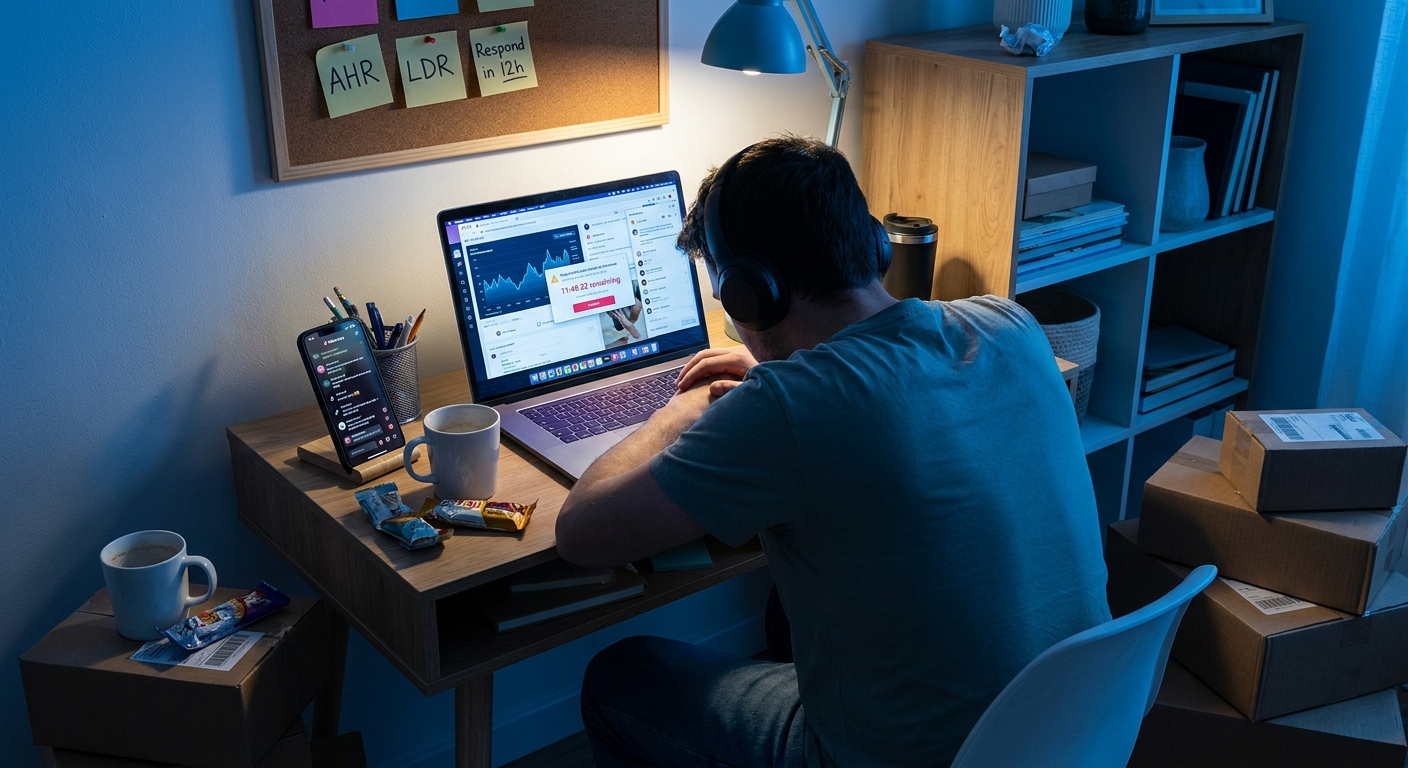
If you sell on TikTok Shop, this is the kind of update that can ruin your week. You can be doing the hard part right. Good products, decent videos, steady orders. Then out of nowhere, your shop health dips because you did not reply to customer messages fast enough. That is the new problem many sellers are now waking up to. TikTok Shop is putting more weight on response speed, and the TikTok Shop response rate rule 12 hours is the number to watch before July hits. If your team misses that window too often, it can hurt store ratings, reach, and even promo access. That stings, especially for small brands that do not have a full-time support desk. The good news is this is fixable. You do not need a huge budget. You need a cleaner message routine, better staffing for off-hours, and a simple system that stops customer chats from slipping through the cracks.
⚡ In a Hurry? Key Takeaways
- TikTok Shop is tightening enforcement on seller message response times, and missing the 12-hour window can damage shop performance.
- Set up saved replies, assign message coverage every day, and treat buyer chats like order fulfillment, not an extra task.
- Do not wait for a warning. Many sellers report sudden rating drops and penalties after policy changes or delayed support responses.
What is changing, and why sellers are nervous
The short version is simple. TikTok Shop wants sellers to answer customers faster. Not next day. Not when someone on your team gets around to it. Faster.
The TikTok Shop response rate rule 12 hours is becoming one of those quiet platform rules that can cause very loud pain. If a customer sends a question about shipping, sizing, returns, stock, or a damaged item, TikTok expects a timely response. Miss too many of those, and your shop can start looking unreliable in TikTok’s system, even if your actual products are solid.
That matters because TikTok Shop is not just a marketplace. It is a marketplace tied to an algorithm. Your seller metrics can affect visibility, campaign performance, trust signals, and access to certain growth tools.
Why this catches good sellers off guard
Most small sellers are not ignoring customers on purpose. They are juggling everything at once. They are packing orders, filming content, chasing creators, fixing inventory mistakes, and trying to keep up with support tickets on a platform that is still changing fast.
That is exactly why this rule is risky. It punishes messy operations more than bad intentions.
Common ways sellers miss the 12-hour mark
Here is how it usually happens:
- A buyer messages late at night and no one checks until the next morning.
- Weekend coverage is weak, so Friday evening messages sit too long.
- Notifications are turned off or buried under personal TikTok alerts.
- One person “owns” support, then gets sick or takes a day off.
- The team answers some messages in email or comments, but forgets the actual Shop inbox.
None of that sounds dramatic. But stacked together, it can quietly crush your response metrics.
What could happen if you ignore it
This is the part sellers should take seriously. A slower response rate is not just a cosmetic stat. It can lead to real business damage.
Possible fallout
Depending on how TikTok applies enforcement, sellers could see:
- Lower shop performance scores
- Reduced eligibility for promotions or platform perks
- Less buyer trust when customers compare stores
- Less reach if poor shop health affects visibility
- Extra stress when you are already trying to scale
And the worst part is timing. Social commerce is getting more crowded, not less. If your traffic gets throttled because of message handling, it can hit right when competitors are ramping up.
The smart fix is to treat messages like orders
A lot of sellers still treat support messages as background noise. That has to change. If TikTok is scoring you on response speed, customer messages are now part of operations.
Think of it this way. You would not leave paid orders unshipped for a day because no one checked the dashboard. Buyer questions now deserve that same level of discipline.
Start with a simple daily coverage plan
You do not need call-center software. You do need ownership.
- Assign one person to check the Shop inbox at opening time.
- Assign a second check midway through the day.
- Do a final check before close.
- Cover weekends and evenings, even if only for 10 to 15 minutes.
If you are a solo seller, set alarms. Seriously. It sounds basic because it is. Basic systems prevent expensive mistakes.
Use saved replies for repeat questions
Most buyer questions are not brand new. They are repeats.
Create saved responses for:
- Shipping times
- Return policy
- Size or fit help
- Order status questions
- Damaged item steps
- Restock timing
The goal is not to sound robotic. The goal is to answer quickly, clearly, and consistently. You can always personalize after the first reply.
Your first reply buys you time
Many sellers think they need a perfect answer right away. Usually, you just need a fast human answer that shows the buyer has been heard.
For example:
“Thanks for reaching out. I am checking this for you now and will update you shortly.”
That kind of reply can help protect your response time while you sort out the full solution.
A practical checklist to fix your shop before July
If you want a clean plan, work through this list today.
1. Audit your inbox response times
Look back over the past 2 to 4 weeks. When are messages coming in, and when are they actually getting answered? Find the gap. Most sellers already have one, even if they have not named it yet.
2. Turn on the right notifications
Make sure TikTok Shop messages trigger alerts on the devices your team actually checks. Test them. Do not assume they work.
3. Create a response schedule
Even a tiny business needs a support rhythm. Morning, midday, evening. Every day.
4. Write 10 saved replies
This is one of the fastest wins. Ten solid templates can cut response time dramatically.
5. Assign backup coverage
If one person handles support, pick a backup. If you are solo, plan your “away” routine in advance.
6. Keep return and shipping info easy to find
Some buyer messages happen because your store info is vague. Tighten product pages, shipping estimates, FAQs, and policy wording so fewer people need to ask basic questions.
7. Watch your metrics weekly
Do not wait until traffic drops. Check whatever seller performance signals TikTok gives you on a regular basis and look for early warning signs.
What not to do
There are a few bad habits that become very expensive under stricter enforcement.
- Do not rely on memory to check messages.
- Do not assume comments count as inbox replies.
- Do not leave buyers hanging while you wait for TikTok support.
- Do not use vague one-line answers that create more back-and-forth.
- Do not think “small shop” means you will be overlooked.
Platforms usually automate these checks. That means even honest sellers can get hit if their process is weak.
If TikTok support is slow, protect yourself anyway
This is another big frustration right now. Sellers often report confusing guidance, slow support responses, and policy enforcement that feels inconsistent. That makes it tempting to wait for clarity.
Do not wait.
If support is messy, your best move is to build a shop process that is stronger than the platform confusion around it. Screenshot key conversations. Track issue times. Keep a simple log of buyer complaints and your replies. If something gets escalated later, having a record helps.
The bigger lesson for social commerce sellers
TikTok Shop is growing up fast, and that usually means stricter seller controls. Early on, platforms focus on growth. Later, they start grading reliability. Fast response times, fast handling, low cancellation rates, clean fulfillment. That is the direction of travel.
So yes, this specific policy matters. But the bigger lesson is this. If your brand depends on platform traffic, you need operations that are boringly dependable. Not flashy. Dependable.
At a Glance: Comparison
| Feature/Aspect | Details | Verdict |
|---|---|---|
| Response time target | TikTok Shop is putting more pressure on sellers to reply within 12 hours to customer messages. | Important. Build daily coverage now. |
| Business risk | Missed replies can hurt store rating, buyer trust, visibility, and promo eligibility. | High risk if ignored. |
| Best seller fix | Use saved replies, enable alerts, assign backup coverage, and check the Shop inbox multiple times a day. | Simple, low-cost, and worth doing immediately. |
Conclusion
TikTok Shop is still a huge opportunity, but it is getting less forgiving. Right now support is messy, policies are shifting, and sellers are reporting sudden penalties and rating drops that can threaten traffic just when competition is heating up. That is why the TikTok Shop response rate rule 12 hours matters more than it sounds. The fix is not glamorous, but it works. Tighten your inbox routine, respond faster, and make sure no customer message sits unseen. Small brands that do this now have a much better shot at protecting the visibility they already earned, keeping campaigns live, and avoiding the nasty surprise of getting throttled by a platform change they did not even know had arrived.