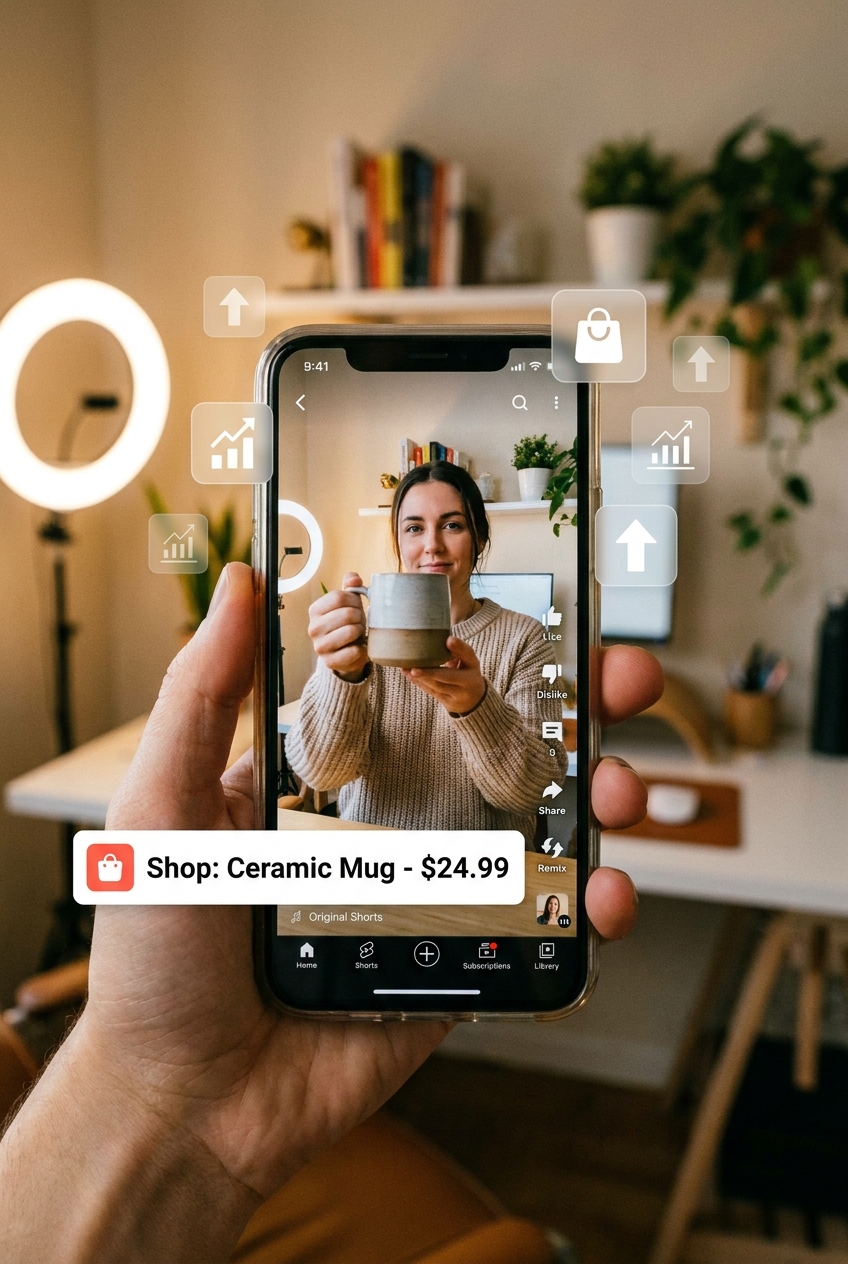
You keep hearing the same advice. Turn on YouTube Shopping. Tag products in Shorts. Start selling. Easy, right? Not really. For a lot of creators and small brands, the whole thing feels half-finished. YouTube is pushing shopping hard, but most people still do not know what to post, what product to tag, or how those new stickers actually turn into sales. That confusion matters, because TikTok Shop is crowded, Instagram can feel expensive, and Amazon often turns your product into just another listing in a giant aisle. YouTube Shorts shopping product stickers give you something a little different. They let a viewer watch, get curious, tap right on the video, and land on a product page without too much friction. If you use them well, Shorts can become a daily sales layer, not just a views machine. The trick is building a simple system instead of tossing stickers on random videos and hoping for the best.
⚡ In a Hurry? Key Takeaways
- YouTube Shorts shopping product stickers work best when the video solves one small problem and tags one obvious product.
- Start with 3 to 5 products, test different hooks for each, and watch click-through and watch retention before scaling.
- Do not tag everything. Bad product matches can hurt trust fast, even if the sticker gets taps.
Why YouTube Shorts shopping product stickers matter right now
YouTube is quietly turning Shorts into a shopping surface. That is the real story.
The sticker sits inside the Short, which means the shopping moment happens while the viewer is still interested. They do not have to dig through your bio, open a link-in-bio page, or remember the product later. They tap, browse, and can move closer to buying right there.
That may sound small, but it changes behavior. The easier the next step is, the more likely someone is to take it.
It also gives smaller sellers a shot at cleaner intent. TikTok can drive impulse. Amazon captures search demand. YouTube often sits in the middle. People come for ideas, answers, comparisons, and demonstrations. That is a strong place to sell useful products.
We are already seeing this broader shift across creator commerce. If you want the big picture, Prime Day Is Getting Hijacked By Creators: How TikTok, Instagram And YouTube Are Quietly Stealing Amazon’s Big Week shows how shopping is moving out of marketplaces and into content feeds.
First, pick the right products for Shorts
Not every product belongs in a 20-second vertical video.
The best products for YouTube Shorts shopping product stickers usually have at least one of these traits:
- They solve a visible problem fast.
- They look better after a before-and-after.
- They are easy to explain in one sentence.
- They create a strong reaction, like “oh, that is smart.”
- They are priced low to mid-range, where impulse or low-friction buying is more realistic.
Good fits for Shorts
Think kitchen tools, desk gear, beauty products, organizers, pet items, creator accessories, fashion basics, and simple gadgets.
Harder fits for Shorts
Complex software, high-ticket furniture, products with long setup times, or anything that needs a lot of trust-building before purchase.
If a product needs a five-minute explanation, Shorts may still help, but probably as the top of the funnel, not the whole sale.
A simple rule for choosing YouTube vs TikTok vs Amazon
If you are stuck deciding where a product belongs, use this quick filter.
Use YouTube Shorts when:
- The product benefits from demonstration.
- The buyer needs a little context before tapping.
- Your audience already watches tutorials, reviews, or “how I use this” content.
Use TikTok when:
- The product wins on trend, personality, or fast emotional pull.
- You can hook attention in the first second with surprise or humor.
Use Amazon when:
- The shopper already knows what they want.
- The purchase is more search-driven than discovery-driven.
For many sellers, the best answer is not one platform. It is sequencing. A Short creates interest. The sticker gets the tap. The product page closes the gap. Amazon or your site may still handle the final checkout depending on your setup.
The best Short structure for product stickers
Here is where most people go wrong. They make a normal Short, then add a product sticker at the end like an afterthought.
That is backwards.
You need to script the Short around the product action you want.
Use this 4-part format
1. Hook. Open with a pain point or curiosity line.
Examples:
- “I was tired of my cables looking like this.”
- “This fixed the most annoying part of my morning routine.”
- “I did not think this tiny tool would matter, but watch this.”
2. Proof. Show the product doing the job. Fast.
3. Outcome. Let the viewer see the result.
4. Tap cue. Give a soft prompt tied to the product sticker.
Examples:
- “I tagged it here if you want the exact one.”
- “The one I used is in the sticker.”
- “Tap the product if you want to see specs or price.”
That last part matters more than people think. Viewers often need a tiny nudge.
Do not tag too many products
If your Short is about one hero item, tag one hero item.
Too many tags create decision clutter. It is the video version of walking into a store and having five salespeople talk at once. The viewer freezes, then scrolls.
Start with one product per Short whenever possible. If the format really needs a bundle, cap it at two or three and make sure one item is clearly the lead.
How to test hooks without wasting a week
You do not need a giant production plan. You need a repeatable test.
Run this 5-video test for each product
- Video 1: Pain point hook
- Video 2: Before-and-after hook
- Video 3: Surprise result hook
- Video 4: “I did not expect this” hook
- Video 5: Comparison hook
Keep the product the same. Change the opening and framing.
This helps you answer the real question. Is the product weak, or is the hook weak?
Example
Let’s say you sell a portable blender.
- Pain point: “I got tired of paying $9 for smoothies.”
- Before-and-after: “My sad desk lunch versus 30 seconds later.”
- Surprise result: “This little blender crushed frozen fruit better than I expected.”
- Unexpected angle: “I bought this for travel, but now I use it at work.”
- Comparison: “Bulky blender versus this grab-and-go one.”
One of those angles will usually separate itself early.
What data to watch first
Do not get hypnotized by views alone.
With YouTube Shorts shopping product stickers, the early scoreboard should look like this:
1. Hold rate or early retention
If people leave in the first seconds, the product sticker will not save the video.
2. Product clicks
This tells you whether the hook plus product match is strong enough to create buying curiosity.
3. Click-through to product page
If people tap the sticker but do not move further, the offer or listing may be weak.
4. Conversion rate
Important, yes. But do not judge too fast if traffic is still small.
5. Comments and saves
These can reveal objections. People will literally tell you what is stopping them.
If a Short gets decent retention but poor product clicks, your content may be entertaining without making the item feel necessary. If product clicks are solid but conversion is weak, check pricing, reviews, shipping, or the product page itself.
Where creators lose money: the handoff after the tap
The sticker gets the click. The product page gets the sale.
That means your job is not done when the Short performs well.
Make sure the product page matches the promise of the video
- Use the same product variant shown in the Short.
- Make the first image instantly recognizable.
- Keep the product title clear, not stuffed with keywords.
- Answer obvious buyer questions fast.
- Show social proof if you have it.
If the Short says “this solves messy charging cables” and the product page opens with generic jargon, you are dropping the ball right at the finish line.
Build a daily sales loop, not a one-hit wonder
The smartest way to use YouTube Shorts shopping product stickers is as part of a loop.
Here is the simple funnel
- Short gets attention.
- Sticker gets the tap.
- Product page gets the consideration.
- Retargeting, email, or follow-up content helps close future sales.
That is why Shorts should not live alone. Pair them with:
- Longer YouTube videos for deeper trust
- Your email list for offers and reminders
- Product roundups or comparison pages
- Retargeting ads if your budget allows
A person may not buy from the first Short. That does not mean the Short failed. It may have started the journey.
Three Short ideas small brands can post this week
1. The “one annoying problem” video
Pick one tiny daily frustration. Show the fix in under 20 seconds. Tag the exact product.
2. The “I use this every day” video
People trust routine more than hype. A practical use case often sells better than flashy editing.
3. The “cheap upgrade” video
If your product improves something common, frame it as a low-effort upgrade. That angle plays well in Shorts.
Mistakes to avoid
- Tagging products that are barely visible in the video
- Using generic hooks that could apply to anything
- Posting only polished ads instead of useful demos
- Ignoring the product page experience
- Giving up after two Shorts
This is still a testing game. You are looking for repeatable signals, not instant magic.
At a Glance: Comparison
| Feature/Aspect | Details | Verdict |
|---|---|---|
| Best product type for Shorts | Simple, visual, problem-solving items with quick demos and clear results | Strong fit |
| Tagging strategy | One main product per Short works better than cluttered multi-product tagging | Keep it focused |
| Early success metrics | Watch retention, product clicks, product-page follow-through, and buyer feedback in comments | Better than views alone |
Conclusion
YouTube Shorts shopping product stickers are not just another box to tick in your creator settings. They are a real chance to turn short videos into a steady sales channel, especially while the space still feels less crowded than TikTok Shop. The opportunity is simple. YouTube is pushing shopping in Shorts with native product stickers that sit right on top of the video and send viewers straight to a product page, and they are clearly giving creators reasons to use them. The edge comes from doing the boring but valuable work that most people skip. Pick the right products. Test several hooks. Tag cleanly. Watch the early data. Then connect those Shorts to the rest of your funnel so one good video can lead to more than one sale. Big commerce blogs are still busy talking in broad terms about social commerce. Small brands that get practical now have a chance to move earlier, learn faster, and build a repeatable system on a channel that is only just becoming shoppable at scale.