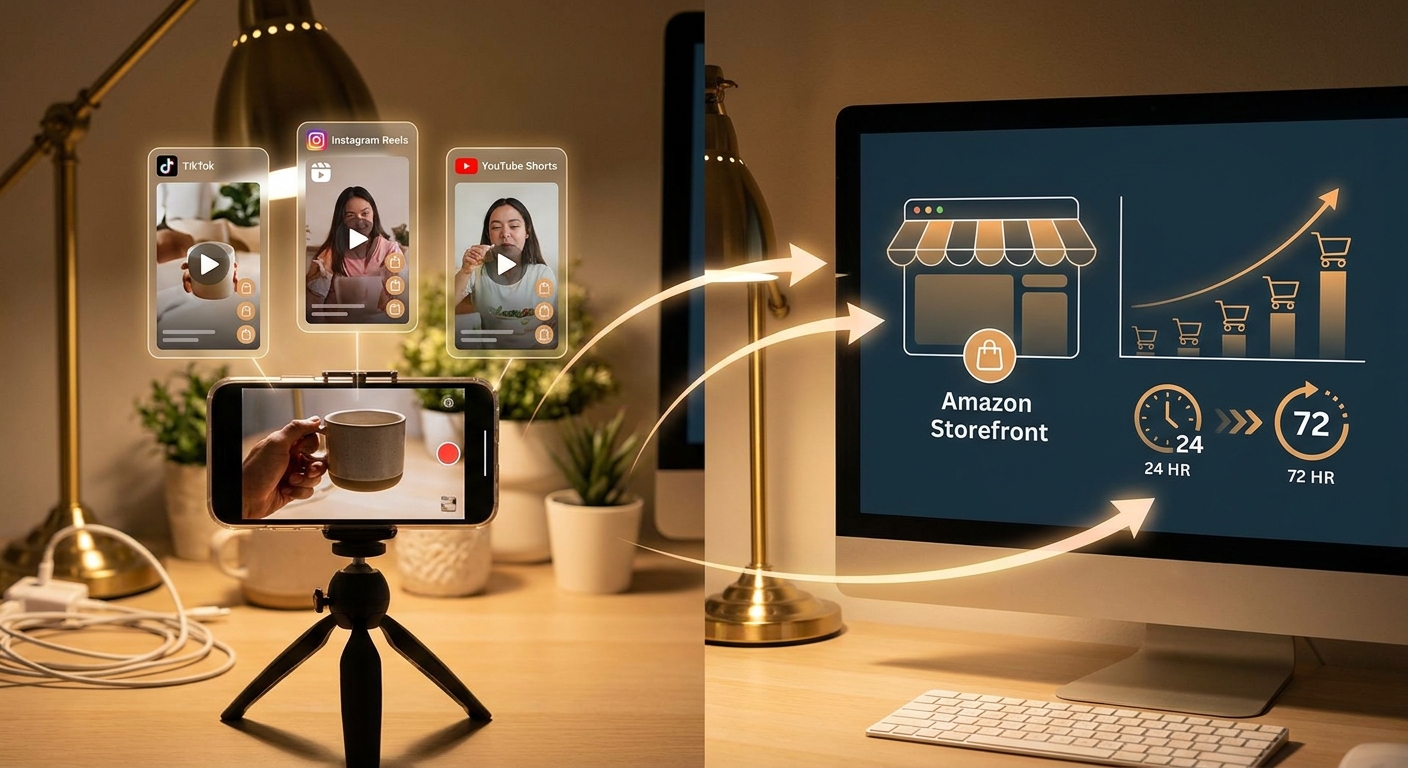
Posting every day just to keep Amazon commissions alive is exhausting. A lot of Influencers feel like they are feeding three apps at once, watching views dip, then staring at a dashboard that still does not clearly explain what actually drove the sale. That is why more creators are quietly leaning on what some are calling the “Prime Bounce” hack. It is not really a loophole. It is a smarter posting rhythm built around Amazon’s 24 hour cookie and the extra time shoppers get when they add something to cart. The basic idea is simple. Instead of making three different videos for TikTok, Instagram Reels, and YouTube Shorts, you use one strong short video and spread it across three days in a way that gives that same product multiple chances to earn. For creators heading into Prime Day, this Amazon Influencer 24 hour cookie strategy can be a lot more realistic than the usual advice to just post more and hope for the best.
⚡ In a Hurry? Key Takeaways
- The “Prime Bounce” idea is to reuse one solid short-form product video across TikTok, Instagram, and YouTube over about three days to create multiple chances for Amazon’s 24 hour cookie to start.
- Post the strongest version first, then repost with a new hook, caption, or angle the next day on another platform instead of filming fresh content every time.
- This is not guaranteed income, and it is not magic tracking. It simply uses the rules Amazon already has, especially the 24 hour click window and cart behavior, in a more organized way.
What people mean by the “Prime Bounce” hack
The name sounds more dramatic than it is.
At its core, this is a timing strategy. A shopper sees your product clip on TikTok, clicks your storefront or affiliate link, and a 24 hour commission window starts. If they buy eligible items during that period, you can earn. If they add an item to cart during that window, that can create a longer buying opportunity for that specific item under Amazon’s normal rules.
So instead of treating every short video like a one-and-done post, creators are trying to “bounce” the same product story across platforms. Day 1 might be TikTok. Day 2 might be Instagram Reels. Day 3 might be YouTube Shorts with Shopping attached or a link in the description flow, depending on how that creator is set up.
The goal is not to trick Amazon. The goal is to give the same item more than one chance to catch a buyer while buying intent is still high.
Why this matters more now
Views are less predictable than they were a year or two ago. Platform reach can swing wildly. One Reel pops. The next five barely move. Meanwhile, the old creator advice still sounds like a broken record. Post more. Test more. Grind harder.
That is not always useful advice for real people with jobs, kids, editing fatigue, and a growing pile of unopened PR boxes.
The reason this Amazon Influencer 24 hour cookie strategy is getting attention is because it focuses on something stable. The apps change. The algorithm changes. The commission rates can change. But the basic shopping behavior around “I saw it, I clicked it, I might buy it later tonight” is still there.
How the Amazon 24 hour cookie actually helps creators
The short version
When a shopper clicks your qualifying Amazon link, a 24 hour referral window typically begins. If they buy qualifying items within that period, you may earn a commission.
If they add a product to their cart during that window, the buying window for that carted item can last longer under Amazon’s standard rules, which is why creators care so much about getting the click before a shopping event peaks.
Why that changes your posting plan
If one product video is strong enough to get clicks, you do not need five new videos for five new products every day. You may be better off getting more mileage from the same winning item and angle.
That is the big shift. Stop thinking only in terms of content volume. Start thinking in terms of click timing.
The three-day “Prime Bounce” routine
Here is the simple version many creators can actually stick to.
Day 1. Post the cleanest, strongest version first
Start on the platform where your product content usually performs best. For a lot of creators, that is still TikTok.
Use the clearest hook you have in the first two seconds. Think less “get ready with me” and more “this fixed the most annoying part of my morning.” Show the product early. Keep the clip short. If the point takes 18 seconds, do not stretch it to 42.
Your job on day one is simple. Earn the click.
Day 2. Repost the same product with a different wrapper
Now move to Instagram Reels.
Do not just dump the exact same file with the same caption and hope for the best. Change the opening text. Change the cover. Trim a second or two. Shift the angle from “review” to “use case.”
Example:
Day 1 TikTok hook: “Three Amazon kitchen tools I use every single day.”
Day 2 Instagram hook: “If your counters always look messy, start with this one organizer.”
Same product. Different entry point.
Day 3. Use YouTube for search and slower burn traffic
YouTube Shorts often moves differently. It can be slower, but it can also keep getting discovered after the first burst is gone.
By day three, you are not pretending this is fresh footage. You are simply giving the product another shot in another lane. If your setup supports YouTube Shopping, great. If not, point viewers to your storefront or linked product list the right way for your program setup.
This is where the “bounce” idea starts to make sense. One video. Multiple windows for discovery. Multiple chances to start that 24 hour click period.
Why one good video often beats three rushed ones
Most creators do not have a content problem. They have an attention problem.
They split their energy across too many products, too many trends, and too many weak posts. Then they cannot tell whether the issue was the product, the platform, the timing, or the hook.
When you use one winning short across three days, you make testing cleaner.
- You know which product you are pushing.
- You can compare hooks by platform.
- You can see whether clicks rise after reposting with a new angle.
- You spend less time filming and more time reading what worked.
That last part matters. Amazon dashboards are not perfect, but they do give you enough to spot patterns if you stop changing ten things at once.
What to watch inside your dashboards
Do not obsess over views alone
A video with lower views but stronger buying intent can outperform a “viral” clip full of casual watchers.
Pay closer attention to:
- Ordered items
- Earnings by day
- Clicks, if visible in your setup
- Which products spike after a specific post goes live
Look for timing patterns
If you post on TikTok Monday night and see a lift in ordered items into Tuesday, that tells you something. If the same product gets another small bump after your Instagram repost Wednesday morning, that tells you something too.
You are not looking for perfect attribution. You are looking for useful patterns. That is enough to build a routine.
How to make this work without annoying your audience
This is the fair concern. If you keep reposting the same thing, will people get sick of it?
Sometimes, yes. But usually only if you are lazy about it.
Change the angle, not just the platform
Here are a few easy ways to reframe the same item:
- Problem-first: “If your dog drags water across the floor, try this.”
- Before-and-after: “My pantry looked awful before this.”
- Budget angle: “This is the under-$25 thing I would buy again.”
- Prime Day angle: “Wait for the deal, but save this now.”
- Comparison angle: “I tried the cheap version first. This one held up better.”
Do not use the exact same caption every time
Platforms read context differently, and people do too. A rewritten caption can change who stops scrolling.
What kinds of products fit this strategy best
Not every item deserves a three-day push.
The best candidates are usually:
- Products that solve one clear problem fast
- Items with a visible demo
- Lower to mid-priced buys that do not need much explanation
- Seasonal or event-driven products near Prime Day, back-to-school, or holidays
- Products you already know get saves, comments, or click curiosity
The worst candidates are often products that need a long explanation, have confusing setup, or only make sense in a big haul video.
Common mistakes creators make with the 24 hour cookie strategy
Mistake 1. Posting too late
If you wait until the biggest sale day is already halfway over, you lose some of the cookie advantage. Try to get your strongest content out before peak buying hours, not after.
Mistake 2. Changing the product every day
If Monday is skincare, Tuesday is office gear, and Wednesday is camping tools, you are not building momentum. You are starting over every morning.
Mistake 3. Making every post a giant haul
Hauls can get views, but single-product posts often create cleaner buying action. They are easier for shoppers to understand and easier for you to track.
Mistake 4. Ignoring the add-to-cart behavior
A lot of shoppers do not buy right away. They browse, compare, and cart things for later. That is exactly why early clicks matter before Prime Day.
A realistic posting cadence before Prime Day
If you want a repeatable routine, try this:
Morning
- Check yesterday’s top clicked or top ordered product.
- Pick one item with clear buying intent.
- Write two fresh hooks for it.
Midday
- Post the main short on your strongest platform.
- Update your link hub, storefront list, or pinned product collection if needed.
Next day
- Repost that same item on platform two with a different hook and thumbnail.
- Reply to comments with extra product context.
Day three
- Post to YouTube Shorts or your third platform.
- Use a search-friendly title or caption line.
- Check whether ordered items rose across the two-day window.
That is manageable. More important, it is measurable.
Is this a “hack” or just smarter creator math?
Honestly, it is mostly smarter math.
The word “hack” makes it sound sneaky. It is not. You are using the same content asset more efficiently and timing your posts around how shopping windows actually work.
That matters because burnout usually comes from making too much content with no system behind it. The Prime Bounce approach gives you a system.
At a Glance: Comparison
| Feature/Aspect | Details | Verdict |
|---|---|---|
| Content workload | One strong short video gets reused across TikTok, Instagram, and YouTube with small changes to hook, caption, and cover. | Much easier to sustain than filming fresh hauls every day. |
| Commission opportunity | Each repost can create a new chance for a shopper to click and start Amazon’s 24 hour referral window. | A smart fit for Prime Day and other shopping spikes. |
| Tracking clarity | Using the same product over a few days makes it easier to compare dashboard changes and spot patterns. | Not perfect attribution, but far better than random posting. |
Conclusion
If your Amazon earnings feel jumpy and the usual advice keeps boiling down to “post more,” this is a more grounded place to start. The reason the Prime Bounce idea is catching on is simple. It focuses on one of the few stable parts of the system, the 24 hour cookie and the extra value of getting products into carts early. For creators, that means one solid short video can do more work than three rushed ones if you space it out with purpose across TikTok, Instagram, and YouTube Shopping. You do not need a brand-new workflow or fancy software. You need a repeatable cadence, a few stronger hooks, and the discipline to watch your own dashboard instead of chasing every new platform feature. Heading into Prime Day or any major shopping event, that is real value. It gives you a routine you can actually keep up with, and a better shot at turning effort into commissions.