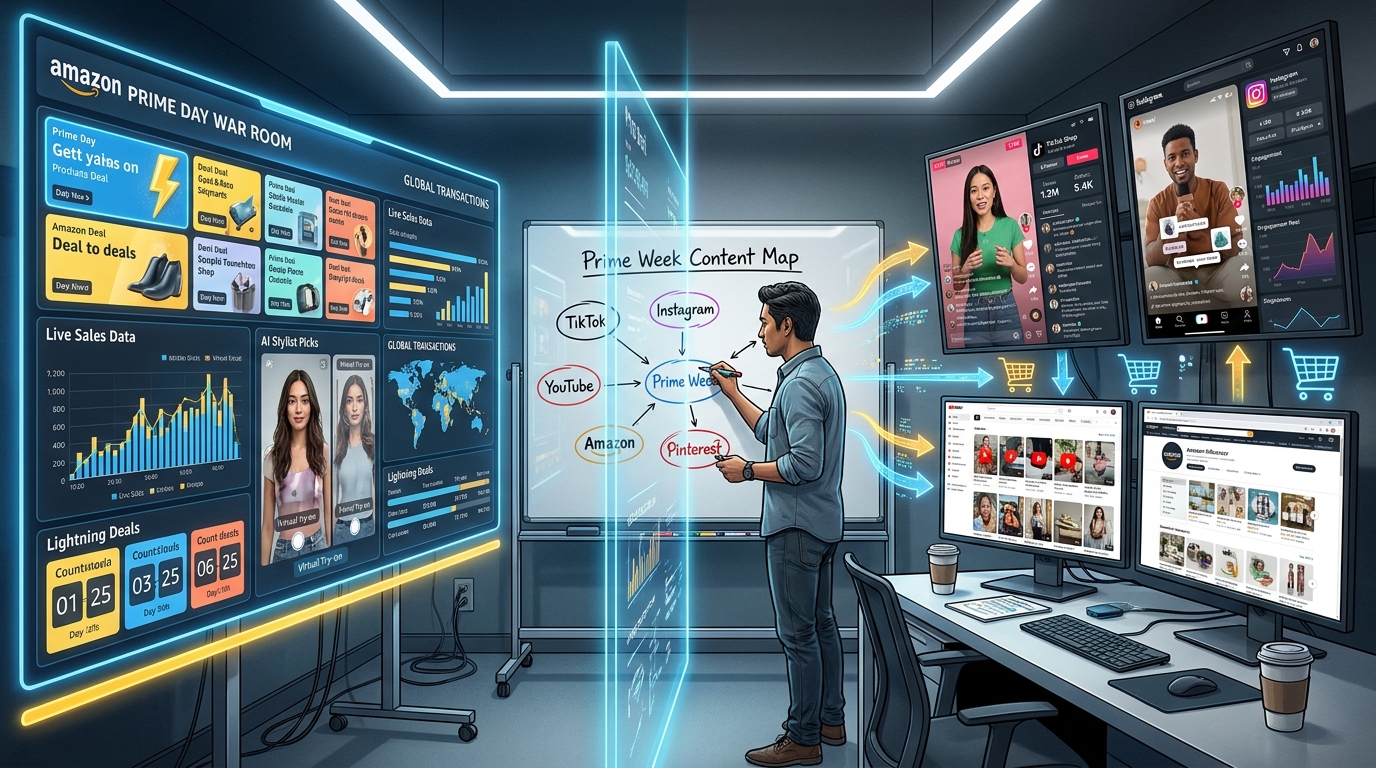
If Prime Day used to feel simple, you are not imagining it. Shoppers once opened Amazon, typed in what they wanted, and checked out. Now they are seeing “Prime Day deal” videos on TikTok, product roundups in Instagram Reels, and YouTube Shorts that feel more like a friend’s recommendation than an ad. That shift is frustrating if you sell products, run an affiliate business, or depend on Amazon traffic, because the buying decision is happening before people ever reach Amazon. The good news is this is not the end of Prime Day traffic. It is a rerouting of it. Prime Day 2026 runs June 23 to 26, but the attention spike is already building thanks to early deals and Amazon’s new AI shopping tools like smarter alerts, virtual try-on, and more personalized recommendations. If you want sales during Prime Week, you need a Prime Day social commerce strategy across TikTok Shop, Instagram, YouTube, and Amazon Influencer links, not just one lonely Amazon listing.
⚡ In a Hurry? Key Takeaways
- Prime Day shopping now starts on social apps first, then moves to Amazon or another checkout page later.
- Use short videos, live demos, and creator-style bundles on TikTok, Instagram, and YouTube to catch Prime Week demand early.
- Do not send every shopper to one link. Route them based on platform behavior, your margins, and where checkout feels easiest.
Prime Day is no longer just Amazon’s moment
Amazon still owns the event. But it no longer owns the full customer journey.
That is the big change this year. People discover products while scrolling, not while searching. A creator posts “best Prime Day kitchen finds under $50,” someone watches three clips in a row, saves one, sends another to a friend, then buys later. Maybe on Amazon. Maybe on TikTok Shop. Maybe through a storefront link in bio.
For shoppers, this feels convenient. For sellers and creators, it changes the rules.
You are not only competing on price now. You are competing on who explains the product fastest, who shows it in real life, and who makes the path to checkout feel easiest.
Why this shift is happening right now
Three trends are colliding at once.
1. Amazon starts the buzz earlier every year
Prime Day 2026 officially runs June 23 to 26, but Amazon is already warming up shoppers with early deals and new AI features. Smarter deal alerts, virtual try-on, and more personalized recommendations keep bargain hunters in shopping mode for longer.
That matters because people who are primed to buy do not stay loyal to one app. They hunt wherever they happen to be scrolling.
2. Creators have become the new product search engine
For plenty of shoppers, TikTok, Instagram, and YouTube are now where research begins. People trust demos, side-by-side comparisons, and “things I actually bought” videos more than polished product pages.
It is not just entertainment anymore. It is pre-checkout behavior.
3. Platforms are making the handoff to Amazon easier
Pinterest rolling out direct Amazon Storefront integration for creators is a clear sign of where this is going. Social content and Amazon carts are getting tied together more tightly. The wall between “content” and “commerce” is thinner than ever.
What this means for small shops and indie creators
You do not need to outspend Amazon. You need to ride the wave Amazon is already creating.
That is the opportunity. Prime Week creates intent. People are already looking for deals, gift ideas, upgrades, and impulse buys. A small shop or solo creator can piggyback on that attention with smart content that feels timely and useful.
In plain English, you are not trying to create shopping demand from scratch. You are stepping in front of demand that already exists.
Your Prime Day social commerce strategy, platform by platform
TikTok Shop: Catch impulse buyers fast
TikTok is where urgency works best. The winning content is short, direct, and visual.
Good hooks include:
- “Prime Day deals I would actually buy with my own money”
- “Three gadgets worth grabbing before prices jump back”
- “TikTok made me try this, Prime Day made me buy it”
What to post:
- Quick before-and-after clips
- Problem-solution videos
- Under-$25 and under-$50 roundups
- Live shopping sessions with limited-time picks
If the product is available in TikTok Shop and converts well there, keep the checkout native. TikTok users are used to staying inside the app. Every extra click can lose the sale.
If your goal is Amazon affiliate revenue instead, use TikTok to build interest, then send traffic to an Amazon Influencer storefront from your bio, comments, or linked landing page.
Instagram Reels: Make the products feel aspirational but real
Instagram is still a visual trust machine. People want polished, but not too polished. Think “helpful friend with good taste,” not late-night infomercial.
Good hooks include:
- “My honest Prime Week home upgrades”
- “Five Prime Day beauty tools that are actually worth the money”
- “If I were starting over, these are the deals I would grab first”
What to post:
- Reels with clean, quick product demos
- Carousel posts with price drops and why each item matters
- Stories with countdown stickers, polls, and link stickers
- Bundle recommendations like “desk reset,” “travel kit,” or “small apartment upgrades”
Instagram is especially strong for curated sets. Instead of pushing one random product, build a mini story around a lifestyle need. That helps followers understand why these products belong together.
YouTube Shorts: Win the shopper who wants one more reason
YouTube Shorts sits in a nice middle ground. It can drive impulse clicks, but it also works well for shoppers who want a bit more proof before buying.
Good hooks include:
- “Best Prime Day tech deals nobody is talking about yet”
- “Three upgrades I regret not buying sooner”
- “What is actually worth buying during Prime Day, and what to skip”
What to post:
- Fast product reviews
- “Buy this, skip that” comparisons
- Top-five lists for a category like dorm gear or kitchen gadgets
- Shorts that point viewers to a longer roundup or storefront link
YouTube is great for stacking content. A Short can tease a deal. A longer video can explain the picks. The description and comments can direct viewers to your Amazon Influencer page or another storefront.
How to route traffic without confusing people
This is where many sellers get sloppy. They post everywhere, then dump every viewer onto the same link.
That rarely works.
Use TikTok Shop when:
- The item is stocked there
- Your audience is used to in-app buying
- You want fewer steps to checkout
Use Amazon Influencer links when:
- The Prime Day discount is strongest on Amazon
- You have a curated storefront that makes browsing easy
- You are posting comparison content and want shoppers to see several items together
Use your own storefront when:
- Your profit margin is much better there
- You control the customer relationship after the sale
- You can offer a bundle Amazon does not
If you can, use a simple landing page that gives people clear choices. For example: “Shop on Amazon,” “Shop on TikTok,” or “See my full Prime Week picks.” That way you guide shoppers instead of forcing them down one path.
A simple Prime Week content schedule
You do not need a giant campaign. You need a plan.
7 to 10 days before Prime Day
- Post “watchlist” content
- Tease categories people should monitor
- Ask followers what they are hoping to buy
This stage is about warming up attention. You are helping people build intent early.
3 to 5 days before Prime Day
- Publish your first curated roundups
- Post best-value picks and budget picks
- Start story reminders and live session promos
During Prime Day, June 23 to 26
- Post daily deal updates
- Use urgency, but keep it honest
- Run lives or rapid-fire short videos with top picks
- Refresh links if deals change or go out of stock
Right after Prime Day
- Post “what is still on sale” videos
- Share best sellers and buyer favorites
- Retarget people who clicked but did not buy
Hooks that work without sounding fake
A lot of Prime Week content fails because it sounds like a clearance flyer. Shoppers scroll past that.
Better hooks sound personal and useful.
- “I went through the Prime Day mess so you do not have to”
- “These are the deals I would text my sister about”
- “Not everything on Prime Day is a deal. These actually are”
- “If you only buy one home upgrade this week, make it this”
- “I tested the viral version and the cheaper one. Here is the better buy”
The key is simple. Do some of the sorting work for your audience. That is what they are really rewarding.
Common mistakes to avoid
Posting only once the sale starts
By then, you are late. Discovery is already happening in the days before the event.
Using the same exact video on every platform
You can reuse the idea, but tweak the opening line, pacing, and call to action for each app.
Sending people to messy pages
If your storefront is cluttered, your conversions will suffer. Make the path obvious.
Focusing only on cheap products
Budget roundups do well, but so do thoughtful “worth the splurge” picks if the value is clear.
Acting like every deal is amazing
People can smell fake urgency. If something is just okay, say so. That honesty builds trust and gets you more sales over time.
At a Glance: Comparison
| Feature/Aspect | Details | Verdict |
|---|---|---|
| Best platform for impulse buys | TikTok Shop works best for quick demos, urgency, and native checkout with fewer steps. | Best for fast-moving, lower-friction sales. |
| Best platform for curated lifestyle selling | Instagram Reels and Stories are strong for bundles, room makeovers, beauty picks, and visual product collections. | Best for trust, taste, and bundle storytelling. |
| Best platform for researched shoppers | YouTube Shorts can spark interest, then send viewers to longer videos or Amazon Influencer pages for more context. | Best for shoppers who want one more reason before buying. |
Conclusion
Prime Day is still a huge shopping event. It just no longer lives in one place. With Prime Day 2026 running June 23 to 26, early deals already appearing, and Amazon pushing AI shopping tools like smarter deal alerts, virtual try-on, and personalized recommendations, shoppers are in buying mode right now. But they are discovering those deals while scrolling TikTok, Instagram, YouTube, and even Pinterest, where creator-to-Amazon storefront connections are getting tighter. That gives small shops, indie creators, and affiliates a very real opening. If you build a practical Prime Week plan with short-form videos, live sessions, clear hooks, and smart traffic routing between TikTok Shop, Amazon Influencer links, and your own storefronts, you do not have to sit back and hope for Prime spillover. You can guide it. And if you start now, while the attention spike is still building, you have a much better shot at turning borrowed buzz into actual sales.