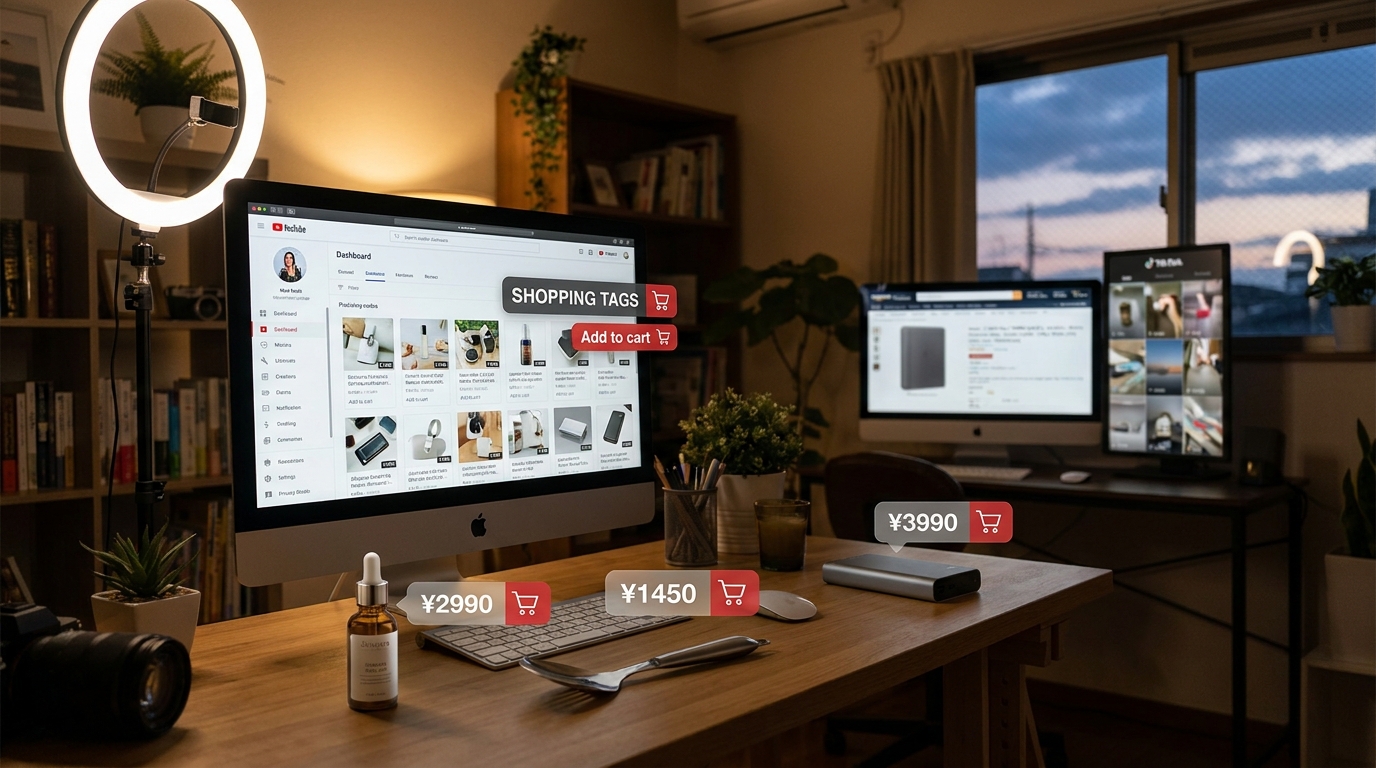
If you have been building on Amazon Influencer for the last two years, the mood shift feels real. Creators are talking about thinner commissions, missing data, fuzzy reporting, and that awful feeling that you are working harder while understanding less. That is a rough place to run a business from. The good news is you do not need to start over. You can take a big chunk of the product videos you already made and give them a second life on YouTube Shopping.
That is why YouTube Shopping for Amazon influencers matters right now. YouTube is making it easier to tag products in Shorts, live streams, and regular videos. Viewers can watch, get the answer they need, and buy without much friction. If Amazon has become the unpredictable paycheck, YouTube can become the backup income stream. Better yet, this is not a full rebrand. For many creators, it is mostly a packaging job. New titles, better thumbnails, product tags, and a smarter plan for videos you already own.
⚡ In a Hurry? Key Takeaways
- YouTube Shopping is becoming a smart backup for Amazon influencers dealing with lower earnings and weaker reporting.
- Start by reposting your best existing product clips as Shorts and simple review videos with product tags, instead of filming everything from scratch.
- Do not quit Amazon entirely. Treat YouTube as a hedge so one platform change does not wreck your monthly income.
Why Amazon creators are looking around
Amazon was attractive because it felt direct. Make product content. Help shoppers decide. Earn commissions. Simple enough.
But simple systems get stressful fast when the numbers stop making sense. Many creators now say the reporting feels harder to trust, optimization is less clear, and earnings are softer than expected. Even if nothing is technically broken, the confidence is. And confidence matters when this is part of your paycheck.
That is the moment when diversification stops sounding like a buzzword and starts sounding like rent money.
Why YouTube Shopping is the obvious next stop
YouTube already has something Amazon creators understand well. Search intent.
People go to YouTube and type things like “best budget ring light,” “honest air fryer review,” or “is this desk chair worth it?” That is basically the same shopping mindset many creators were serving on Amazon. The difference is that YouTube gives your content more than one path to get seen.
On Amazon, your video often lives inside Amazon’s walls
That can work well. But it also means your reach depends heavily on Amazon’s system, placement choices, and reporting tools.
On YouTube, one product video can keep working in several ways
A single video can show up in search, suggested videos, Shorts feeds, live streams, Google results, and even months later when shoppers are researching before a sale event. That longer shelf life is a big deal.
It also fits the bigger creator shift we are seeing across platforms. If you want the larger picture, Prime Day 2026 Is Quietly Becoming ‘Influencer Day’: How To Ride The Multi‑Platform Shopping Wave In 24 Hours makes the point well. Shopping content is no longer an Amazon-only game.
You do not need to make brand-new content to start
This is the part most creators miss. They assume moving into YouTube Shopping means becoming a full-time YouTuber overnight. It does not.
If you already made product videos for Amazon, you likely have enough raw material to start a YouTube Shopping test this week.
What to repurpose first
Start with products that have one or more of these traits:
- They solve a clear problem quickly.
- They photograph well or have a visible before-and-after effect.
- You can explain the value in under 60 seconds.
- They are evergreen, not tied to one short trend.
- You have already earned at least some sales or clicks from them elsewhere.
Think desk gear, kitchen tools, beauty organizers, gadgets, travel items, home cleaning tools, and creator equipment. These categories tend to work well because shoppers often want a quick demo before they buy.
A simple YouTube Shopping plan for Amazon influencers
1. Turn one product into three formats
You do not need one perfect masterpiece. You need useful coverage.
- A Short: “3 reasons I still use this mini vacuum”
- A standard video: “Mini vacuum review after 6 months”
- A comparison video: “Mini vacuum vs lint roller. Which is better?”
This gives YouTube more chances to understand your topic and more chances for shoppers to find you at different stages of the buying process.
2. Rewrite the title for human search
Amazon-style titles can be stiff. YouTube titles need to sound more like real questions or decisions.
Instead of “Portable Blender Review,” try:
- “Is This Portable Blender Actually Worth Buying?”
- “Portable Blender Review After 30 Days”
- “Best Portable Blender for Protein Shakes?”
That small shift can make old footage feel new.
3. Use your first 10 seconds wisely
On Amazon, shoppers may already be close to buying. On YouTube, they still need a reason to stay.
Start with the answer or the problem. Not a long intro. Not your logo animation. Just the useful part.
For example: “If your phone tripod keeps slipping, this is the one that finally fixed it for me.”
4. Tag products where available
If you have access to YouTube Shopping features, use them. Tag the product in the Short, the regular video, or the live stream where it fits naturally. The goal is to reduce the number of steps between curiosity and purchase.
Even if your channel is still small, getting familiar with the workflow now matters. Early comfort with the tools often beats waiting for the “perfect” moment.
5. Build around buyer questions
This is where Amazon influencers already have an edge. You know the questions people ask before buying.
Make videos around:
- Is it worth it?
- Who is this for?
- What are the downsides?
- How does it compare to a cheaper option?
- What happened after 30 days or 6 months?
Those questions convert because they are honest and specific.
What YouTube gives you that Amazon often does not
More discoverability
Amazon content usually depends on product page placement and platform visibility. YouTube gives your video a shot through search, recommendations, homepage browsing, and Shorts distribution.
More control over packaging
Thumbnail, title, topic angle, posting cadence, playlists, pinned comments. None of these guarantee success, but they do give creators more knobs to turn when results are flat.
More shelf life
A good review can keep collecting views for months or years, especially if the product stays relevant. That can turn one afternoon of repurposing into a longer tail of commissions.
Where creators can trip themselves up
Posting Amazon-style footage without adapting it
If your original video assumed the shopper was already on the product page, it may feel too abrupt or too context-light for YouTube. Add a quick voiceover, text overlay, or new intro that explains the problem being solved.
Ignoring thumbnails
A thumbnail is not decoration. It is packaging. If nobody clicks, the quality of the review does not matter.
Trying to copy giant YouTubers
You do not need cinematic b-roll and a studio set. You need clarity. A normal, trustworthy review often beats a flashy one for shopping content.
Waiting too long
This window will not stay quiet forever. The creators who start building product search history and Shorts momentum now have a better chance of earning placements before the space gets crowded.
Best first niches for YouTube Shopping for Amazon influencers
If you want the quickest test, focus on categories where shoppers want a visual proof point:
- Home organization
- Kitchen gadgets
- Beauty tools
- Work-from-home gear
- Travel accessories
- Budget tech
- Cleaning products
- Creator tools like mics, lights, tripods, and stands
These products are easy to show, easy to explain, and often easy to compare.
A 7-day starter plan
Day 1
Pick 10 products from your Amazon content library that still make sense today.
Day 2
Choose the best 3. Rewrite titles and sketch simple thumbnail ideas.
Day 3
Edit each product into one Short and one regular video.
Day 4
Upload, tag products where available, and write plain-English descriptions.
Day 5
Reply to comments and note what questions viewers ask.
Day 6
Create one comparison or follow-up video based on those questions.
Day 7
Check which format got the best response. Then repeat with the next batch.
This is not glamorous. It is practical. Practical pays.
At a Glance: Comparison
| Feature/Aspect | Details | Verdict |
|---|---|---|
| Income stability | Amazon can still convert well, but creators are reporting weaker earnings and less clear data. YouTube adds a second path to monetize shopping intent. | Use both. Do not rely on one platform. |
| Content workload | Most Amazon influencers can repurpose existing product footage into Shorts, reviews, and comparison videos with light editing. | Low barrier to test. |
| Discovery potential | Amazon mostly depends on in-platform placement. YouTube can surface videos through search, recommendations, Shorts, and longer-term browsing. | Better upside for long-tail traffic. |
Conclusion
Right now, a lot of Amazon influencers feel like they are driving in fog. The reports are less helpful, earnings feel softer, and the program is harder to read than it used to be. That frustration is real. But this is also a useful moment to make a smart move instead of a panicked one. You do not have to abandon Amazon. You just need a hedge.
YouTube Shopping for Amazon influencers is one of the cleanest ways to build that hedge because you can redirect product videos you already made into a platform that keeps expanding its shopping features. Shorts, lives, and regular videos all create fresh ways for viewers to buy while they watch. And because this still feels underused by many product creators, there is a real early-mover advantage for search spots and recommendations. If you can turn even part of your old video library into YouTube shopping content, you are not just recycling footage. You are building a second paycheck with far less work than starting from zero.