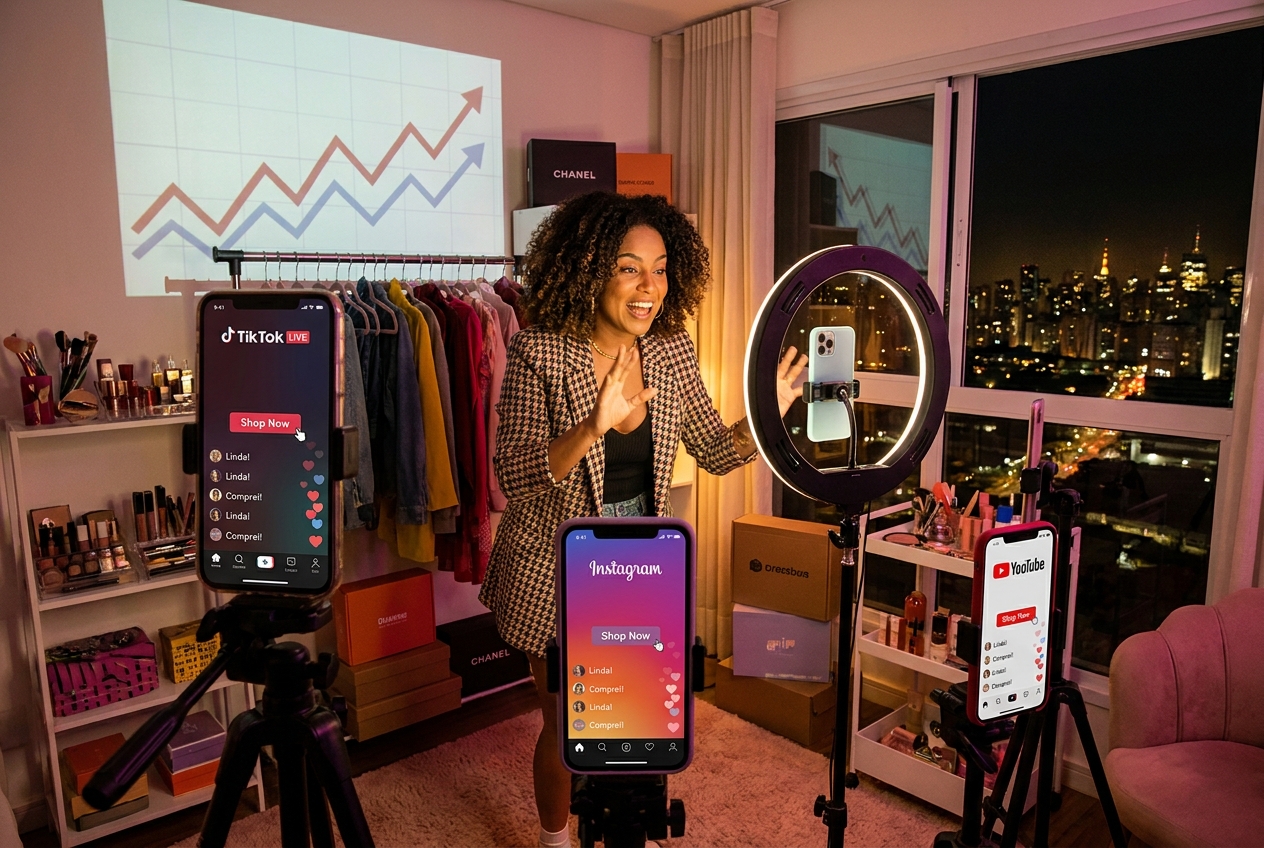
If you are trying to plan your next social commerce move, the TikTok Shop story probably feels maddening right now. One week you hear it is fading in the US. The next week Brazil posts a 102x sales jump in a year and suddenly the whole “TikTok shopping is over” narrative looks shaky. That gap matters. Brands, creators, and agencies do not have endless time or budget to waste on platform drama. They need signals they can trust. Brazil is giving us some of the clearest ones yet. What stands out is not just raw growth. It is how that growth happened. Video is doing the selling. Creators are acting more like retail partners than ad slots. Live shopping is becoming normal behavior, not a novelty. And impulse buying starts on the For You Page, then moves to checkout without much friction. If you want a practical TikTok Shop Brazil growth 2026 social commerce strategy, Brazil is not a side story. It is the preview.
⚡ In a Hurry? Key Takeaways
- TikTok Shop’s 102x surge in Brazil suggests social commerce is shifting toward creator-led, video-first buying journeys, not away from them.
- Start with small tests: creator affiliates, short product demos, live sessions, and KPIs tied to view-to-click, click-to-cart, and cart-to-order rates.
- Do not copy Brazil blindly. Use it as an early signal, then adjust for your market, margins, shipping speed, and customer trust needs.
Why Brazil matters more than the headlines suggest
When a market grows 102 times in a year, that is not a rounding error. It is a clue.
The easy mistake is to treat Brazil as an outlier. The smarter move is to ask what conditions made that kind of growth possible. Usually, huge jumps like this happen when three things line up at once. The platform gets easier to buy on. The audience gets more comfortable shopping inside content. And sellers finally learn what kind of content actually converts.
That appears to be the real story here. Brazil is showing what happens when discovery, entertainment, and checkout are close enough together that people do not have time to second-guess the purchase.
For Western brands, this matters because mature markets often get stuck arguing about whether social commerce “works,” while faster-moving markets get busy testing what works best. By the time US and UK coverage catches up, the playbook is often already written somewhere else.
The big lesson: social commerce is becoming content commerce
Old ecommerce thinking says people search for a thing they already want, compare prices, then buy. TikTok flips that. People discover something they did not plan to buy, get convinced by a person rather than a product page, and purchase while the interest is still hot.
That is a different funnel.
In Brazil, the mix of short-form video, creator energy, affiliate incentives, and live selling appears to be tightening the gap between “that looks useful” and “I just bought it.” This is why TikTok Shop can look messy from the outside and still produce explosive growth on the inside.
If you are building a 2026 social commerce strategy, that means your product page is no longer the main event. Your content is.
What this changes for brands
Brands need to stop treating TikTok Shop like a smaller Amazon storefront. It is closer to QVC meets creator media meets impulse checkout. Your best seller may not be the product with the best specs. It may be the product that is easiest to show, easiest to explain in 15 seconds, and easiest for a creator to make feel real.
What this changes for creators
Creators are not just traffic sources anymore. In this model, they are your front-end sales team. They answer objections, show use cases, create urgency, and make products feel trustworthy. The stronger the affiliate setup, the more this behavior compounds.
Why the US “cooling off” story can be misleading
There is some truth behind the US skepticism. Shoppers can get fatigued. Sellers can flood the platform with cheap lookalike products. Returns, shipping issues, and policy shifts can hurt trust. Some brands also jumped in expecting instant wins, then discovered they had no creator strategy and no content engine.
But that does not mean the model is broken. It often means the first wave was sloppy.
Fast-growing markets can be useful because they strip away some of that baggage. You get a clearer view of the underlying behavior. Are people willing to buy from video? Yes. Do creators influence conversion, not just awareness? Yes. Can live shopping still work when the offer and host are right? Yes.
So the question is not, “Is TikTok Shop hot or cold?” That is too simple. The better question is, “Under what conditions does it work best?” Brazil is helping answer that.
What brands should copy from Brazil, carefully
1. Build for discovery first, not search first
On TikTok Shop, demand can be created on the spot. That means your content should do three jobs quickly. Show the product in action. Explain why it matters. Give a reason to buy now.
If your videos only look polished but do not answer basic buyer questions, they may get views and still fail to sell.
Start with product categories that naturally fit short video. Beauty, wellness, home fixes, accessories, snacks, gadgets, organization products, and low-risk impulse buys tend to do well because they are easy to demonstrate.
2. Treat affiliates like a system, not a side project
One of the strongest signals from social commerce markets is that creator affiliate programs work best when they are active and managed. Sending out a few samples and hoping for the best is not a strategy.
Give creators a clear offer. Make commission worth their time. Provide hooks, talking points, and proof. Track who converts, not just who posts. Then reinvest in the creators who can actually move units.
Your top affiliate may not be your biggest influencer. Quite often, it is the person who explains the product best.
3. Bring back live shopping, but make it useful
Live shopping gets mocked when it turns into awkward hard selling. But when it works, it works because it solves hesitation in real time. People can see the product, hear honest reactions, ask questions, and buy before leaving the stream.
Brazil’s growth suggests live commerce still has real life in it, especially when the host is energetic, the offer is simple, and the product lends itself to demonstration.
If you try it, do not start with a three-hour marathon. Start with 20 to 30 minutes. One hero product. One host. One limited-time offer. Then look closely at retention, clicks, comments, and conversion.
4. Use price points that fit impulse behavior
Many social commerce wins come from products cheap enough to feel low-risk. That does not mean everything has to be bargain-bin pricing. It means the value proposition has to be obvious fast.
For higher-priced products, you may need stronger trust signals. More reviews. Better demos. Better creator fit. Better post-purchase support.
The practical KPI stack to watch
This is where many teams get lost. They look at GMV screenshots and vanity views, then have no idea what actually drove the sale.
If you want a useful TikTok Shop Brazil growth 2026 social commerce strategy, break the funnel into simple stages.
Content KPIs
Watch-through rate. Thumb-stop rate. CTR from video to product page. Comment quality. Save and share behavior.
If people watch but do not click, your hook may be good but your offer is weak. If they click but do not add to cart, your product page or price may be the problem.
Commerce KPIs
Product page view-to-cart rate. Cart-to-order rate. Refund rate. Average order value. New customer rate. Repeat purchase rate.
This is the stuff that tells you whether content is attracting buyers or just curious viewers.
Creator KPIs
Revenue per creator. Conversion rate by creator. Cost per acquired customer by affiliate. Content output per creator. Time to first sale.
Do not judge creator programs only by reach. Judge them by efficiency and repeatability.
How small brands can test this without burning cash
You do not need a giant budget to learn from Brazil. You need a better test design.
Run a 30-day pilot
Pick one to three products. Keep it tight.
Recruit 10 to 20 creators in small, medium, and micro tiers. Give them the same core offer, but let them speak in their own style. Post a mix of direct demos, problem-solution clips, before-and-after content, and one or two live sessions.
Your goal in month one is not scale. It is pattern recognition.
What to look for
Which product gets the best click-to-cart rate? Which creator type gets the most trusted comments? Which opening line gets people to stop scrolling? Which objections show up over and over?
That information is gold. It tells you what to fix before you spend bigger.
What not to do
Do not hire one expensive creator and call the test finished. Do not post brand-polished videos only. Do not expect the platform to carry a boring offer. And do not ignore fulfillment. Fast content cannot save slow shipping forever.
What agencies should take from this now
Agencies have a chance to be genuinely useful here because many clients are overwhelmed by mixed signals. The service gap is not “we can make TikToks.” Lots of people can do that. The gap is strategic translation.
Clients need help connecting content style, creator mix, offer structure, and backend metrics. They need someone to say, “Here is what Brazil suggests. Here is what is likely to transfer. Here is what probably will not.”
That is much more valuable than repeating whatever the latest US narrative says.
Agencies should consider building market-watch reports, affiliate playbooks, and live shopping testing packages now. The firms that can turn global signals into local action will look very smart over the next year.
What could slow this down
It would be lazy to pretend every market will simply follow Brazil in a straight line. There are real friction points.
Trust and quality control
If shoppers get burned by poor product quality, fake scarcity, or weak customer service, growth can flatten fast. Social commerce depends on trust more than it first appears.
Logistics
Checkout is only the middle of the story. Delivery, refunds, and support still decide whether a first purchase becomes a second one.
Regulation and platform risk
Political pressure, platform bans, or policy shifts can change the economics overnight. That is why smart brands build portable creator relationships and reusable content systems, not platform dependence.
The 2026 strategy takeaway for Western sellers
Here is the simple version. Do not wait for perfect certainty. You will never get it.
Instead, use Brazil as an early warning system in reverse. It is showing where social commerce may be headed when the pieces click together. The future looks more creator-led, more video-driven, more affiliate-powered, and more native to entertainment platforms than many traditional retailers want to admit.
If you are a brand, build products and offers that can be sold in motion, not just on a product grid. If you are a creator, think like a retailer with taste and trust, not just an audience owner. If you are an agency, become the translator between messy trend headlines and practical campaign design.
At a Glance: Comparison
| Feature/Aspect | Details | Verdict |
|---|---|---|
| Brazil growth signal | 102x sales growth points to strong demand when video discovery, affiliates, and native checkout line up well. | Worth studying closely. It looks more like a preview than a fluke. |
| Best first experiment | Test 1 to 3 easy-to-demo products with 10 to 20 creators, short videos, and one live shopping session. | Low-risk way to learn what actually converts before scaling. |
| Main risk | Weak product quality, poor shipping, and low-trust creator fits can kill repeat buying fast. | Growth is real, but operations still matter just as much as content. |
Conclusion
The most useful thing about Brazil’s TikTok Shop surge is not the giant number. It is the behavior hiding underneath it. People are getting comfortable buying through content, creators are becoming real sales channels, and live shopping is finding practical footing again. That matters because a lot of English language coverage is still stuck on US drama and splashy tentpole events, while the more interesting signals are coming from fast-growing markets where the model is being stress-tested in public. For Social Commerce Show readers, that is good news. It means there is still time to learn before everyone else catches on. If you take the patterns coming out of Brazil and turn them into simple tests, tighter KPIs, and smarter creator partnerships, you can move earlier than the big-box retailers and trend-chasing headlines. That is where the edge is right now.