Blog

  • The New ‘Multi‑Cart Stack’: How Creators Are Quietly Turning One TikTok Into TikTok Shop, Amazon, Insta And YouTube Sales At Once

    The New ‘Multi‑Cart Stack’: How Creators Are Quietly Turning One TikTok Into TikTok Shop, Amazon, Insta And YouTube Sales At Once

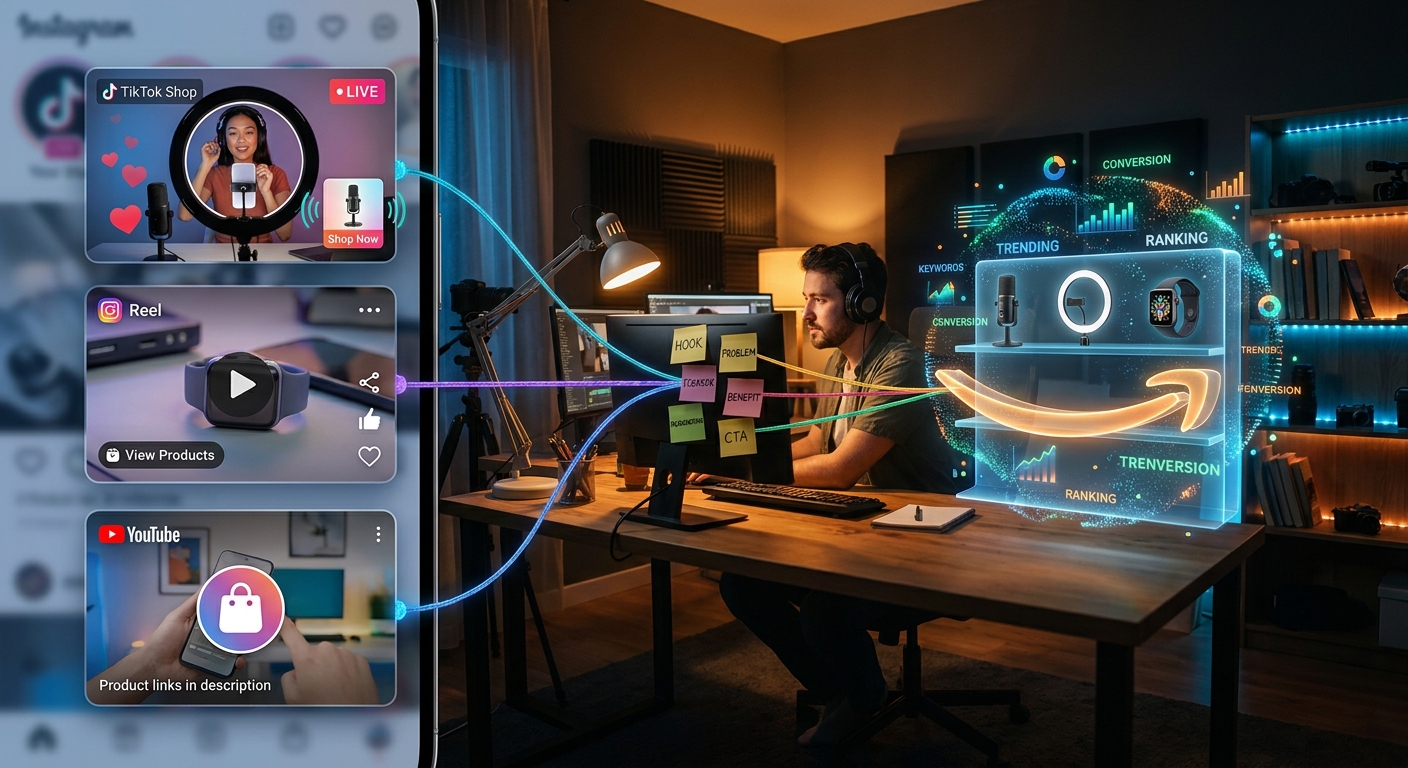
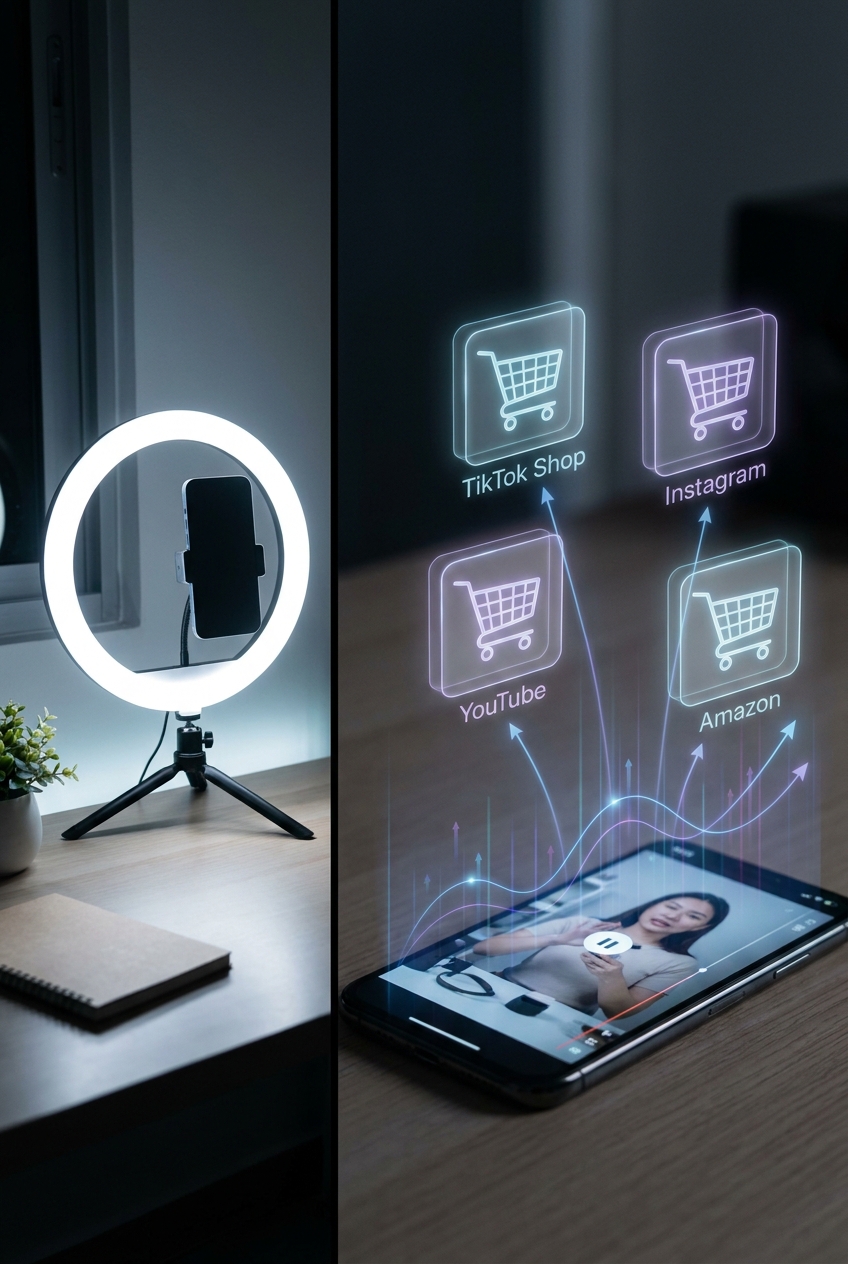
    You post one product video, then the platform chaos starts. TikTok Shop wants a native offer. Instagram wants tagged products in a Reel. YouTube wants shopping links and product tags. Amazon wants fresh storefront clips and creator picks. If you are a solo creator or small brand, it can feel like four part-time jobs fighting over the same 30 seconds of content. That is the real appeal of the new multi-cart stack. It is not about doing more. It is about making one piece of content work in more than one checkout lane at the same time.

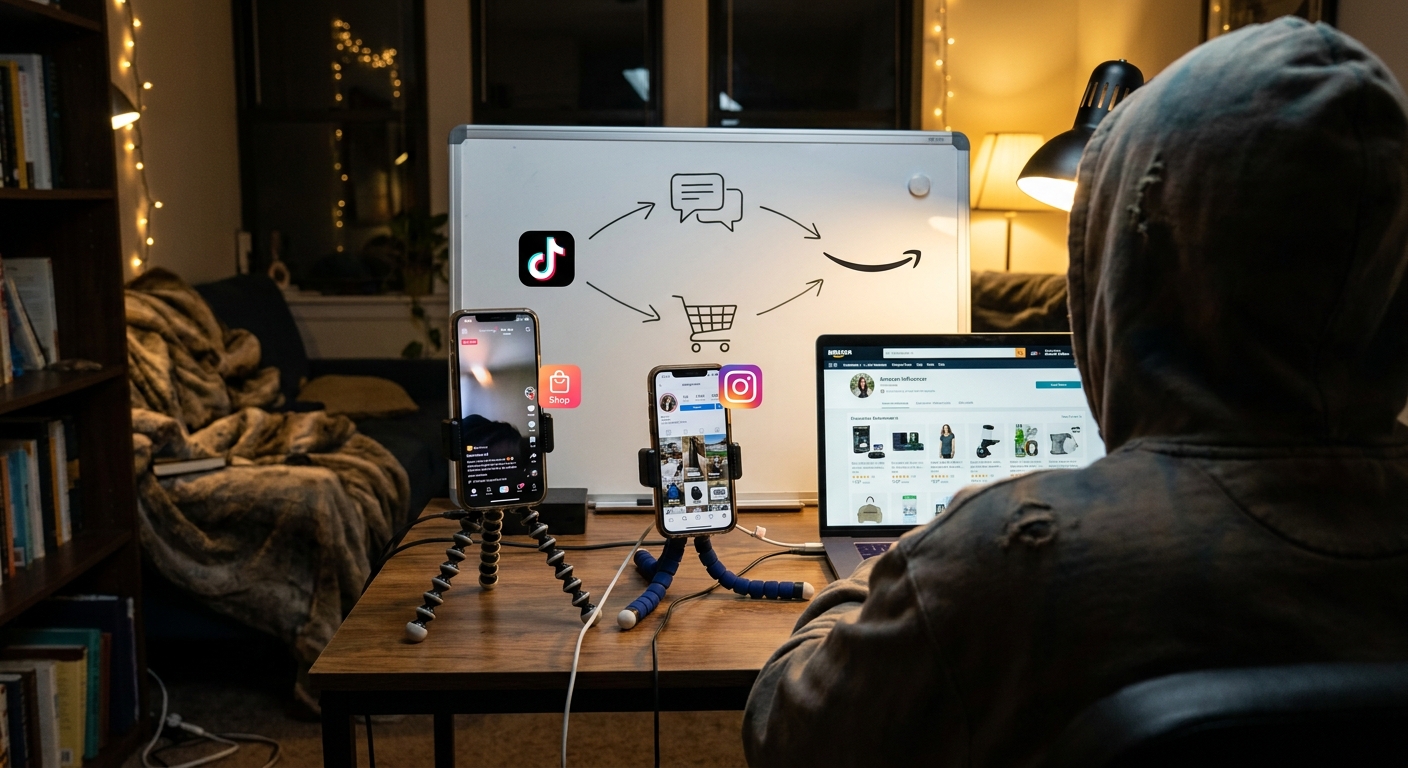
    If you are wondering how to sell on TikTok Shop Instagram YouTube and Amazon with the same content, the answer is simpler than it sounds. Build one “source” video, then adapt the packaging around it. Keep the hook, demo and proof the same. Change the links, tags, captions and product mapping for each platform. The video stays mostly intact. The cart changes. Done right, you stop rebuilding your sales system every time one app changes the rules.

    ⚡ In a Hurry? Key Takeaways

    • Yes, you can sell on TikTok Shop, Instagram, YouTube and Amazon with the same core content if you swap the checkout path for each platform.
    • Start with one strong vertical video, then create platform-specific versions with the right product tags, links, captions and calls to action.
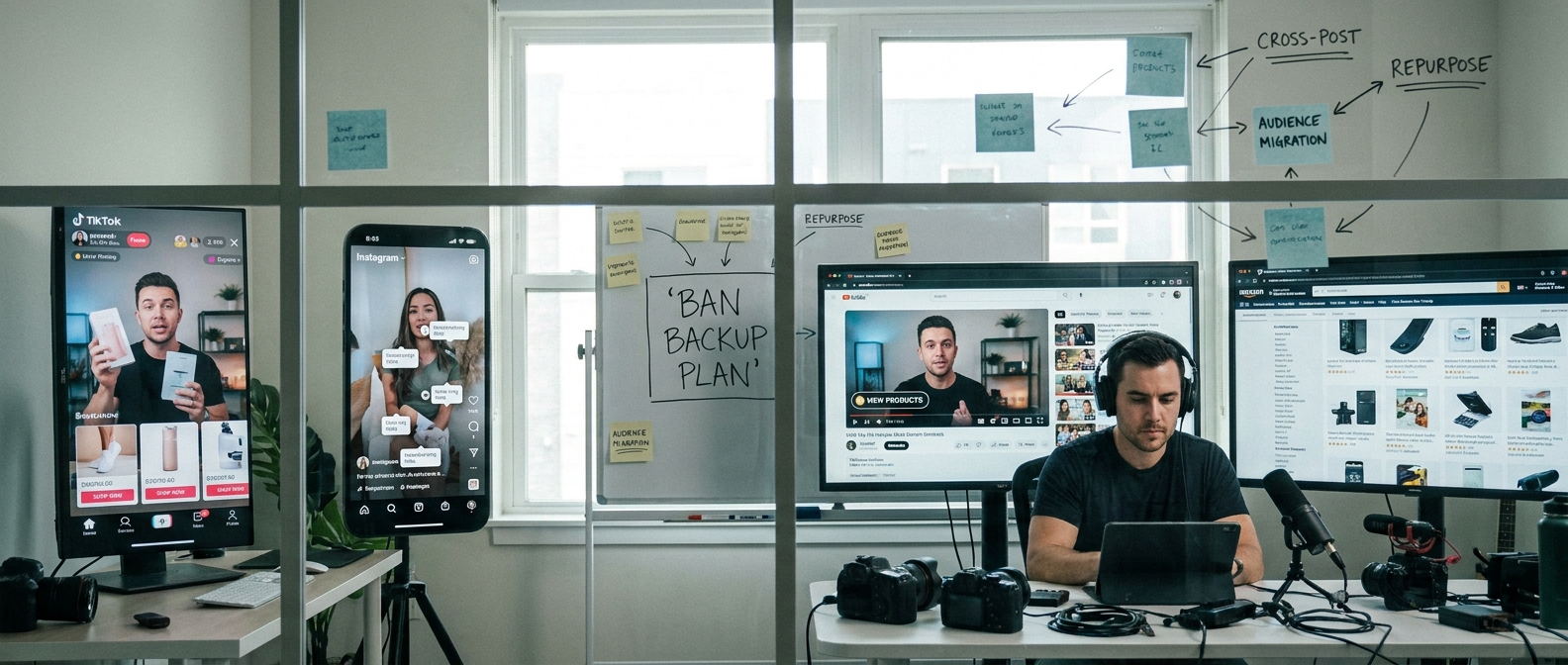
    • Do not let any one platform own your whole business. A multi-cart stack gives you backup when reach drops or commissions change.

    What the “multi-cart stack” actually means

    Think of it like this. You are not making four different sales campaigns. You are making one content asset that can feed four different carts.

    The stack usually looks like this:

    • TikTok Shop for fast discovery and impulse buys
    • Instagram Shopping or affiliate links for people who already follow you
    • YouTube Shopping tags for longer shelf life and search traffic
    • Amazon Influencer or storefront links for high-intent buyers who trust Amazon checkout

    Each platform plays a different role. TikTok finds people. Instagram warms them up. YouTube keeps working after the trend fades. Amazon closes people who want Prime shipping and familiar checkout.

    That is why creators are quietly moving this way. They are tired of betting the whole month on one app.

    Why creators are doing this now

    Because the old way is exhausting.

    You make one TikTok. Then someone tells you it should have been an Instagram Reel. Then YouTube says Shorts with product tags are getting pushed. Then Amazon wants updated idea lists, video reviews or storefront clips. Every platform acts like it should be your main job.

    But for most people, there is no extra team hiding in the back room.

    The multi-cart stack is a survival move. It gives you a way to reuse the expensive part, your idea, your filming time, your face on camera, your product demo, and only change the last-mile pieces.

    How to sell on TikTok Shop Instagram YouTube and Amazon with the same content

    1. Start with a “master video”

    Create one clean vertical video first. Aim for 20 to 45 seconds for most products. Include three things:

    • A fast hook in the first two seconds
    • A simple demo or before-and-after moment
    • A clear reason to buy now

    Example. If you are selling a kitchen gadget, your master video might be:

    • Hook: “I thought this was pointless until it cut prep time in half.”
    • Demo: Show the product solving one annoying problem
    • Proof: Show the result, then mention the exact item

    Keep branding light. Do not overstuff it with platform-specific language yet.

    2. Make four versions, not four new videos

    This is the key shift.

    You are not starting from scratch for each app. You are making light edits:

    • TikTok Shop version: Native product anchor, TikTok-style caption, a direct CTA like “grab it here”
    • Instagram version: Product tag in Reel, cleaner caption, maybe slightly more polished cover image
    • YouTube version: Product tag or linked product shelf, searchable title, maybe a spoken phrase that works without trend context
    • Amazon version: Use the same clip in your storefront or product review content, but trim out references to other platforms

    The core footage can stay almost identical. The wrapper changes.

    3. Match the call to action to the platform

    This is where many creators mess it up.

    A TikTok CTA can be quick and impulse-driven. Instagram often needs a softer prompt. YouTube rewards clarity. Amazon content works better when it feels useful, not salesy.

    Here is a simple guide:

    • TikTok Shop: “It’s linked in the product tab.”
    • Instagram: “Tap the product tag if you want the exact one.”
    • YouTube: “I tagged the product so you can check specs and price.”
    • Amazon: Focus on what the product does, then let the storefront handle the conversion

    Same video. Different final nudge.

    4. Keep one product naming system

    This sounds boring. It will save your sanity.

    If the same item is called “Mini Blend Pro” on TikTok, “Portable Blender” on Instagram, and “USB Smoothie Mixer” on Amazon, your reporting turns into a mess. Use one master product name in your own spreadsheet, even if the public listing titles differ a bit.

    Track:

    • Product name
    • SKU or ASIN
    • TikTok Shop listing
    • Instagram tagged product
    • YouTube linked product
    • Amazon storefront or product link

    This helps you see which content concept is working, not just which app had a lucky week.

    The practical workflow that keeps this manageable

    If you want this to work without eating your whole week, use a batch system.

    Record once

    Film three to five master videos in one session.

    Edit once

    Create a clean version with captions burned in, but leave room for each app’s native product tools.

    Package four times

    Export platform-specific versions with the right caption, cover, product tag and link structure.

    Review weekly

    Check which angle is selling, problem-solving demo, testimonial style, unboxing, comparison, and then roll that angle into the next batch.

    This is also where it pays to be careful about handing everything to a managed service. The promise sounds lovely when you are tired, but if someone else controls your creator mix, ad logic and store operations, you can slowly lose touch with what actually makes your audience buy. That is why it is worth reading The New ‘Managed Shop Trap’: Why TikTok’s Done‑For‑You Storefronts Could Quietly Train You Out Of Your Own Business. It makes an important point. Convenience can train you out of your own sales instincts.

    What changes on each platform, and what should stay the same

    What should stay the same

    • The product being featured
    • The core hook
    • The proof or demo
    • The overall promise of the video

    What should change

    • Caption style
    • Product tags or anchors
    • Thumbnail or cover text
    • Disclosure language for affiliate content
    • Platform-specific CTA

    This is the part many people get backwards. They rewrite the whole video, then forget to fix the metadata that actually controls the shopping path.

    Common mistakes that wreck a multi-cart stack

    Using a TikTok-native joke everywhere

    Some jokes or sounds travel badly. A clip built entirely around one TikTok trend can feel stale on YouTube a week later.

    Forgetting the checkout experience

    Amazon buyers often want specs, ratings and delivery confidence. TikTok buyers often want speed and excitement. Same product, different buying mood.

    Sending all traffic to one platform out of habit

    If your content is doing well on Instagram but your caption tells everyone to “go to TikTok,” you are creating friction for no reason.

    Not saving your raw footage

    Always keep the clean files. Platforms change dimensions, product features and edit styles constantly. Raw footage is insurance.

    Ignoring compliance and disclosures

    If something is affiliate content, say so clearly where needed. Boring, yes. Still important.

    Who benefits most from this approach

    This works especially well for:

    • Solo creators who do not have an editor for every platform
    • Small brands working with a tiny content budget
    • Amazon Influencers who want more top-of-funnel discovery
    • TikTok Shop sellers who are nervous about relying on one app
    • Creators with evergreen products that solve clear problems

    If your product needs a lot of explanation, YouTube may carry more weight. If it is visually obvious and impulse-friendly, TikTok Shop may bring the first sale. The point is not equal effort on every platform. The point is connected effort.

    At a Glance: Comparison

    Feature/Aspect Details Verdict
    Content creation workload One master video gets lightly adapted for four shopping systems instead of filming four separate campaigns. Best way to save time without going silent on other platforms.
    Platform risk If TikTok reach drops or one commission program changes, the same content can still earn through Instagram, YouTube or Amazon. Much safer than building your whole business on one app.
    Setup complexity You need product mapping, clear naming, platform-specific tags and a repeatable workflow. A little fussy at first, then much easier once your system is built.

    Conclusion

    The social commerce race is speeding up faster than most solo creators and small brands can reasonably handle. That is exactly why the multi-cart stack matters. It gives you a calmer way to work. Instead of chasing every new shopping feature like it is a separate career, you build one strong piece of content and let it feed TikTok Shop discovery, Instagram native shopping, YouTube Shopping tags and Amazon conversions together. When one platform throttles reach, changes commissions or shifts priorities, you are not back at zero. You still have working rails elsewhere. That is the real win here. Not more hustle. More resilience, from the same content you were already making.


  • The New ‘Managed Shop Trap’: Why TikTok’s Done‑For‑You Storefronts Could Quietly Train You Out Of Your Own Business

    The New ‘Managed Shop Trap’: Why TikTok’s Done‑For‑You Storefronts Could Quietly Train You Out Of Your Own Business

    You can feel the appeal straight away. You are tired, sales are lumpy, creators ghost you, ad reports do not match, and half your week disappears into dashboards that seem built to test your patience. So when a TikTok Shop managed service pilot shows up and says, “we can run creators, ads and key shop operations for you,” it sounds less like a risk and more like rescue. The problem is that rescue can come with a quiet cost. If TikTok becomes the team that plans, executes and optimizes your store, you may gain sales while losing the habit of running your own business. That is the managed shop trap. It is not that these programs are automatically bad. Some brands will benefit a lot. But if you say yes without clear rules, documentation and benchmarks, you could wake up months later dependent on one platform, with no repeatable playbook you can use anywhere else.

    ⚡ In a Hurry? Key Takeaways

    • The TikTok Shop managed service pilot may boost results, but it can also make your brand dependent on TikTok’s team, tools and decision-making.
    • Before joining, document your current numbers, demand regular reporting and keep control of creative testing, customer data and operating rules.
    • Higher sales are not enough if you cannot explain what worked or repeat it later on Instagram, YouTube or Amazon.

    Why this offer feels so hard to refuse

    If you sell on TikTok Shop right now, “overwhelmed” is probably the polite version of how you feel.

    You are trying to manage creators, short videos, live selling, affiliate relationships, paid ads, product samples, inventory, shipping problems and customer service. Then you still have to make sense of platform reporting that can feel incomplete or delayed.

    So a managed-service style offer lands at exactly the right moment. It promises relief.

    On paper, that sounds reasonable. TikTok already sees a huge amount of behavior inside its own ecosystem. It knows what converts, which creators are moving product, which ad formats get attention and which shop setups tend to stall. If anyone can tune the machine fast, it is the platform itself.

    That is why this matters now. Social commerce is not standing still. If you want a bigger picture of where things may be heading, From For You Page To Checkout: What TikTok’s 102x Shop Surge In Brazil Reveals About The Future Of Social Commerce is worth your time. It shows how quickly TikTok Shop can shift from “maybe” to “move now” in the right market.

    What the managed shop trap actually is

    The trap is simple. Someone else starts running the growth engine so well that you stop learning how the engine works.

    At first, that may seem fine. You are busy. You need wins. But over time, three things can happen.

    You lose process memory

    If TikTok handles creator selection, offer structure, ad setup and store optimization, your team may stop building those muscles internally. You become the passenger in your own car.

    You lose visibility

    If reports stay high level, you may know revenue went up but not why. Was it one creator? A discount? Better product tagging? A lucky spike in category demand? If you cannot answer that, you do not have a strategy. You have a result.

    You lose portability

    This is the big one. A tactic that works inside TikTok’s system may not transfer cleanly to Instagram, YouTube Shops or Amazon. If all the know-how stays inside TikTok’s managed layer, your business gets stronger on one platform while your independence gets weaker everywhere else.

    To be fair, this pilot could still help a lot of brands

    Let’s not pretend every managed program is a trick. For some sellers, this could be the difference between stalled growth and real momentum.

    If your team is tiny, your category is moving fast, and your current operation is messy, expert help from the platform could improve performance quickly. Better creator matching, cleaner ad execution and tighter shop operations can absolutely lift sales.

    The issue is not whether the pilot can work. The issue is whether you are still in control while it works.

    The questions to ask before you say yes

    You do not need to be suspicious. You do need to be specific.

    Who owns the strategy?

    Ask whether your team still approves creator types, price promos, content themes, discount timing and ad budget ranges. If TikTok can make all the key calls without you, that is not support. That is outsourcing your judgment.

    What reporting do you get?

    Ask for weekly and monthly reporting that shows more than sales totals. You want creator-level results, ad-level performance, conversion rates, refund rates, repeat purchase signals and inventory impact.

    What data can you export?

    This matters a lot. Can you keep performance history, creator learnings, winning hooks, audience patterns and operational insights in a format your own team can store and use later?

    What happens if you leave the program?

    This is the question many brands forget to ask. If the pilot ends, or if you choose to exit, what remains with you? A healthy program should leave you smarter, not just temporarily bigger.

    How to protect yourself without turning down help

    You do not need to reject a TikTok Shop managed service pilot to stay safe. You need guardrails.

    1. Benchmark everything before the pilot starts

    Write down your current baseline.

    Include revenue, conversion rate, average order value, creator response rate, ad spend, return on ad spend, refund rate, shipping delays and customer service volume. If possible, track how many pieces of content per week actually lead to sales.

    Without a baseline, every future claim sounds impressive.

    2. Keep a living playbook

    Create a simple shared document. Every week, log what changed.

    What creators were activated? What offers were used? What videos or live formats worked? Which products were pushed hardest? What happened to margins?

    This sounds boring. It is not. It is how you stop your business knowledge from leaking out of your own company.

    3. Ask for “why,” not just “what”

    If TikTok’s team says sales improved, ask why they think it improved. Push for explanation, not just celebration.

    You are trying to capture patterns you can use later, not clap at a dashboard.

    4. Keep one test lane under your control

    This is a practical safeguard. Even if the managed team handles most operations, keep one slice of activity owned by your internal team.

    Maybe you keep one product line, one creator segment or one weekly content test in-house. That way your team keeps learning, and you have a control group to compare against.

    5. Review incrementality, not just total sales

    If sales go up, good. But ask the harder question. Would some of those sales have happened anyway?

    You want to know whether the managed service is creating new demand, improving conversion, reducing wasted spend or simply shifting credit around inside the platform.

    What creators should watch for too

    This is not just a seller issue.

    If TikTok starts managing more storefront activity directly, creators may find that relationship-building changes too. Brand deals, affiliate pushes and content direction could become more platform-shaped and less creator-shaped.

    That can mean more opportunity in the short term, but it can also mean less direct access to the brand and less room to build long-term value outside TikTok’s system.

    If you are a creator, keep your own records. Track which products sold, which hooks worked, what your audience responded to and what formats converted. Do not let your business intelligence live only inside platform messages and campaign summaries.

    The real risk is skill atrophy

    This is the part many people miss. Dependence rarely arrives with a dramatic warning.

    It shows up quietly. Your team stops learning how to recruit creators. You stop understanding your own paid media tests. You stop knowing which operational fixes improved conversion. You get better outcomes and weaker instincts at the same time.

    That is dangerous because platform rules change. Fees change. category support changes. Account managers change. Pilot programs come and go.

    If the machine works only while someone else is touching the controls, you do not really own the machine.

    When a managed service pilot makes sense

    There are good reasons to join.

    • If your shop is underperforming and your team lacks TikTok-specific experience.
    • If you treat the pilot as a learning period, not a permanent crutch.
    • If you can get detailed reporting and maintain approval rights.
    • If your margins can absorb experiments and changing promo pressure.

    In other words, use it when it helps you build capability, not replace it.

    When you should be careful

    • If you do not understand your current numbers.
    • If reporting will stay vague.
    • If the platform controls all key decisions.
    • If your team has no process for documenting what is learned.
    • If TikTok already makes up too much of your total business.

    That last one matters. Concentration risk is real. The stronger one channel becomes, the more discipline you need.

    At a Glance: Comparison

    Feature/Aspect Details Verdict
    Convenience TikTok may handle creators, ads and shop operations, saving time for small teams. Useful, but only if you still see how decisions are being made.
    Performance insight Sales may rise, but vague reporting can hide what actually caused the lift. Demand detailed reporting before you depend on the program.
    Long-term control If your team stops learning, your brand may struggle to repeat success on other channels later. Protect your own playbook, benchmarks and approval rights from day one.

    Conclusion

    The TikTok Shop managed service pilot might be a real help. For some brands, it could clean up chaos and unlock growth fast. Just do not confuse short-term relief with long-term strength. This helps the community today because TikTok Shop is starting to test managed-service style programs that promise to handle creators, ads and store operations for overwhelmed brands, and many smaller teams are about to say yes without understanding the tradeoff. If you document your baseline, track what changes, ask better questions and keep decision-making power close, you can get the upside without handing over your business brain. The goal is not to reject support. It is to make sure that six months from now, you have higher sales and a clearer playbook you can still use if the rules change again.

  • The New ‘Storefront Everywhere’ Shift: How Amazon’s Quiet Update Just Turned Every TikTok, Reel And Short Into A Shoppable Home Base

    The New ‘Storefront Everywhere’ Shift: How Amazon’s Quiet Update Just Turned Every TikTok, Reel And Short Into A Shoppable Home Base

    If you are an Amazon creator right now, you are not imagining it. The ground really is shifting under your feet. Commissions can feel softer, reporting feels less clear than it used to, and the old habit of tossing affiliate links into every bio, caption, comment, and Linktree page is getting harder to manage and easier for shoppers to ignore. That is frustrating, especially when you are doing more work and getting less certainty back. The bigger story is not just that Amazon changed a few things quietly. It is that shoppers are being trained by TikTok Shop, Instagram, and YouTube to expect one simple place where they can browse everything you recommend. That means your Amazon storefront is no longer just a nice extra. It is becoming your home base. The smart move now is to build a storefront everywhere system that sends people from short video content to one clean shopping destination.

    ⚡ In a Hurry? Key Takeaways

    • Amazon’s quiet shift means creators should treat their storefront as the main shopping hub, not just one more link.
    • Build one consistent storefront path across TikTok, Instagram, and YouTube so every short video points buyers to the same easy-to-browse place.
    • This approach gives you a little more protection when commissions change, reports get fuzzier, or one platform’s algorithm suddenly cools off.

    The old “spray links everywhere” model is wearing out

    For a while, the playbook was simple. Post a product. Drop a link. Repeat that process everywhere.

    That worked when shoppers were willing to hop across tabs, open clunky link pages, and dig around for the exact item you mentioned in a 20-second clip. People are less patient now. Social platforms trained them to expect fewer steps.

    If someone sees your kitchen gadget on a Reel, your skincare routine on TikTok, or your desk setup on YouTube Shorts, they do not want a scavenger hunt. They want one clear place to keep shopping.

    That is the real shift behind this Amazon influencer storefront strategy across TikTok Instagram YouTube. Your storefront is starting to matter more than the individual affiliate link.

    What Amazon quietly changed

    Amazon did not exactly put up a giant billboard announcing this. But creators have noticed a pattern. More traffic is being funneled toward storefront-style shopping behavior, while old-school reporting clarity and easy one-off link confidence do not feel as strong.

    The result is subtle but important. Amazon appears to be rewarding a more organized shopping journey. Instead of sending people to random product pages one by one, creators are better off giving buyers a place to browse collections, idea lists, videos, and category picks in one spot.

    That matters because a storefront does a few things a raw product link cannot:

    • It keeps shoppers in your world longer.
    • It encourages binge shopping.
    • It makes your recommendations feel curated, not scattered.
    • It gives you one destination to use across platforms.

    Why TikTok, Instagram, and YouTube are pushing this change faster

    Short-form video is no longer just content. It is a storefront preview.

    TikTok Shop made that painfully obvious. People now expect to see a product in action and buy it with minimal friction. Instagram is doing the same with product tagging and in-app shopping habits. YouTube is moving harder into shopping features tied to creators and videos.

    So even when the final purchase still happens on Amazon, the buyer expectation has changed. They want a clean path.

    That is why this is bigger than Amazon alone. If you have not been following how platforms are bundling shopping, messaging, and payments together, it is worth reading The New ‘Super App Shuffle’: How TikTok’s Quiet Shopping, Messaging And Payments Push Could Rewrite Your Whole Sales Strategy. It helps explain why the “one place to discover and buy” habit is getting stronger so fast.

    What “storefront everywhere” actually means

    This does not mean pasting the exact same thing on every platform and calling it a strategy.

    It means building one shopping home base, then making every piece of content feed into it naturally.

    Your content is the door

    TikToks, Reels, Shorts, story posts, carousels, livestream clips. These grab attention and create interest.

    Your storefront is the room people walk into

    Once they are interested, they need a place that feels organized. Think category shelves, not a junk drawer.

    Your collections are the actual shopping experience

    Best home office gear. Summer travel picks. Under-$25 beauty buys. New mom essentials. Dorm room basics.

    That is the setup that helps buyers keep going after the first click.

    How to build an Amazon influencer storefront strategy across TikTok Instagram YouTube

    1. Pick one clear storefront promise

    Your storefront should answer one simple question fast: “What kind of stuff will I find here?”

    If your page is a mix of toddler snacks, gaming chairs, anti-aging serum, and camping knives with no structure, people bounce.

    Create clear collections based on how your audience already thinks:

    • As seen on TikTok
    • My daily makeup routine
    • Home office favorites
    • Small apartment kitchen must-haves
    • Travel gear I actually use

    Simple beats clever here.

    2. Match your short videos to storefront categories

    Each video should have an obvious landing place.

    If you post a Reel about three pantry organizers, send shoppers to your “Kitchen Organization” storefront section. If you post a Short about your filming setup, send them to “Creator Gear.”

    This is better than sending them to one product page, because many people will want to browse similar items once they arrive.

    3. Use the same language on every platform

    Consistency helps more than people realize.

    If your TikTok says “Shop my work-from-home setup,” your Instagram bio says “Office picks,” and your YouTube description says “desk items,” you are making shoppers think too hard.

    Pick one label and use it everywhere. Same words. Same category name. Same destination.

    4. Stop treating the bio link like a junk drawer

    Too many creators have bio links with 18 buttons. That is not helpful. That is digital clutter.

    Your top path should be obvious. For many creators, that now means:

    • Shop my Amazon storefront
    • Browse my latest finds
    • See everything from my videos

    You can still keep other links, but your main buyer path should be easy to spot.

    5. Build platform-specific content, not platform-specific shops

    This part is important. Your videos should fit each app. Your shopping destination should still feel unified.

    TikTok can be fast, casual, and demo-heavy. Instagram can be more polished and visual. YouTube Shorts can be more search-friendly and explanation-based.

    But all three should guide people toward the same organized storefront system.

    What creators should do if reporting feels fuzzier

    This is where a lot of people feel stuck. If your reporting gives you less detail, it is harder to know which individual post drove what.

    You may not be able to fix Amazon’s reporting. But you can make your own system cleaner.

    Track by content bucket

    Instead of obsessing over every single post, look at themes:

    • Beauty
    • Kitchen
    • Tech
    • Travel
    • Seasonal gift guides

    If one category keeps getting strong response, double down there.

    Watch click behavior outside Amazon too

    Look at which videos get saves, comments asking for links, profile taps, and repeat questions. Those are buying signals even when the commission dashboard is not telling the full story.

    Use naming discipline

    If you keep changing collection titles, it gets harder to spot what is working. Stay consistent long enough to see patterns.

    How brands should adapt too

    This is not only a creator problem. Brands need to stop thinking in isolated campaign posts and start thinking in shopping paths.

    If you send a creator one hero product and ignore the rest of the buyer journey, you are missing the point. Shoppers often want comparison, bundles, alternatives, and related items.

    Brands should ask:

    • Does this creator have a relevant storefront category for us?
    • Can our product sit inside a broader themed collection?
    • Are we helping the creator build a binge-shopping path, not just a one-click post?

    The winners here will be the brands that fit naturally into a creator’s shopping ecosystem.

    A simple storefront everywhere setup you can copy

    Step 1: Create 5 to 8 storefront categories

    Think evergreen first. Categories that will still make sense three months from now.

    Step 2: Map content to each category

    Make a list of your usual video topics and assign each one a storefront destination.

    Step 3: Update bios and link pages

    Make the storefront the clearest shopping option.

    Step 4: Mention the category in the content

    Say things like “I put all my desk picks in my Amazon storefront” or “Everything from this series is in my kitchen favorites list.”

    Step 5: Refresh collections weekly

    Do not let your storefront feel abandoned. New videos should connect to updated collections.

    Step 6: Review what shoppers keep asking for

    Your comments are telling you which categories deserve more attention.

    What not to do

    • Do not make a new random list for every single post.
    • Do not bury your storefront under too many unrelated links.
    • Do not assume one viral video means your whole strategy is working.
    • Do not copy TikTok Shop tactics blindly if your audience still buys mostly on Amazon.
    • Do not wait for perfect reporting before cleaning up your shopping system.

    At a Glance: Comparison

    Feature/Aspect Details Verdict
    Old affiliate link strategy Single product links scattered across bios, captions, comments, and landing pages. Works for quick hits but creates friction and weakens the bigger shopping journey. Less reliable now
    Storefront everywhere strategy Short-form content across TikTok, Instagram, and YouTube all points to one organized Amazon storefront with clear collections and themes. Best long-term move
    Platform-by-platform reaction mode Creators change tactics every time Amazon, TikTok, Instagram, or YouTube tweaks shopping features, without building one stable system underneath. Exhausting and fragile

    Conclusion

    The useful shift here is not just “Amazon changed something again.” It is that shopping is getting centralized around clearer creator hubs, while discovery keeps happening in short videos all over the place. That helps the community right now because Amazon has quietly pulled more people into storefronts, TikTok Shop traffic is exploding, and YouTube and Instagram are pushing in-video shopping harder every week. If you build an organized storefront everywhere system now, you do not have to panic every time commissions move, reports get downgraded, or an algorithm changes its mind. You give buyers one easy place to keep shopping your recommendations, and that is often better for them and better for your business.

  • The New ‘AI Shelf Hijack’: How Amazon’s Rufus Is Quietly Rewriting TikTok, Insta And YouTube Shopping Scripts

    The New ‘AI Shelf Hijack’: How Amazon’s Rufus Is Quietly Rewriting TikTok, Insta And YouTube Shopping Scripts

    You are not imagining it. The same product video can do great on TikTok or Instagram, then send people to Amazon and somehow die on arrival. That is maddening, especially when your creative did its job and the clicks were real. The problem is that Amazon is no longer just the cash register at the end of the social journey. Inside the app, Rufus, Amazon’s AI shopping assistant, is now helping decide what shoppers compare, what questions they ask next, and which products get pushed back onto the shelf. So your video might be speaking one language on TikTok, Instagram, or YouTube, while your Amazon listing is speaking another. If those signals do not match, the customer gets rerouted. The fix is not more hype. It is tighter alignment. You need content and product pages that clearly say who the item is for, what problem it solves, and why someone should buy it right now.

    ⚡ In a Hurry? Key Takeaways

    • Amazon Rufus can redirect shoppers after they arrive, so social content alone no longer guarantees Amazon sales.
    • Start scripting every video and live stream around three matching signals: who it is for, what problem it solves, and why now.
    • Do not overpromise in social clips. If the Amazon page cannot support the claim with titles, bullets, images, and reviews, conversions can fall fast.

    What the “AI shelf hijack” really means

    Creators keep asking the same question. Why did a video with strong watch time, solid comments, and good click-through suddenly stop converting on Amazon?

    Because the handoff is no longer simple.

    For a while, many sellers treated Amazon like a checkout page. A TikTok got attention. An Instagram Reel built interest. A YouTube Short explained the product. Then Amazon closed the deal.

    Now Amazon has its own discovery brain inside the store. Rufus can answer shopper questions, compare products, suggest alternatives, and guide people toward items that better match the words and signals it sees. That means your social platforms and Amazon are each trying to interpret buyer intent in their own way.

    If TikTok thinks your product is a dorm-room space saver, Instagram frames it as cute desk decor, YouTube presents it as a productivity tool, and Amazon lists it as generic office storage, you have a mismatch. Rufus may decide a different product fits the shopper better.

    Why content that “works” on social can fail on Amazon

    Social platforms reward attention first

    TikTok, Instagram, and YouTube are very good at finding people who will stop scrolling. A dramatic before-and-after clip, a quick reaction, or a satisfying demo can pull in views even if the product positioning is still fuzzy.

    That is enough to win reach. It is not always enough to win the sale on Amazon.

    Amazon rewards clarity at the moment of purchase

    Amazon shoppers are closer to buying. They ask practical questions. Is this the right size? Does it work for oily skin? Is it safe for pets? Does it fit in a carry-on? Can I use it with an iPhone 15?

    Rufus is built for those questions. If your listing does not clearly answer them, Amazon’s own system may point the shopper toward another option that does.

    Your message may be too broad

    Many product videos try to appeal to everyone. That can help top-of-funnel reach, but it hurts platform alignment. Rufus works better when the product context is specific. “For runners with knee pain after long walks” is stronger than “great for everyone.”

    How to optimize TikTok Instagram YouTube content for Amazon Rufus and social shopping

    This is the core fix. Every piece of content should carry the same three signals across all platforms and your Amazon listing.

    1. Who is this for?

    Name the buyer plainly. New moms. Apartment renters. Frequent travelers. Teachers. People with curly hair. Dog owners with anxious puppies.

    Do not bury this. Say it out loud in the first few seconds of the video. Put it in captions. Include it in product tags where possible. Make sure Amazon’s title, bullets, A+ content, and images back it up.

    2. What problem does it solve?

    Pick one main problem. Not five.

    A good script is simple. “If your laptop charger keeps slipping behind the desk, this clip holds it in place.” That gives social algorithms context and gives Rufus cleaner signals too.

    3. Why now?

    This is the timing trigger. Back-to-school. Summer travel. Post-workout recovery. Small apartment clean-up. Holiday hosting. New puppy stage.

    “Why now” helps on both sides. Social platforms get a clearer reason to show your content to the right crowd, and Amazon gets a stronger use-case signal for shopper questions and comparisons.

    A simple scripting formula creators can use this week

    You do not need to reinvent your whole content style. Just tighten the structure.

    The 15-second short video script

    Hook: “If you travel with tangled cables, you need to see this.”

    Problem: “Mine used to get crushed and lost in my backpack.”

    Demo: “This case keeps cords, charger blocks, and earbuds in separate spots.”

    Why now: “Perfect if you are packing for summer trips or heading back to campus.”

    Close: “It is linked in my shop and on Amazon.”

    That script gives every system something useful. Audience. Problem. Use case. Product function.

    The live stream version

    In live shopping, repeat the same positioning every few minutes. New viewers join constantly.

    Try this pattern:

    “For anyone setting up a small apartment kitchen, this gadget saves counter space. The main thing it fixes is cabinet clutter. I started using it during a recent move, and that is why I am showing it today.”

    Then answer real buyer questions in plain English. That language often mirrors the questions shoppers ask Amazon too.

    What to change on Amazon so Rufus has better material to work with

    If your content is aligned but the listing is vague, you still have a problem.

    Rewrite titles and bullets for human questions

    Do not stuff keywords and call it a day. Write bullets that answer the obvious buyer concerns.

    Instead of:

    “Premium ergonomic bottle, stylish design, durable material.”

    Try:

    “Made for commuters and gym users who want a leakproof bottle that fits most cup holders.”

    That is clearer for both people and AI systems.

    Use images that match your social promise

    If your TikTok is about meal prep for busy parents, your Amazon images should show that use case. If your Reel targets dorm storage, your image stack should show a dorm-like setting, not a luxury office.

    Mine reviews and questions for exact wording

    Customers already tell you how they think about the product. Use their language. If reviews say “great for swollen feet after work,” do not rewrite that into bland marketing speak. That real phrasing is gold.

    Platform-by-platform tips

    TikTok Shop

    TikTok responds well to problem-first hooks and fast visual proof. Open with the pain point. Show the fix immediately. Keep your spoken words consistent with your product title and on-screen text.

    If you are sending traffic to Amazon instead of using TikTok Shop directly, make the transition feel natural. The shopper should expect to see the same use case on Amazon that they just saw in the clip.

    Instagram shopping

    Instagram is still more aesthetic, but the best shopping posts do not stop at pretty. Use carousels and Reels to show context. Who uses it. Where it lives. What annoyance it removes.

    Product tags should connect to a page that feels familiar. If the Amazon listing looks generic compared with the polished Instagram post, trust drops.

    YouTube shopping

    YouTube gives you more time to explain. Use that advantage. Shorts can grab attention, but longer videos are great for buyer objections, side-by-side comparisons, and “best for” explanations.

    If your YouTube audience is warmer and more research-driven, your Amazon page needs deeper answers. Think compatibility, sizing, cleaning, battery life, setup, and return concerns.

    The biggest mistake social sellers are making right now

    They are optimizing each platform in isolation.

    One team writes punchy TikTok hooks. Another makes pretty Instagram posts. Another uploads YouTube demos. Then Amazon gets a half-finished listing written like a warehouse catalog.

    That setup made more sense before Amazon’s in-app assistant started playing a stronger discovery role. Now the system is more connected. Mixed signals cost money.

    The fix is to create one message spine for the product, then adapt it by format.

    Your message spine should include:

    • Primary audience
    • Main pain point
    • Top use case
    • Seasonal or timely reason to buy
    • Proof point, such as a demo, review theme, or comparison

    A practical workflow for teams and solo creators

    Here is a simple process that works whether you are a solo affiliate or a growing brand.

    Step 1: Write one positioning sentence

    Example: “This portable blender is for office workers and commuters who want quick protein shakes without using a full kitchen.”

    Step 2: Build three short hooks from it

    “If you skip breakfast because mornings are chaos…”

    “For commuters who are tired of buying expensive smoothies…”

    “If your office lunch never has enough protein…”

    Step 3: Match the Amazon listing

    Make sure the title, bullets, images, and FAQ reflect that same buyer and use case.

    Step 4: Check the handoff

    Click from your own social post to the Amazon page. Ask yourself one question. Does this feel like the same product story, or did the shopper just walk into a different store?

    What success looks like after alignment

    You may not get viral numbers overnight. But you should start seeing healthier patterns.

    • Fewer empty clicks from social
    • Better Amazon conversion on traffic that does arrive
    • More relevant comments and questions
    • Higher-quality shoppers who understand the product faster
    • Stronger repeatability across TikTok, Instagram, YouTube, and Amazon

    That is the goal. Not random spikes. A cleaner path from discovery to purchase.

    At a Glance: Comparison

    Feature/Aspect Details Verdict
    Social reach vs Amazon conversion TikTok, Instagram, and YouTube can drive attention, but Rufus can still redirect shoppers if the Amazon listing lacks clear buyer and use-case signals. Views are not enough. Alignment matters.
    Best content strategy Use one core message across all platforms: who it is for, what problem it solves, and why now. This is the most practical fix.
    Risk of ignoring Rufus You may keep getting social engagement without Amazon sales, or Amazon purchases without building long-term social momentum. Expensive mistake. Start adjusting now.

    Conclusion

    Amazon is not just sitting there waiting to cash out your TikTok, Reel, or YouTube traffic anymore. Rufus is now part of the shopping journey, and it is shaping what customers see, compare, and choose once they enter Amazon. That means the old habit of treating Amazon like a simple checkout button is starting to break down. The good news is that this is fixable. If you start feeding Rufus and the social platforms the same clear signals about who the product is for, what problem it solves, and why now, your content and your listing can finally start working together. Do that, and you give TikTok Shop, Instagram product tags, YouTube shopping tools, and Amazon’s own AI shelf a better chance to push in the same direction instead of cancelling each other out.

  • The New ‘Cart Handoff’ Playbook: How To Follow Your Shopper From TikTok To Amazon Without Losing The Sale

    The New ‘Cart Handoff’ Playbook: How To Follow Your Shopper From TikTok To Amazon Without Losing The Sale

    You make the TikTok. People click. Then the trail goes cold. That is the part nobody warns you about. The video performs, comments look great, your Amazon clicks bump up a bit, but you still cannot clearly tell which post got the sale. If you have been trying to figure out how to track sales from TikTok to Amazon Influencer, you are not alone. The handoff between social apps and Amazon is messy because each platform shows you only part of the story. The good news is you do not need fancy software to get a lot better at this. You need a simple playbook. One hero link per product. One naming system you use every time. And one quick daily check so you can connect the content you posted with the clicks and earnings that followed. That will not make tracking perfect, but it will make your next decision much smarter.

    ⚡ In a Hurry? Key Takeaways

    • To track sales from TikTok to Amazon Influencer, use one unique Amazon tracking ID and one hero link per SKU so every click has a clean source.
    • Create a simple naming pattern for each post, then log daily clicks, ordered items, and commission changes against that post.
    • You will never get perfect one-to-one attribution, but this system cuts guesswork, saves ad money, and shows which videos deserve more effort.

    The real problem is not traffic. It is the jump.

    Most creators and small brands are not struggling to make content anymore. They are struggling to keep the buying journey intact once a shopper leaves TikTok, Instagram, or YouTube.

    That jump is where sales go fuzzy. A person watches your TikTok on their phone, clicks your link, browses Amazon, then buys later on a laptop. Or they click, get distracted, come back from a search, and the sale still happens. Amazon may count the sale. TikTok may claim the click. You are left staring at reports that do not line up.

    That is why a cart handoff playbook matters. You are not trying to build a giant agency stack. You are trying to make the path from short video to Amazon as clean and trackable as possible.

    What “cart handoff” really means

    Think of cart handoff as the moment a shopper leaves your content and enters the buying environment. On social, your job is attention and trust. On Amazon, your job is to remove friction and get them to the right product fast.

    If the handoff is sloppy, you lose two things. The sale itself, and the data that tells you why it worked or failed.

    The goal

    Your goal is not perfect tracking. That is not realistic across TikTok, Amazon, and different devices. Your goal is directional clarity. You want to know which product, which link, and which content format is producing the best buying behavior often enough that you can act on it.

    The simple playbook: one hero link per SKU

    This is the part most people skip. They use one storefront link for everything, or they keep swapping links around depending on the platform. That makes reporting muddy fast.

    Instead, pick one hero link per SKU. In plain English, that means one main destination link for each product you promote.

    Why this works

    If every TikTok about Product A points to the same main Product A link structure, then changes in clicks, ordered items, and earnings become easier to compare. You are reducing chaos.

    You can still have separate tracking IDs for platforms or campaigns, but the shopper should always land in the same clean place.

    What that hero link can be

    Depending on how you sell, that hero link might be:

    • An Amazon Influencer product page link
    • A direct Amazon product link with your proper Influencer tracking tag
    • A simple landing page that sends people to a single Amazon product

    The point is consistency. Do not send one video to your storefront, another to a product page, and another to a random Link in Bio page unless you have a reason and a way to track each path.

    Use one tracking structure every time

    If your naming is a mess, your data will be too. You need a naming pattern that tells you the platform, the product, the content type, and the date at a glance.

    A naming example that is easy to live with

    Try something like this in your spreadsheet or notes:

    • TT-blender-demo-0714
    • TT-blender-live-0714
    • IG-blender-reel-0714
    • YT-blender-short-0714

    Now every piece of content has a simple label. When you post, log it. When you check clicks and Amazon results later, match them back to that label.

    Where to use the structure

    Use it in:

    • Your internal content calendar
    • Your link shortener labels, if you use one
    • Your spreadsheet tabs
    • Your notes on what hook or angle you used

    This sounds boring. It is also where the money is.

    How to track sales from TikTok to Amazon Influencer in a scrappy way

    Here is the practical version. No giant data warehouse required.

    Step 1: Create a dedicated Amazon tracking ID for TikTok traffic

    If your Amazon setup allows multiple tracking IDs, make one specifically for TikTok. If you also promote on Instagram or YouTube, give those their own IDs too.

    This does not tell you which exact TikTok closed a sale by itself. But it gives you a cleaner platform-level picture than stuffing everything into one tag.

    Step 2: Pair that with one hero link per product

    For each SKU, create your main TikTok-ready link. Save it in a sheet so you are not rebuilding links every time you post.

    Your sheet can include:

    • Product name
    • ASIN
    • Hero link
    • Platform tracking ID
    • Date created

    Step 3: Use a link hub carefully

    If TikTok only gives you one bio link, a link hub can help. But do not turn that hub into a junk drawer with 27 options. Keep it tight.

    For a product push, feature the SKU near the top. If possible, make the landing page mirror the promise of the video. If your TikTok says “this fixed my dry scalp in two washes,” the shopper should not land on a generic page with ten unrelated products.

    Step 4: Log every content push

    Every time you post a video, Story, live, or pinned comment with the link, note:

    • Date and time
    • Platform
    • Product
    • Content label
    • Hook used
    • CTA used

    This is how you start connecting creative choices to sales behavior.

    Step 5: Do a daily 10-minute check

    Once a day, look at:

    • TikTok video views and profile clicks
    • Link clicks from your bio tool or shortener
    • Amazon Influencer clicks, ordered items, and earnings

    You are looking for patterns, not courtroom proof. Did the live create a spike? Did the problem-solution video drive more clicks than the trend post? Did sales rise the same day or the next morning?

    The daily ritual that keeps you from flying blind

    If you do nothing else, do this. Every morning or evening, spend ten minutes with one sheet and three windows open.

    Your three-window check

    Window 1: TikTok analytics.

    Window 2: Link click data.

    Window 3: Amazon Influencer reporting.

    Then ask three questions:

    • What content got attention?
    • What content got clicks?
    • What content likely moved buyers toward checkout?

    Over a week, this gets surprisingly useful. You start spotting that some videos drive cheap curiosity clicks, while others drive fewer clicks but stronger buying intent.

    What to watch for in Amazon Influencer reports

    Amazon reporting can feel fuzzy because it often is. Still, a few signals matter a lot.

    Clicks

    Clicks tell you interest. They do not guarantee buyer intent. A high-click post may simply be a good curiosity hook.

    Ordered items

    This is often the better clue. If clicks rise but ordered items stay flat, your handoff may be weak, the product page may be underperforming, or your video promise may not match the landing page.

    Earnings and timing

    Watch timing. Some posts create same-day purchases. Others warm people up and convert a day later. If you only look once a week, you miss those smaller cause-and-effect signals.

    Common mistakes that quietly kill attribution

    Using one storefront link for everything

    This feels simple, but it makes product-level insight harder. If five videos point to one broad storefront, you will have trouble knowing what really pulled the shopper in.

    Changing links too often

    If you rebuild the path every few days, you lose comparability. Keep the structure stable long enough to learn from it.

    Sending people to a cluttered page

    The more choices you add, the weaker your handoff becomes. Social content usually works best when it hands off to one obvious next step.

    Ignoring delayed purchases

    Not every buyer purchases right away. Give your analysis at least 24 to 72 hours before judging a post.

    When TikTok Shop works, and when Amazon still wins

    TikTok Shop is tempting because it keeps checkout closer to the content. Sometimes that absolutely boosts conversions. But it is not always stable, and many creators still trust Amazon for fulfillment, reviews, and buyer confidence.

    That is part of why a backup route matters. We talked about that bigger risk in The New ‘Ban Backup Plan’: How TikTok’s Big Brand Push Could Quietly Flood Every Other Social Shop With Safer Ad Dollars. If platform rules, ad spending, or buyer behavior shifts, you do not want all your sales data and buying flow trapped in one app.

    The smart move is to treat Amazon as part of a stable cross-platform path, not as an afterthought.

    A simple setup for one product campaign

    Let’s make this concrete. Say you promote a portable blender.

    Your setup

    • One hero Amazon link for the blender
    • One TikTok-specific Amazon tracking ID
    • One link-in-bio button labeled exactly like the video promise
    • One spreadsheet row for every TikTok, Reel, Short, and live mention

    Your content labels

    • TT-blender-morningshake-0714
    • TT-blender-cleaningdemo-0714
    • TT-blender-livefaq-0715

    Your daily note

    You notice the cleaning demo had fewer views than the morning shake video, but it drove more clicks and more ordered items. That is valuable. It tells you the “easy cleanup” angle may be a better buying trigger than the “healthy lifestyle” angle.

    That one insight can change your next five videos.

    At a Glance: Comparison

    Feature/Aspect Details Verdict
    One hero link per SKU Keeps each product handoff consistent and makes click-to-sale patterns easier to spot. Best starting point for cleaner attribution.
    Separate tracking IDs by platform Helps split TikTok, Instagram, and YouTube traffic inside Amazon reporting. Very useful, but still not perfect at the individual post level.
    Daily manual check A 10-minute routine comparing social views, link clicks, and Amazon orders. Low-cost habit with the biggest practical payoff.

    Conclusion

    You do not need perfect attribution to make better money. You need a cleaner handoff. Right now, a lot of creators and small brands are chasing TikTok Shop, Instagram, and YouTube Shopping while quietly losing conversions in the jumps between those platforms and Amazon. A clear cart handoff playbook fixes that in a practical way. Use one tracking structure, one hero link per SKU, and a simple daily ritual to see which video or live likely moved the buyer toward checkout. That means less guessing, fewer burnt ad dollars, and more confidence when you decide what to post again, what to stop doing, and where to put your next push. Start small. Pick one product. Clean up the path. You will learn more in a week of consistent tracking than in a month of hoping the dashboards somehow explain themselves.

  • The New ‘Receipt Remix’ Playbook: How TikTok Shop Sellers Are Quietly Using Amazon Return Data To Pick Guaranteed Winners

    The New ‘Receipt Remix’ Playbook: How TikTok Shop Sellers Are Quietly Using Amazon Return Data To Pick Guaranteed Winners

    You are not crazy if TikTok Shop product research feels like a money pit. One week a gadget looks hot. The next week your ads flop, creators ignore it, and you are stuck with a product that looked amazing on trend charts but had no staying power. That is the problem with copying what everyone else is already watching. By the time a product shows up on bestseller lists, the easy margin is often gone. A smarter move is starting one step earlier. Instead of asking what is viral right now, ask what people are already buying on Amazon, what they keep reordering, and what they are returning or complaining about. That is the quiet little playbook many sharper sellers are using. They are not just hunting winners. They are hunting flawed winners. If you know how to find winning products for TikTok Shop from Amazon data, you can spot products with proven demand and obvious fixable weaknesses before the crowd piles in.

    ⚡ In a Hurry? Key Takeaways

    • Use Amazon as your first filter. Look for products with strong review growth, repeat-buy language, and clear complaint patterns.
    • Start with products people already understand in a short video, then improve the weak spot buyers mention most often.
    • This is safer than chasing random viral gadgets because you are picking from proven demand, not pure hype.

    What “Receipt Remix” actually means

    The phrase sounds fancy, but the idea is simple. You look at Amazon like a giant public receipt book. It shows what people are buying at scale, how fast reviews are stacking up, what they love enough to repurchase, and what keeps disappointing them.

    Then you remix that information for a social shopping platform.

    You are not copying a listing word for word. You are using Amazon demand signals to choose a product category that already works, then shaping a better version, a better bundle, or a better angle for TikTok Shop, Instagram Shop, or YouTube Shopping.

    That is the hidden advantage. Amazon tells you what sells. The complaints tell you where the opening is.

    Why TikTok bestseller charts are not enough anymore

    Most sellers are staring at the same dashboards. TikTok Shop rankings. Ad libraries. Amazon influencer storefronts. Creator roundups. “Top 10 must-sell products” videos.

    The result is predictable. Too many people pile into the same categories. Margins shrink. CPMs rise. Creators get flooded with the same offers. Your “winning product” turns into everybody else’s clearance item.

    Amazon data helps because it sits a little earlier in the chain. It shows broader buyer behavior, not just what is being pushed hardest by affiliate creators this week.

    How to find winning products for TikTok Shop from Amazon data

    1. Start with review velocity, not just star rating

    A product with 4.8 stars is nice. A product gaining reviews quickly is more useful.

    Review velocity means the pace at which new reviews are coming in. If a product picked up 800 reviews over years, that is less exciting than one that added 150 reviews in the last month. Fast review growth usually points to current demand, not old demand.

    What to look for:

    • Recent reviews posted daily or several times a week
    • Multiple reviewers mentioning they “just bought another”
    • Consistent sales rank strength across a category
    • A product that seems to be climbing, not coasting

    For social commerce, this matters because momentum helps creators. It is much easier to sell a product people are already warmed up to than to educate the market from scratch.

    2. Hunt for repeat purchase language

    This is one of the cleanest signals. If buyers say things like “my second order,” “I buy this every month,” “I got one for my sister after trying mine,” or “reordered because the first one worked,” pay attention.

    Repeat purchase language tells you two things. First, demand is real. Second, the product has a clear use case people understand quickly.

    That second part is gold for TikTok Shop.

    Products that do well in short-form video usually pass a very basic test. A person can see the problem and the payoff in seconds. If Amazon buyers keep returning to a product, it often means the benefit is easy to grasp and easy to justify.

    3. Read the complaints like a product designer

    This is where the “guaranteed winner” idea gets closer to reality. Nothing is truly guaranteed, of course. But this is where your odds improve.

    Open the low-star reviews and look for patterns.

    You are not looking for random angry comments. You are looking for repeated complaints such as:

    • “Works, but feels cheap”
    • “Love the idea, hate the packaging”
    • “Too small for what the listing showed”
    • “Battery dies too fast”
    • “Leaks after a week”
    • “Instructions are terrible”
    • “Wish it came with two”

    That is your opening. If people clearly want the product but keep hitting the same frustration, you may have found a category worth entering.

    4. Separate fatal flaws from fixable flaws

    Not every complaint is an opportunity.

    If customers are saying the whole concept is pointless, skip it. If they are saying the product breaks because the underlying design is bad, be careful. But if the problem is packaging, sizing, accessories, clarity, material quality, or bundling, that is often fixable.

    Good examples of fixable flaws:

    • Add clearer instructions
    • Use stronger materials
    • Bundle refill parts or extra pieces
    • Improve size labeling
    • Show honest demos in content
    • Create a version for a specific niche use case

    That is the remix part. You are not inventing demand. You are removing friction from proven demand.

    5. Check whether the product can actually work on video

    Some Amazon winners are terrible TikTok products. They may sell through search but flop in feeds.

    Ask these questions:

    • Can the problem be shown in under 5 seconds?
    • Is the payoff visual?
    • Can a creator demo it without a long explanation?
    • Would a customer understand why it matters before the caption finishes?

    If the answer is no, it may still be a good Amazon SKU, but not a great social commerce SKU.

    The quiet sweet spot: flawed products with obvious demand

    This is where smaller brands can still win.

    Big catalogs move slowly. They may have the sales volume, but they are often slow to fix packaging, tweak bundles, refresh instructions, or reposition a product for a niche audience. A small seller can do that much faster.

    Say you find an Amazon kitchen tool with strong recent review growth. Buyers love the outcome, but low-star reviews complain that it is too flimsy and comes with confusing instructions. That is not a dead product. That is a product gap.

    Your version could use thicker material, a simple instruction card, and content that shows the exact before-and-after result in 10 seconds.

    Same demand. Better execution.

    A simple product filtering checklist

    If you want a practical system, use this before you spend on samples or ads.

    Green lights

    • Recent review growth is steady
    • Buyers mention reordering or buying extras
    • The use case is easy to show on camera
    • Complaints are specific and fixable
    • The product solves a common annoyance
    • There is room to bundle, niche down, or improve quality

    Yellow lights

    • Reviews are strong but old
    • Demand exists, but the demo is boring
    • Complaints are mixed and hard to summarize
    • The category is overloaded with nearly identical listings

    Red lights

    • Most low reviews say it does not work at all
    • Repeat purchase language is missing
    • Return complaints point to safety or reliability issues
    • The product needs too much explanation to sell socially

    What sellers often miss

    Many people use Amazon data only to copy top sellers. That is the lazy version, and it usually leads to race-to-the-bottom competition.

    The better move is to use Amazon as a demand map, not a copy machine.

    Look for:

    • Products with strong desire but poor presentation
    • Items that are useful but badly bundled
    • Popular products that confuse first-time buyers
    • Review sections full of “almost perfect” comments

    “Almost perfect” is where a lot of money hides.

    How to test without burning cash

    Once a product clears your Amazon filter, do not jump straight into broad ad testing.

    Start smaller.

    Use sample content first

    Create 3 to 5 short videos around different angles:

    • The problem it solves
    • The most satisfying visual result
    • The flaw your version fixed
    • A niche audience angle
    • A bundle or value angle

    Test with creators before big inventory bets

    Send samples to a handful of creators who already make problem-solution content. Watch which talking points they naturally use. That often reveals the strongest hook faster than paid ads do.

    Read comments as fresh research

    Comments on creator videos can validate the same things Amazon reviews hinted at. People will tell you if they already use something similar, what they hate about current options, and whether your angle makes sense.

    What this playbook is really buying you

    It is buying you better odds.

    You are still testing. You are still taking risk. But you are no longer picking products out of pure trend noise. You are starting with proof of demand, proof of repeat behavior, and proof of what needs fixing.

    That is a much smarter place to start than chasing the same crowded winners everybody else found on a public TikTok Shop chart.

    At a Glance: Comparison

    Feature/Aspect Details Verdict
    TikTok bestseller charts Show what is already hot, but often after competition has crowded in Useful for validation, weak for early discovery
    Amazon review velocity and repeat-buy signals Helps spot current demand and products customers already understand Strong first filter for safer SKU selection
    Return complaints and low-star review patterns Reveals fixable weaknesses like sizing, durability, packaging, or instructions Best place to find product-gap opportunities

    Conclusion

    Right now, too many sellers are watching the same TikTok Shop bestseller charts and Amazon influencer storefronts, and that is exactly why margins keep getting squeezed in the same handful of categories. A better move is to start with Amazon’s messier but more useful clues. Review velocity shows what is moving now. Repeat purchase language shows what customers truly value. Return complaints and low reviews show where the product is falling short. Put those together and you get a much calmer, more practical way to choose what to sell next. For small brands, this is one of the smartest ways to spot product gaps that bigger catalogs cannot fix quickly. It will not remove all risk, but it can help you pick safer SKUs for TikTok Shop, Instagram, and YouTube Shopping without gambling on random gadgets or lighting money on fire with broad ad tests.

  • The New ‘Super App Shuffle’: How TikTok’s Quiet Shopping, Messaging And Payments Push Could Rewrite Your Whole Sales Strategy

    The New ‘Super App Shuffle’: How TikTok’s Quiet Shopping, Messaging And Payments Push Could Rewrite Your Whole Sales Strategy

    If you sell online, this is the kind of change that can sneak up on you. One day TikTok feels like a place for quick product demos and impulse buys. The next, it starts looking like the place where people discover you, ask questions, pay you, and come back again without ever leaving the app. That is exciting, but also a little unsettling. A lot of small brands, creators, and Amazon influencers are still treating TikTok Shop like a side project while putting their real strategy somewhere else. That may be a mistake. The bigger story is not a flash sale or a tiny feature tweak. It is that TikTok appears to be stitching together shopping, messaging, and payments into one tighter system. If that keeps moving forward, your sales strategy needs to change too. Not by betting everything on TikTok, but by using it wisely before your competitors do.

    ⚡ In a Hurry? Key Takeaways

    • TikTok Shop is starting to look less like a simple storefront and more like a super app that mixes discovery, chat, checkout, and repeat buying.
    • Start building a cross-platform funnel now. Use TikTok for attention and first contact, then use Instagram, YouTube, email, and your own store to deepen trust and keep customer access.
    • Do not hand over your whole business to one app. If rules, reach, or fees change, your customer list and backup channels can save your income.

    The real shift is bigger than shopping

    Most people hear “TikTok Shop” and think cheap gadgets, beauty finds, and creators saying, “I did not expect this to be so good.” That is still part of it. But the more important move is what is happening around the sale.

    TikTok is making it easier for shoppers to stay inside its world. They can find a product in a video, ask about it, get nudged toward a purchase, check out, and potentially return again, all with fewer reasons to click away. Add messaging and payment tools into that mix, and you no longer have “just another sales channel.” You have the start of a super app model.

    That matters because super apps are sticky. Once people can browse, chat, buy, and pay in one place, they tend to stay there. Convenience wins.

    Why this matters for small brands and creators right now

    If you are a small business owner, a solo creator, or someone making affiliate income from Amazon and social platforms, your biggest risk is usually not bad content. It is dependency.

    Too many sellers build their whole plan around one platform at a time. First it was Facebook. Then Instagram. Then Amazon. Then short-form video. Every time, the same thing happens. Early movers do well. Late adopters copy tactics. Then the platform changes the rules.

    TikTok’s shopping, messaging, and payments strategy changes the game because it tightens the loop between attention and transaction. That is powerful. It can also trap you if you mistake rented ground for owned ground.

    What the “super app shuffle” really means

    Think of the big platforms as shuffling roles.

    TikTok is moving from entertainment app toward relationship and commerce hub. Instagram still has strong brand presence and DMs, but shopping has felt less central than before. YouTube remains excellent for trust and long-term search value, but it is slower to convert impulse purchases. Amazon is still brilliant for ready-to-buy shoppers, but weak at helping you own the relationship.

    So the shuffle is this. TikTok is trying to handle more of the full customer journey inside one app, while many sellers are still planning as if each platform only does one job.

    What a WeChat-style path could look like

    No, TikTok is not suddenly turning into WeChat overnight. But the direction matters. A WeChat-style setup means one app becomes the front door to several parts of daily digital life.

    For commerce, that often includes:

    Discovery

    A user finds your product through video, live streams, recommendations, or creator mentions.

    Conversation

    They ask questions through chat or direct messages instead of leaving to hunt through your website.

    Transaction

    They pay inside the app with fewer steps and less second-guessing.

    Retention

    They come back through notifications, repeat offers, live events, and creator follow-ups.

    That kind of closed loop is gold for a platform. It is also a warning sign for sellers who have not built any customer path outside it.

    So should you go all in on TikTok Shop?

    No. But ignoring it would be just as risky.

    The smart move is not “all in.” It is “first in, with backups.”

    You want TikTok to become your discovery engine and early relationship builder. Then you want other channels to support trust, search visibility, repeat orders, and list building. That gives you reach without becoming trapped.

    A practical sales strategy for the next 90 days

    If you want a tiktok shop super app shopping messaging payments strategy that protects your income, keep it simple.

    1. Treat TikTok as the top of the funnel

    Use TikTok for product discovery, creator partnerships, social proof, and fast feedback. Post demos. Answer objections. Show before-and-after use. Run short clips that solve one problem at a time.

    The goal is not just views. It is getting people interested enough to ask, click, save, or buy.

    2. Build message-ready selling assets

    If messaging becomes a bigger part of the shopping flow, your team or your creator partners need fast answers ready.

    Prepare responses for:

    • Shipping times
    • Sizing or compatibility questions
    • Returns
    • Discount timing
    • Best product for a specific need

    Think of this as your digital shop counter. If people can ask and buy in the same session, slow replies will cost you sales.

    3. Keep your own customer list growing

    This is the part people skip until it hurts. Every order should be a chance to build a customer relationship you control. That can mean email signup, SMS opt-in, warranty registration, VIP club access, or post-purchase education on your own site.

    If TikTok sends the first sale, great. But do not let TikTok own every future sale too.

    4. Use YouTube and Instagram for trust, not just duplication

    Do not repost the same content everywhere and call it a strategy. Give each platform a job.

    Use TikTok for quick hooks and fast conversion moments. Use Instagram for community and DMs. Use YouTube for reviews, comparisons, tutorials, and buyer reassurance. Use Amazon for shoppers who already trust Amazon’s checkout and shipping experience.

    5. Make repeat buying easy outside the app too

    If someone loves your product, the second order should not depend on them stumbling across another video. Include inserts, follow-up emails, bundles, refill offers, and loyalty rewards where allowed.

    The first sale may be impulsive. The second sale should be planned.

    What creators and Amazon influencers should do differently

    This matters just as much if you are not a brand, but a person with an audience.

    Many creators still think in terms of links. One post, one link, one commission. TikTok’s shift suggests that the stronger play may be relationship-based selling inside a tighter app loop.

    That means creators should start asking better questions:

    • Can I answer buyer questions quickly?
    • Can I build trust beyond a one-time product mention?
    • Am I collecting any audience access outside this platform?
    • Do I have content on YouTube or Instagram that helps people who need more proof before buying?

    If your entire income depends on whichever platform is hot this quarter, you do not have a business yet. You have exposure.

    Three mistakes to avoid

    1. Chasing every TikTok rumor

    Feature gossip is distracting. The strategic signal matters more. TikTok is trying to reduce the number of steps between interest and payment. Plan around that.

    2. Copying old Instagram tactics

    TikTok buying behavior is often faster, more reactive, and more creator-led. A polished brand page alone is not enough. People want proof, personality, and quick answers.

    3. Forgetting platform risk

    If all your product discovery, support, checkout, and repeat orders sit inside one app, one policy shift can hit all four at once.

    How to tell if this strategy is working

    You do not need a complicated dashboard to start. Watch these signs:

    • More direct product questions coming from TikTok users
    • Better conversion on videos that answer buying objections
    • Higher repeat purchase rates from customers who also join your list
    • Improved sales when TikTok content is supported by YouTube reviews or Instagram follow-up content

    If TikTok becomes stronger at keeping discovery, chat, and checkout together, your winners will usually be the brands and creators that remove friction but still keep a bridge to owned channels.

    At a Glance: Comparison

    Feature/Aspect Details Verdict
    TikTok’s role Moving beyond short videos toward discovery, messaging, checkout, and repeat buying in one place. Great growth opportunity, but do not rely on it alone.
    Best strategy for brands Use TikTok for first contact and momentum, then move customers into email, SMS, your site, Instagram, YouTube, and other channels you control. Best balance of growth and safety.
    Biggest risk Letting one platform own discovery, support, payment, and customer access all at once. Avoid by building a cross-platform funnel now.

    Conclusion

    The useful takeaway today is not that TikTok has one more shopping feature. It is that TikTok is clearly signaling something bigger. It wants to be more than a video app. It wants to be an all-in-one shopping, messaging, and payment layer. For small brands, creators, and Amazon influencers, that matters a lot more than the latest algorithm rumor. If TikTok becomes the place where discovery, chat, checkout, and repeat orders all happen, the people who build a smart cross-platform funnel now will be in a much stronger position later. Use TikTok as the discovery and relationship engine. Then use Instagram, YouTube, Amazon, email, and your own store to deepen trust, diversify revenue, and keep control of your customer list. That is how you stay flexible, protect your income, and avoid getting caught flat-footed in the next platform shuffle.

  • The New ‘Affiliate Tag Squeeze’: How Instagram’s Quiet Link Change Just Turned Every Reel Into A Commission War

    The New ‘Affiliate Tag Squeeze’: How Instagram’s Quiet Link Change Just Turned Every Reel Into A Commission War

    If you post product Reels or sell through Instagram, this week’s quiet change probably feels annoying for a reason. What looked like a minor shopping update is actually a power shift. Meta is turning ordinary product tags into affiliate-ready links while also rolling out more live video ads, and that means your old tagging setup may now send attention, clicks, and even commissions in directions you did not expect. For small creators and shop owners, that is the part that stings. You do the work, make the video, build the trust, then a bigger creator, brand, or cleaner catalog setup gets the sale. The good news is this is fixable. If you clean up your product catalog, check how tags appear in Reels and Lives, and stop stacking duplicate links on the same item, you can give yourself a much better shot before the holiday rush starts.

    ⚡ In a Hurry? Key Takeaways

    • Instagram’s affiliate product tags update is making regular product tags act more like monetized links, so old setups can now split or misdirect buying intent.
    • Audit your catalog now. Remove duplicate listings, match SKUs correctly, and test how one product appears in Reels, Lives, and shop posts.
    • Do not assume more tags means more sales. Messy tagging can confuse buyers and make it harder to see which content is actually earning.

    What actually changed?

    Meta did not package this like a giant alarm bell, but the effect is bigger than the announcement. Instagram is making product discovery inside Reels and Lives more directly tied to shopping and affiliate behavior.

    In plain English, a product tag is no longer just a neat little label that helps someone tap and browse. It is becoming part of a money path. That path may involve your shop, a creator commission, a brand partner, or a competing version of the same product in a shared catalog system.

    That is why this feels like an affiliate tag squeeze. More people are now fighting for the same tap.

    Why small creators and shops should care

    If you are a big brand with an agency, a clean product feed, and a team checking attribution every day, this is manageable. If you are a small seller with an old catalog and a few creators tagging products manually, it is easy to lose control.

    Here is the problem. Instagram now blurs three things that used to feel more separate:

    • Organic product mentions
    • Shop product tags
    • Affiliate-driven product links

    When those overlap, the strongest setup often wins, not necessarily the first person who created the interest.

    That means a Reel from a smaller creator can spark the sale, but a cleaner linked product path, a stronger brand listing, or a competing affiliate setup can catch the buyer at the last second.

    How the commission war starts

    Imagine one moisturizer.

    It exists in your product catalog. It also exists in a brand partner catalog. It may also be tagged by multiple creators. One creator uses an old product tag. Another uses a newer affiliate-ready setup. A live video ad pushes the same item later that day.

    The customer does not see this mess. They just tap what looks easiest.

    Behind the scenes, though, Instagram is deciding what product page, tag relationship, and monetization logic gets priority. If your structure is outdated, you may be feeding sales into a system that rewards someone else more clearly than it rewards you.

    The biggest mistakes I see coming

    1. Duplicate products in the catalog

    This is the silent killer. The same product often shows up twice, or three times, with slightly different titles, colors, variants, or URLs. When that happens, creators may tag different versions of what is basically the same item.

    That splits data. It also muddies attribution.

    2. Old manual tags left in place

    Some shops built their Instagram setup in stages. First came simple shop tags. Then affiliate links. Then creator partnerships. Nothing got cleaned up. Now all of it is sitting on top of each other.

    That worked well enough before. It is riskier now.

    3. Too many tags in one Reel

    People think more tags means more chances to sell. Sometimes it just creates noise. If the post is about one hero product, tag the hero product clearly. Do not bury it under seven maybe-relevant extras.

    4. No testing between Reels and Lives

    Meta is pushing live video ads harder, and buyer behavior in Lives is not the same as in Reels. A tag flow that works fine in a short Reel may perform very differently once viewers are seeing live prompts, comments, and shopping cues together.

    Your quick audit before Q4

    You do not need a giant agency deck for this. Set aside an afternoon and check the basics.

    Step 1: Export your catalog

    Look for duplicate SKUs, near-identical product names, old URLs, discontinued items, and variant confusion. If two records point to the same real-world product, clean that up now.

    Step 2: Pick your “source of truth”

    Decide which catalog entry is the real one for each item. Not the oldest one. The cleanest one. The one with the right image, right price, right landing page, and right stock status.

    Step 3: Check creator tagging rules

    If you work with affiliates or influencers, make sure they are all tagging from the same approved product list. If every creator picks a different version of the same product, your reporting will be useless.

    Step 4: Test one Reel and one Live

    Tap through your own content like a customer would. Where does the tag go? Does it open the right product? Is the title clean? Does the product page look trustworthy? Is there a commission-enabled path competing with your direct shop path?

    Step 5: Track payout versus click volume

    Do not focus only on taps. A post with fewer taps but cleaner conversion may beat a post that gets lots of curiosity clicks and poor buying intent.

    What to measure now

    The Instagram affiliate product tags update means vanity numbers matter less than clean sales paths. Watch these:

    • Product tag taps by post type
    • Conversion rate by tagged item
    • Earnings or commission by creator
    • Sales by duplicate versus cleaned catalog listings
    • Refund or return patterns from live-shopping traffic

    If you cannot answer which exact tagged product is paying, you are flying blind.

    Why this matters beyond Instagram

    Social commerce money moves fast when platforms feel shaky or newly promising. That is why this update matters even more in the wider market. Brands are already looking at where they can place safer ad dollars and cleaner commerce links. If you want the bigger picture, read The New ‘Ban Backup Plan’: How TikTok’s Big Brand Push Could Quietly Flood Every Other Social Shop With Safer Ad Dollars. It helps explain why Instagram is moving so aggressively to tighten the shopping loop.

    Who wins from this update?

    Not automatically the biggest brand. Not always the loudest creator.

    The winners will usually be the people with:

    • Clean catalogs
    • Consistent product IDs
    • Clear creator instructions
    • Fewer overlapping tags
    • Actual reporting on what converts

    That is boring stuff. It is also the stuff that pays.

    What not to do next

    Do not panic and delete every affiliate setup.

    Do not let every creator freestyle product selection.

    Do not assume Meta will sort this out in your favor.

    And do not wait until October to fix a catalog you already know is messy. Q4 is when all these little errors get expensive.

    At a Glance: Comparison

    Feature/Aspect Details Verdict
    Regular product tags Now sit much closer to affiliate and shopping flows, especially in Reels and Live formats. Useful, but only if the linked catalog entry is clean.
    Affiliate-ready links Can help creators monetize, but they also create more competition for the final sale path. Good for strong setups, risky for messy ones.
    Live video ads and shopping Adds more purchase prompts and more chances for attribution confusion if product mapping is sloppy. High potential, but test before scaling.

    Conclusion

    The big takeaway is simple. Meta has started rolling out live video ads on Instagram and turning regular product tags into affiliate-ready links, so the line between organic content and shoppable posts is getting blurry fast. That can be frustrating, especially if you thought your old setup was “good enough.” But this is also a real chance for small shops and creators to get ahead while bigger players are still pretending nothing changed. If you fix your tagging structure before Q4, audit your catalog, remove overlapping product entries, and track which links are actually paying, you put yourself in a much stronger position. The people who treat this like a boring housekeeping job now are the ones most likely to keep more of their holiday sales later.

  • The New ‘Ban Backup Plan’: How TikTok’s Big Brand Push Could Quietly Flood Every Other Social Shop With Safer Ad Dollars

    The New ‘Ban Backup Plan’: How TikTok’s Big Brand Push Could Quietly Flood Every Other Social Shop With Safer Ad Dollars

    If you sell on TikTok Shop, or make money nudging people from Instagram or Amazon to buy, you probably know that low-grade panic in the background. Things can look great one week, then a new headline about a forced sale or possible ban shows up and everyone starts wondering if brands will freeze spending. That fear has been hanging over creators, affiliates and sellers for months. What changed in the last day is subtle but important. TikTok is making a fresh push to bring big U.S. brands back into Shop. That matters because brand money has a way of calming nerves fast. But here is the part many creators are missing. If the platform risk still feels real, those ad dollars will not stay neatly inside TikTok. They are likely to spill into Instagram shopping, YouTube affiliate formats and Amazon creator programs too. For creators, this is less about picking one winner and more about building a real backup plan while budgets are moving.

    ⚡ In a Hurry? Key Takeaways

    • TikTok’s big-brand Shop push could increase creator deals now, but smart creators should treat it as a test lab, not a forever guarantee.
    • Use every new TikTok campaign to learn what products, bundles, hooks and video styles convert, then copy those lessons to Instagram, YouTube and Amazon.
    • Your safest move is a tiktok shop ban backup plan for creators that spreads revenue across multiple social shopping channels before the next policy scare hits.

    Why this matters more than it seems

    At first glance, this looks like simple good news. Big brands may be warming back up to TikTok Shop. More briefs. More product sends. More paid creator work.

    That part is real. But the bigger story is where risk-aware money goes next.

    Big brands do not like uncertainty. If they put fresh budget into social commerce while TikTok still carries political and regulatory questions, they usually do two things at once. They test TikTok because the audience and conversion potential are strong. Then they quietly build backup lanes on other platforms.

    That is why this moment matters even if you are not a TikTok-first creator. A brand that restarts Shop spending today may also need Instagram product-tag content, YouTube shopping support and Amazon-friendly creator videos tomorrow.

    The new “ban backup plan” is not really about panic

    A lot of creators hear “backup plan” and think worst-case scenario. That is too narrow.

    A better way to look at it is this. TikTok may become the fastest place to learn what sells, while other platforms become the safest place to preserve those lessons.

    If TikTok signs bigger U.S. brands back into Shop, creators get a rare chance to test:

    • Which price points get impulse buys
    • Which bundles make people stop scrolling
    • Which creator style feels trustworthy enough to drive purchase
    • Which short video formats create both clicks and conversions

    That data is gold. Not fancy dashboard gold. Real money gold.

    The smart move is to take what works and quickly adapt it elsewhere.

    What brands are likely thinking right now

    1. TikTok Shop still moves product

    Even with all the noise around regulation, brands can see that TikTok can create sudden demand. A product demo, a creator testimonial or a bundle offer can still move fast.

    2. But no one wants to be trapped

    If a platform has headline risk, brands do not want their whole social commerce plan sitting in one basket. They may spend on TikTok, but they also want fallback channels ready.

    3. Creators who can work across platforms look safer

    This is where you win. If you can show that a product story can live on TikTok Shop, Instagram product tags, YouTube affiliate shelves or Amazon Influencer lists, you become easier to say yes to.

    That is also why articles like The New ‘Platform Splitter’: Why Smart Creators Are Quietly Doing TikTok Shop, Instagram Reels And Amazon Influencer At The Same Time feel so timely now. The creators splitting their efforts are not being unfocused. They are acting like small media businesses.

    Your tiktok shop ban backup plan for creators

    This does not need to be dramatic or complicated. Think of it like keeping copies of your house key. You hope you never need the spare, but you are glad it exists.

    Build offer portability

    If a bundle sells on TikTok Shop, ask yourself whether the same bundle can be recreated as:

    • An Instagram product-tag post
    • A YouTube description or shopping carousel recommendation
    • An Amazon Influencer list

    The point is not to clone the post word for word. The point is to move the sales idea.

    Track what actually converts

    Do not just save views and likes. Save the parts that matter:

    • Opening hook
    • Problem the product solves
    • Price framing
    • Bundle structure
    • Call to action

    If “three items under $25 that fixed my travel mess” works on TikTok, that same framing may work beautifully as an Instagram Reel with product tags or an Amazon storefront idea list.

    Keep your creator assets organized

    Have clean copies of your best videos, product photos, scripts and raw footage. If a brand asks, “Can you also cut this for Reels or Amazon?” your answer should be yes, quickly.

    Strengthen your non-TikTok homes

    This is the boring step people skip. It matters.

    • Update your Instagram bio and shopping readiness
    • Clean up your Amazon Influencer storefront
    • Make your YouTube affiliate setup easy to understand
    • Build a basic email list if you can

    When budgets shift suddenly, the people who already have the plumbing in place get paid first.

    What creators should do this week

    If you are a TikTok Shop seller

    Use any new brand attention to test stronger product pages, sharper bundles and clearer creator partnerships. Then export the winning ideas to other channels.

    If you are an Instagram creator

    Watch TikTok Shop trends closely. You may learn what product category is about to attract more ad money across social commerce. Get your product-tag content ready now.

    If you are an Amazon Influencer

    Think of TikTok as your trend radar. If brands are proving demand there, your storefront and list content can become the lower-risk backup home for those same buying moments.

    If you do all three

    You are in the best position. Use TikTok for speed, Instagram for brand comfort and Amazon for buying intent.

    The quiet opportunity most people are missing

    Many creators are still stuck on the question, “Will TikTok be banned?”

    Fair question. But it is not the only useful one.

    A better question is, “If TikTok reactivates big brand budgets now, how do I turn that into portable income before the next scare?”

    That mindset changes everything.

    You stop treating TikTok as your whole business. You start using it as a high-speed testing ground. That means every sponsored post, affiliate clip or Shop video teaches you something you can reuse elsewhere.

    At a Glance: Comparison

    Feature/Aspect Details Verdict
    TikTok Shop brand push Can bring back bigger U.S. ad budgets and more creator briefs fast, especially for products that demo well on video. Good upside, but do not treat it as risk-free.
    Cross-platform backup plan Moving winning offers and content ideas to Instagram, YouTube and Amazon spreads your income and lowers platform shock. Strongest long-term move for creators.
    Creator learning value TikTok’s fast feedback helps you learn which hooks, bundles and formats convert before copying them into safer channels. High value, even if TikTok risk stays in the background.

    Conclusion

    The real story is not just that TikTok may pull big brands back into Shop. It is that this could send safer ad dollars flowing across the rest of social commerce too. That is the opening. If you are smart about it, this moment becomes more than a short-term bump in TikTok briefs. It becomes paid research for your business. Learn which offers, bundles and content styles actually convert, then move those lessons into Instagram product tags, YouTube affiliate carousels and Amazon Influencer lists. That is the part many creators are missing. The news cycle is shifting from “Will TikTok disappear?” to “How fast can it sign big U.S. brands to Shop?” Your job is not to guess every headline. Your job is to turn today’s momentum into a sturdier business before the next one lands.

  • The New ‘Auto Tag Trap’: How YouTube’s AI Shopping Tags Can Quietly Kill Or Multiply Your Creator Commissions Overnight

    The New ‘Auto Tag Trap’: How YouTube’s AI Shopping Tags Can Quietly Kill Or Multiply Your Creator Commissions Overnight

    If your YouTube Shopping revenue suddenly dipped, you are not imagining it. A growing number of creators are seeing products auto tagged by YouTube, then later finding those same tags missing, blocked, or grouped differently with little warning. That is maddening, especially when your video is still getting views and clicks but the sales just stop. The tricky part is that this can look like a content problem when it is really a tagging and policy problem. If you rely on Shorts, haul videos, tutorials, or product reviews, this matters right now. YouTube is pushing shopping features harder, but the rules behind the scenes are not always obvious. The good news is you do not need to sit around waiting for a vague email. You can check for tag changes early, spot the risky categories, and make a few smart adjustments before your next campaign goes live. That can save a lot of lost commission.

    ⚡ In a Hurry? Key Takeaways

    • YouTube Shopping auto tagging can add products to your videos, but those product tags can also be removed later for policy reasons you may never see clearly.
    • Check your next three uploads within 24 hours, then again after 72 hours, to confirm the same tags are still live and linked correctly.
    • Beauty, supplements, kids items, health gear, and anything that can trigger safety or claims reviews deserve extra caution before Q4 promotions.

    What the new auto tag trap looks like

    Here is the basic problem. You upload a video. YouTube’s systems detect products in the content, title, description, or linked store feed. It may auto attach shopping products for you. Nice and easy, in theory.

    Then something changes.

    A tag disappears. A product gets swapped into a group. A review video that used to show a clean shopping shelf now shows fewer items, or none at all. Your clicks may still be there, but conversions can fall off a cliff because the item people wanted is no longer attached to the video.

    That is why the search term YouTube Shopping auto tagging product tags removed is going to matter to a lot more creators this year. This is not just a settings issue. It is part automation, part policy enforcement, and part limited visibility into what YouTube is doing on the back end.

    Why this is happening now

    YouTube wants more shopping activity on the platform. That means more automation. Auto tagging helps YouTube scale faster because creators do not have to manually identify every item in every Short or product roundup.

    But automation is only half the story. The same systems that help identify products can also flag them. If a category, claim, merchant listing, or linked product data trips a policy rule, tags can be restricted or removed. Sometimes the issue is the product itself. Sometimes it is the wording around it. Sometimes it is the seller feed data, which many creators never even think to check.

    That is the trap. You may be doing what worked six months ago, while YouTube quietly changed how products are applied, grouped, and policed.

    What creators are likely seeing behind the scenes

    1. Auto detected products from video context

    If your video clearly shows a product, or your title and description strongly suggest one, YouTube may suggest or attach shopping items automatically.

    2. Product grouping changes

    Instead of one exact item, YouTube may bunch similar products together, or surface a broader listing. That can hurt commissions if the grouped item pays differently or sends viewers to a less relevant listing.

    3. Policy filtering after upload

    A video can go live looking fine, then lose tags later after systems recheck the content, merchant data, or category rules.

    4. Merchant feed issues you do not control

    If the product comes through a brand partner, affiliate network, or connected store feed, bad data on their side can create problems on your side.

    Which product categories are most at risk

    Not every item gets equal treatment. Some categories are much more likely to trigger extra review or quiet restrictions.

    • Health and wellness products. Supplements, posture tools, sleep aids, fitness recovery gadgets, and products with body change claims.
    • Beauty and skincare. Especially before-and-after style videos or strong claims about acne, aging, or medical effects.
    • Kids and baby products. Safety standards matter here, and platforms tend to be more careful.
    • Adult-adjacent items. Even mainstream wellness products can get caught if the language is too suggestive.
    • Financial or high-claim products. Anything that sounds like guaranteed results can draw attention.

    If you are in one of these niches, do not assume an approved tag today will stay approved next week.

    The real damage is how easy it is to miss

    This is what makes the issue so expensive for smaller creators. You usually do not get one giant red warning. You get silence.

    Your video still performs. Your audience still asks about the product. Your brand partner still expects sales. But your shopping shelf is weaker than it was at launch, or your product tag is gone entirely. Unless you are manually checking each upload, you may not catch it until your commission report lands.

    A practical checklist for your next three uploads

    This is the part worth saving.

    Before you publish

    • Write the exact product name in your notes so you know what should appear.
    • Take screenshots of your intended tags or shopping shelf setup.
    • Avoid exaggerated claims in the title, thumbnail text, and description.
    • Double check that the merchant listing title matches the actual product cleanly.

    Within 24 hours of publishing

    • Open the video as a viewer and confirm the tagged products are live.
    • Check both mobile and desktop if possible.
    • Make sure the exact item appears, not a vague grouped alternative.
    • Click through and verify the landing page still matches your recommendation.

    At 72 hours

    • Check again for missing or changed tags.
    • Compare with your screenshots from day one.
    • Look for sudden drops in shopping clicks versus view growth.
    • If you used Shorts, inspect whether the product shelf still appears consistently.

    After one week

    • Review which categories held steady and which did not.
    • Flag any merchant or product that repeatedly loses tags.
    • Swap risky offers out of upcoming uploads if they keep causing issues.

    How to reduce the odds of product tags being removed

    Keep your language boring in the best way

    This is not the time to get too clever with claims. “I liked this moisturizer” is safer than “this fixes rosacea overnight.” The more your phrasing sounds like a guarantee, medical advice, or a dramatic promise, the more likely you are to invite trouble.

    Use cleaner product matches

    If YouTube can choose between a very specific listing and a messy product family page, go with the cleaner listing whenever you can. Exact matching helps both viewers and the review systems.

    Ask brand partners better questions

    If you work with brands, ask whether their product feed has had policy issues, title mismatches, or rejected listings. A lot of creators never ask this, but it can explain why one campaign underperforms while another is smooth.

    Do a small test before a big push

    Before you build a major Q4 campaign around a product, test it on a smaller upload. If the tag survives the first week cleanly, that is a much better sign than just assuming all is well.

    What to do if your tags disappear

    First, do not panic and delete the video right away.

    • Document what changed with screenshots.
    • Compare the current tag state with the original live version.
    • Check whether the exact product listing is still available from the merchant.
    • Review your title, description, and spoken claims for anything that might raise flags.
    • If possible, replace the offer with a safer alternative in future uploads.

    If you have access to partner support or creator support, be specific. “My sales dropped” is hard to act on. “Product X was tagged on publish, removed by day three, and the merchant listing still exists” gives support something concrete to inspect.

    Why Shorts creators need to be extra careful

    Shorts move fast. That is great for discovery, but terrible for hidden shopping problems. A tag can go missing while the Short is still climbing, and by the time you notice, the best sales window may already be gone.

    That means Shorts creators should be the most disciplined about early checks. A one minute audit can save a very expensive week.

    At a Glance: Comparison

    Feature/Aspect Details Verdict
    Auto tagging convenience YouTube can identify and attach products faster than most creators can do manually. Helpful, but never trust it without checking.
    Policy-based tag removals Tags may vanish later due to category rules, claims, merchant feed issues, or grouped listings. Big risk for affiliate and review creators.
    Best creator response Monitor uploads at launch, 24 hours, 72 hours, and one week. Keep screenshots and avoid risky claims. Most practical way to protect commissions.

    Conclusion

    YouTube Shopping can absolutely multiply creator income. It can also quietly wreck it when auto tagging and policy filtering work against you in the background. That is why this matters right now. YouTube is pushing shopping tools aggressively while quietly changing how product tags are applied, grouped, and policed, and most small creators are flying blind. The smart move is not to guess. Run a simple check on your next three uploads. Watch for removals early. Learn which categories keep causing problems. Then adjust your offers before Q4 campaigns lock in. That small habit could be the difference between a strong holiday season and a very confusing commission drop.