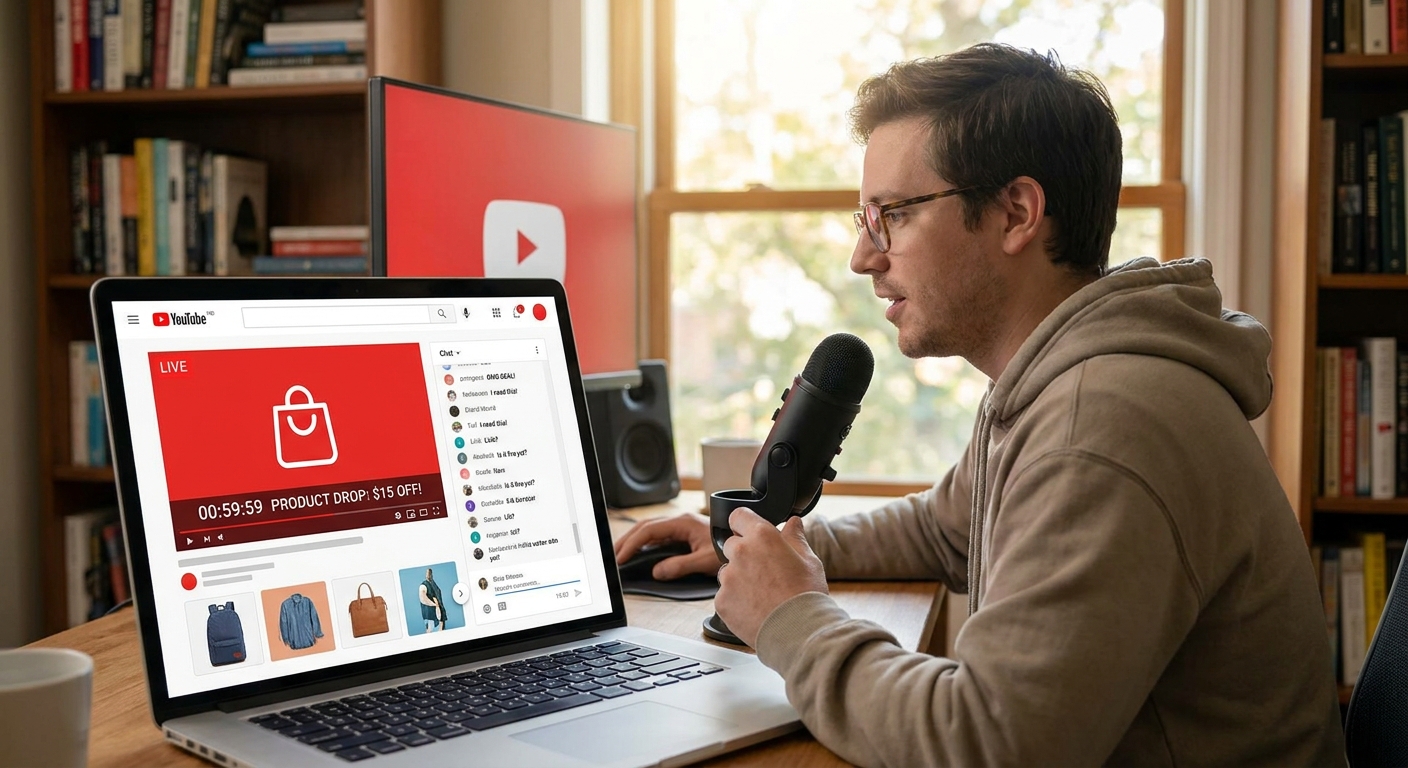
Trying to keep up with social shopping can feel like a second full-time job. One day it is a TikTok Shop flash sale. The next day you are hunting for Instagram promo code tricks, only to get a tiny bump in orders that disappears by dinner. That is why a smart YouTube Shopping product drops live stream strategy matters right now. Small creators do not need another platform gimmick. They need something they can plan.
YouTube is quietly becoming that calmer option. People already watch videos there to figure out what to buy, how to use it, and whether it is worth the money. Now YouTube Shopping gives creators a way to tag products in live streams, run limited-time offers, and build “coming soon” product drops before the event starts. In plain English, you can create the feeling of a flash sale without begging people to remember a promo code. Done well, a simple 45-minute mid-week stream can act like a mini launch event, with better timing, clearer pricing, and a much more predictable path from viewer to checkout.
⚡ In a Hurry? Key Takeaways
- YouTube Shopping product drops let small creators create real urgency through live product tagging, pinned items, and “coming soon” listings, even without messy promo code systems.
- Start with one 45-minute live drop, one hero product, one clear reference price, and one pinned shopping item at a time.
- Do not fake discounts. Make the offer simple, time-limited, and easy to understand so viewers trust you and actually buy.
Why this matters more than another flash sale
Creators are tired, and honestly, for good reason. A lot of social selling now feels like chasing someone else’s calendar. You wait for the next big event, the next platform push, the next coupon trend. Then the rules change.
That is part of the bigger pattern we have already seen in The New ‘Sale Surfing’ Shopper: How TikTok’s 6.6 Mega Sale Quietly Changed Every Other Social Shop Day. Shoppers have been trained to expect urgency everywhere. The problem is that most small creators do not have the staff, stock, or patience to keep rebuilding a sales plan every week.
YouTube offers something different. Viewers are not only there to scroll. They are often there with intent. They are already asking, “Which one should I get?” or “Can I trust this?” That makes YouTube a better place to hold a product drop than many creators realize.
What a “live cart spike” actually is
Think of it as a short, planned burst of buying activity during a live stream.
Not a random lucky spike. Not a one-day coupon code hidden in your caption. A live cart spike is when you guide viewers toward a specific buying window during a stream, using product pins, time-based messaging, and a clear featured item.
In other words, you are creating the energy of a flash sale without needing to scream “70 percent off” or train viewers to wait for codes.
The key difference
Traditional flash sales often depend on outside hype. A YouTube product drop depends on your own event structure.
That is good news for small shops. You can control the script, the timing, the featured products, and the price story.
What YouTube Shopping gives small creators now
If you have ignored YouTube Shopping because it sounded like a feature built for giant brands, it is worth another look.
1. Product tagging in live streams
This is the practical part. You can attach products directly to the stream so viewers do not have to leave, search your bio, or type a discount code correctly on the third try.
Less friction usually means more sales.
2. Limited-time promotions
You can frame an offer around the event itself. That matters because people understand deadlines. “Available during this live” is cleaner than “Use code LIVE20 before midnight if the app behaves.”
3. “Coming soon” product drops
This is the overlooked tool. Anticipation sells. If viewers know something is dropping on Wednesday at 7 PM, they have a reason to show up live instead of watching later.
That changes the whole rhythm of the sale. You are not just hoping someone stumbles into a stream. You are giving them a date.
How to fake a flash sale the honest way
“Fake” here does not mean deceptive. It means creating the same urgency and event feeling as a flash sale without relying on a clunky code or a giant platform-wide promo day.
Use a clear reference price
People need context. If your item is usually $42 and tonight it is $34, say that simply and repeat it clearly. A reference price helps viewers understand the deal fast.
Do not make them do math while you are talking.
Keep the offer narrow
One hero product is better than ten confusing ones. Small creators often hurt their own results by tagging too many items at once.
Pick the product that already gets the most questions. That is usually the one people are closest to buying.
Pin the right product at the right moment
Your shopping bag should match the conversation on screen. If you are demonstrating the moisturizer, pin the moisturizer. If you are comparing two versions, pin both, but make it obvious which one is tonight’s featured drop.
Simple beats clever.
A 45-minute YouTube Shopping product drops live stream strategy that works
You do not need a two-hour marathon. In fact, shorter is often better because urgency fades when the event drifts.
Minute 0 to 5: Set the promise
Open with the headline. Tell people what is dropping, what the normal price is, what the live offer is, and how long they have.
Example: “Tonight we are doing one mid-week drop. This kit is usually $48. During this live it is $39, and I am walking you through exactly who it is for before we close it out.”
Minute 5 to 15: Show the product in real life
This is where YouTube beats other platforms. People stay on YouTube for explanation. Use that. Demonstrate the item. Answer common objections. Show size, texture, fit, setup, or before-and-after results.
You are not just pitching. You are reducing doubt.
Minute 15 to 25: Add social proof
Read a customer comment. Share who bought it last time. Explain the most common reason people reorder. If you have a small audience, that is fine. Small audiences can convert really well when trust is high.
Minute 25 to 35: Remind viewers of the deadline
Now bring the urgency back. Re-pin the product. Restate the reference price. Mention when the drop ends. If stock is limited, only say that if it is true.
Trust is worth more than one rushed sale.
Minute 35 to 45: Q&A and close
Handle last-minute questions and make checkout feel easy. Repeat where to tap, what is included, and when the offer ends.
Then end the event cleanly. A firm ending helps train your audience that your drops are real events, not endless streams.
Common mistakes that kill the cart spike
Too many products in the shopping bag
If everything is featured, nothing is featured. Keep the bag tidy.
No price anchor
If viewers do not know the normal price, the deal feels vague. Always give a baseline.
Starting the stream before interest is built
The “coming soon” setup matters. Tease the drop in Shorts, community posts, and your regular videos. A drop without pre-hype is just a live stream.
Talking like an ad
YouTube viewers can smell forced sales language instantly. Speak like a helpful person. Explain who the product is for, who should skip it, and why tonight’s offer exists.
Who should try this first
This works especially well for creators and small shops selling products that need a little explanation.
- Beauty and skincare
- Home gadgets
- Craft kits
- Fitness gear
- Food bundles
- Creator merch with a story behind it
If your audience already asks “Where did you get that?” in comments, you are in good shape. That is buying intent, even if you have not turned it into a system yet.
How to make it feel predictable, not lucky
The best part of this approach is not just the sales. It is the repeatability.
Run one drop every week or every other week. Same day. Same time. Similar structure. That helps train your audience to show up ready to shop.
You are not waiting for Prime Day. You are not hoping the algorithm suddenly gets generous. You are building your own mini retail rhythm.
For a lot of small creators, that stability is the real win.
At a Glance: Comparison
| Feature/Aspect | Details | Verdict |
|---|---|---|
| Urgency setup | YouTube product drops can build anticipation before the live event with “coming soon” listings and a fixed stream time. | Better for planned sales than random discount blasts. |
| Checkout friction | Live product tagging and pinned shopping items reduce the need for promo codes, link hunting, or extra steps. | Strong choice for small creators who want simpler buying paths. |
| Best use case | Works best for one hero product, clear reference pricing, and a 30 to 45-minute explanation-driven live stream. | Ideal for creators with trust, even if audience size is modest. |
Conclusion
You do not need to out-shout every mega sale on the internet. You just need a sales format that fits how your audience already shops. That is why this matters. Creators want something more predictable than TikTok’s next policy tweak or Amazon’s latest reporting change, and YouTube has finally added real retail tools that small channels can actually use. Product tagging in live streams, limited-time promotions, and “coming soon” product drops give you a way to build interest before you ever go live. If you learn how to script a 45-minute drop event, set a clear reference price, and pin the right products in the Shopping bag, a quiet mid-week stream can become a real revenue moment. No waiting for Prime Day. No chasing every 6.6 sale. Just a cleaner, calmer way to sell.